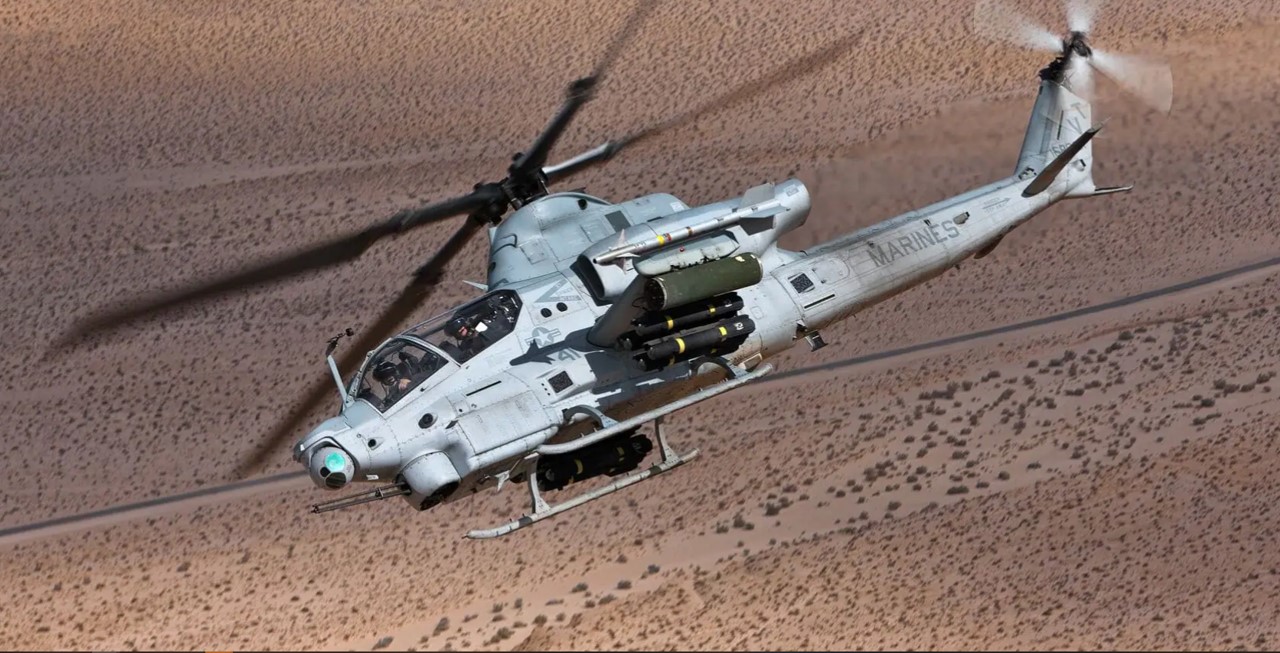
Bell Textron has launched a Ukrainian subsidiary to support its prospective sale of AH-1Z Viper and UH-1Y Venom rotorcraft to the Ukrainian Armed Forces.
The new entity, Bell Textron Ukraine, will serve as a hub for the company’s operations in the country, supporting planned and future activities focused on helicopter assembly, maintenance, and repair.
The US-based helicopter manufacturer also plans to open a dedicated office in Ukraine to coordinate its industrial cooperation efforts.
“This is a meaningful step toward building a practical, mutually beneficial cooperation with the Ukraine defense and industrial base,” Senior Vice President of Strategic Pursuits at Bell, Jeffrey Schloesser, said.
“Bell is committed to establishing a presence in Ukraine to promote collaboration and long-term growth.”
Bell Platforms for Ukraine
The development follows Bell signing a letter of intent in October with Ukraine’s Ministry of Economy, Ecology, and Agriculture for industrial cooperation and the potential sale of the aircraft.
Any procurement would take place through the US government’s foreign military sales program, which requires approval from Washington before the platforms are acquired from the manufacturer.
With unit costs exceeding $50 million for the AH-1Z Viper and around $30 million for the UH-1Y Venom, the total deal could surpass $1 billion — posing a significant financial challenge for Ukraine, according to Defense Express.
The next phase would involve production, assembly, localization, and personnel training, with training alone expected to take around seven months.
Capabilities and Benefits
The AH-1Z Viper is equipped with a 20mm M197 cannon and six hardpoints capable of carrying a wide range of munitions, including APKWS II guided rockets for countering drone threats.
It can also deploy AGM-114 Hellfire or AGM-179 JAGM missiles, making it effective against moving armored formations. Notably, it is the only rotorcraft with fully integrated air-to-air missile capability.
The UH-1Y Venom would help modernize Ukraine’s transport helicopter fleet, which currently relies heavily on Soviet-era Mi-8 and Mi-24 platforms, supplemented by Western donations such as the aging Super Puma.
The helicopter has an 8.4-tonne maximum takeoff weight, is powered by two T700-GE-401C engines, and reaches speeds of up to 315 kilometers (196 miles) per hour, with a range of 600 kilometers (373 miles) and a combat radius of 220 kilometers (137 miles).
Both aircraft are designed to operate seamlessly together, sharing approximately 85 percent component commonality, which enhances operational flexibility and simplifies maintenance.