US Troops Test Bumblebee Counter-Drone System in Capital Defense Exercise

The US is continuing efforts to advance counter-drone capabilities through a recent exercise involving the Joint Interagency Task Force (JIATF)-401 and Joint Task Force National Capital Region (NCR).
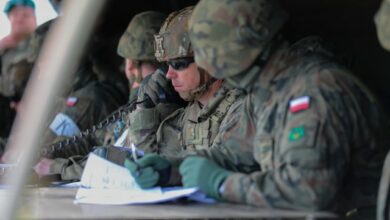
Held at Fort Belvoir, Virginia, soldiers from the 3rd Infantry Regiment trained with the Bumblebee V1 counter-uncrewed aerial system (UAS) in detecting, tracking, identifying, and defeating drones while limiting risks to surrounding personnel and facilities.
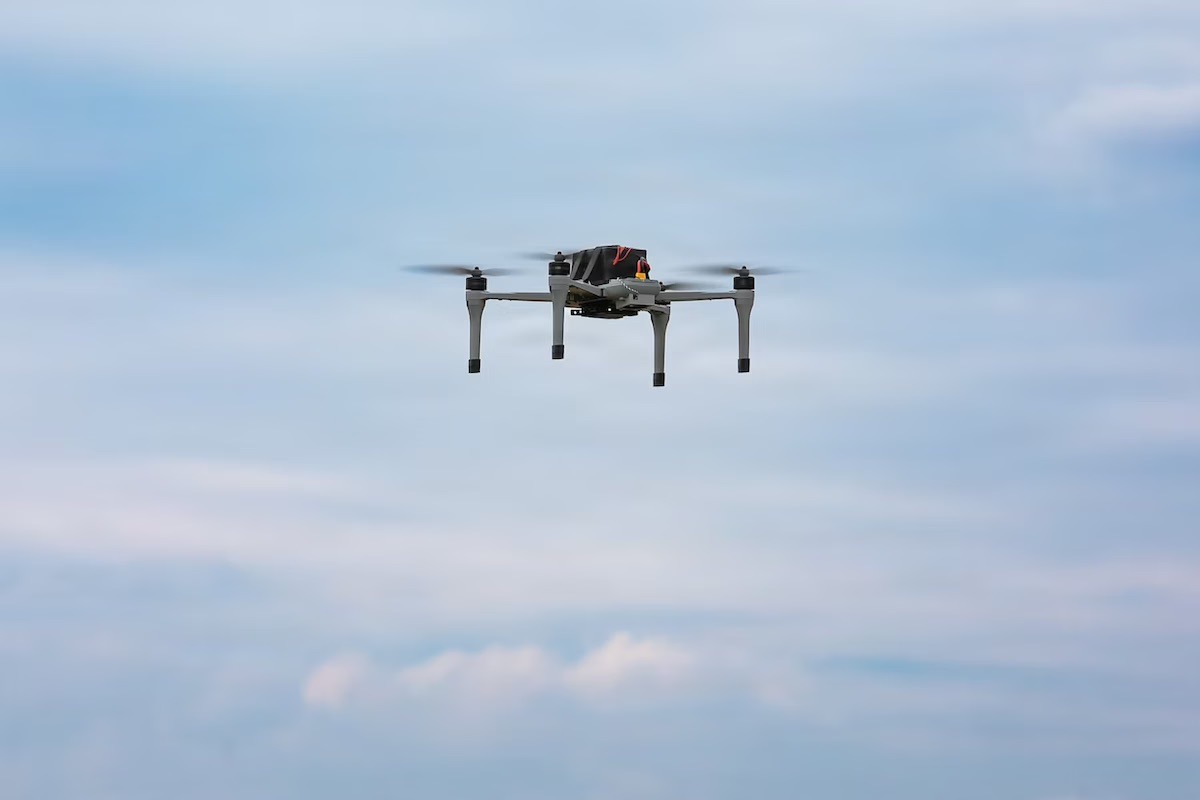
Bumblebee V1 is a small, low-cost, and low-collateral kinetic effector that is undergoing operational assessment for dual use as a reconnaissance asset and a counter-UAS platform.
According to JIATF-401 spokesperson Army Lt. Col. Adam Scher, “Bumblebee’s improved air-to-air capability will enhance our layered defenses by enabling warfighters to follow drones back to their launch point to identify the operator, or by destroying them in the air with minimal risk to people or property on the ground.”
JIATF-401 Initiatives
JIATF-401 focuses on integrating counter-UAS systems and coordinating efforts across military, interagency, and law enforcement partners to strengthen homeland defense.
It has published a guide on regulating the use of counter-UAS detection technologies, as well as procured anti-drone systems, such as Fortem Technologies’ DroneHunter F700 interceptors and the Bumblebee V2 first-person view multi-rotor drone.
In March, the JIATF-401 collaborated with the US Federal Aviation Administration to conduct a high-energy laser test for counter-drone missions while prioritizing the safety of civil aviation operations.
The specialized unit also spearheaded a US-UK effort to establish common data standards for counter-UAS technologies meant to improve interoperability and speed of deployment.