In the age of connected warfare, classic tube artillery and dated rocket launchers are being overshadowed by systems that can rapidly shift from target to target.
The Precise and Universal Launching System (PULS) is one of these responders: a modular, adaptable, and digitally networked rocket artillery solution built not just to fire different rounds, but to integrate into today’s command networks with minimal friction.
For anyone tracking how indirect fire is changing, let’s unpack what PULS is, how it works, where it’s headed, and why it matters.
What Is PULS?
PULS is a next-generation rocket artillery system developed by Israeli firm Elbit Systems, engineered for an era where flexibility and precision define battlefield dominance.
Unlike legacy multiple-launch rocket systems that rely on a single ammunition type, PULS is a modular, multi-range platform capable of launching guided rockets and long-range tactical missiles from a single launcher.
Instead of massed unguided salvos, it employs GPS/INS-guided munitions and extended-range precision weapons to deliver scalable, surgical effects across the battlespace.
The result is a system that lets commanders pinpoint fortified positions, strike fleeting targets, or reach deep operational objectives without reconfiguring the launcher — compressing response times, multiplying tactical options, and sustaining tempo in fast-moving operations.
Meeting 21st‑Century Artillery Needs
PULS evolved from the Lynx MLRS, originally developed by Israel Military Industries (IMI) before being further refined under Elbit Systems following its 2018 acquisition of IMI.
Rather than simply upgrading an existing launcher, Elbit reworked the concept into a more adaptable, export-ready system aligned with modern networked warfare.
At its core, PULS was designed to solve three pressing artillery challenges: universal ammunition compatibility, rapid modular deployment, and seamless battlefield integration.
Its pod-based launcher architecture, interoperable communications suite, and open-system design close the loop between sensors, fire control networks, and strike assets.
What Makes PULS Stand Out?
Pivotable Modular Launcher
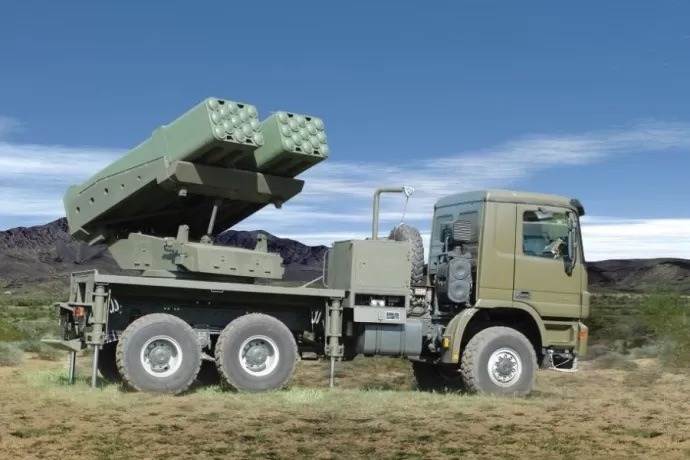
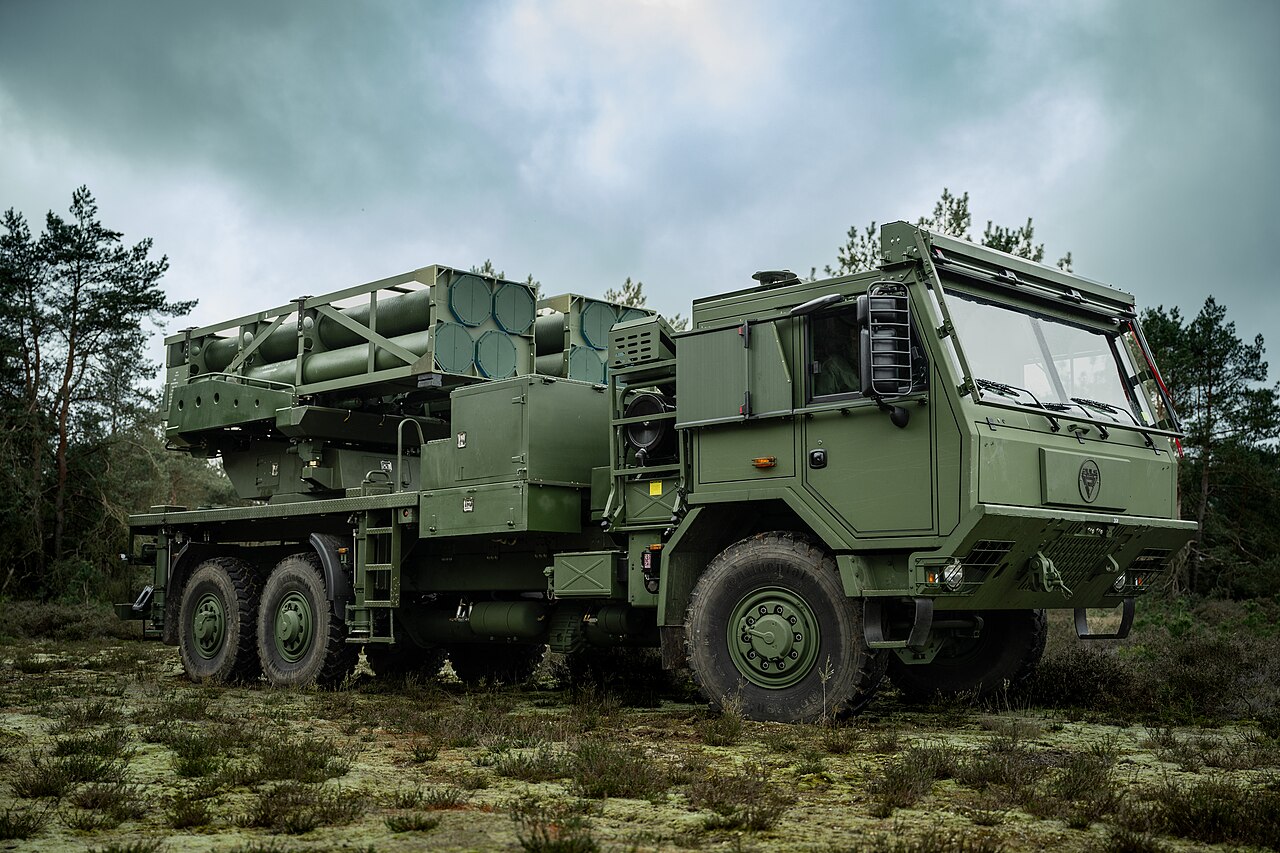
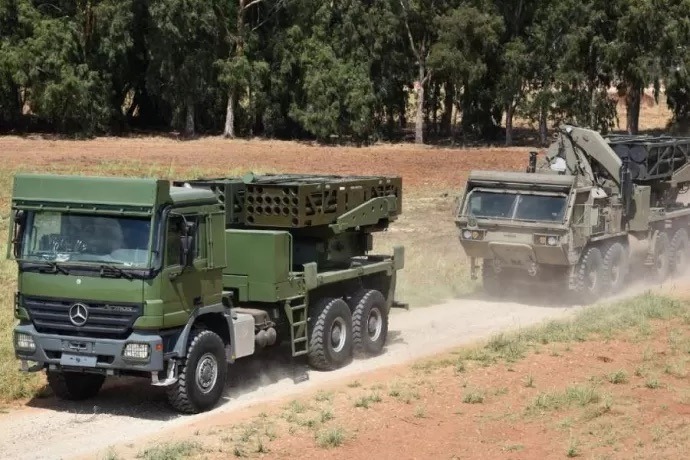
PULS uses two protected, interchangeable pods that can each be configured for different types and sizes of rockets, allowing a single launcher to switch between conventional rockets, precision-guided munitions, or tactical missiles.
Wide Variety of Supported Munitions
The breadth of munitions that PULS can deploy allows commanders to tailor firepower based on range, target type, and operational tempo.
- 122 mm Accular rockets: Precision strike munitions capable of reaching targets up to 35 kilometers (22 miles) away, ideal for tactical-depth engagements where accuracy and rapid response are key.
- 160 mm rockets: Deliver enhanced destructive power over 40 kilometers (25 miles), striking fortified positions, logistics hubs, and area targets.
- EXTRA rockets: Bring long-range, high-precision effects to targets 150 kilometers (93 miles) deep into the operational rear.
- Predator Hawk tactical missiles: Transform the launcher into a quasi-theater strike system, engaging high-value strategic targets up to 300 kilometers (186 miles) away.
- SkyStriker loitering munitions: Combine onboard surveillance and precision attack in a single mission cycle.
There have also been proposals to arm the PULS with Naval Strike missiles and Joint Fire Support missiles.
Together, this layered arsenal enables PULS to operate across tactical, operational, and even limited-strategic ranges without changing the launcher platform.
Rapid Engagement Timeline
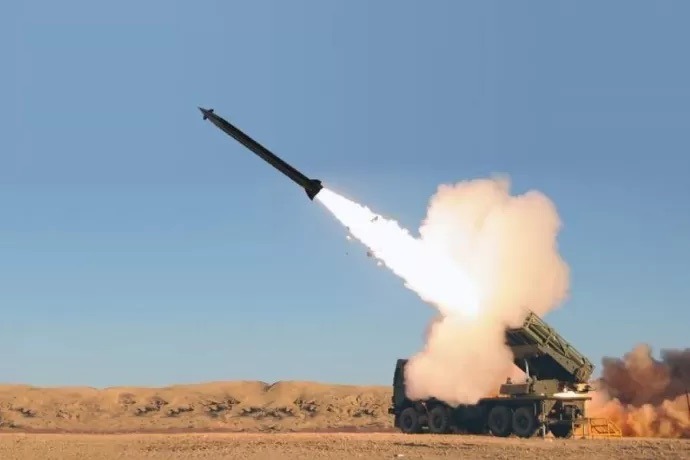
PULS is designed for responsiveness: a firing mission can be executed in under one minute from initiation, with a rapid sequence of multiple salvos.
The system’s architecture and automated fire-control integration enable rockets and tactical missiles to be sequenced almost instantly.
Whether engaging time-sensitive targets, counter-battery threats, or deep operational objectives, PULS enables commanders to maintain a relentless tempo.
Networked C4I Integration
Modern battlefield operations demand connectivity. PULS incorporates advanced navigation, communications, and fire-control systems that integrate with wider command networks for coordinated strikes.
Through real-time data sharing, the system can receive target updates, adapt to shifting priorities, and synchronize with other artillery, air, and reconnaissance assets.
This level of integration allows commanders to orchestrate precision fires across multiple units, reduce duplication of effort, and exploit fleeting windows of opportunity.
Strengths and Limitations
Strengths
- Universal ammunition compatibility: The pod system supports rockets and missiles of varying calibers, giving commanders flexible engagement options without needing multiple launcher types.
- Precision at long range: GPS/INS‑guided ammunition and tactical missiles allow strikes out to 300 kilometers (186 miles) with greater accuracy than traditional MLRS solutions alone.
- Quick responsiveness: Its integrated fire control and launcher design deliver rapid reaction times and improve survivability via shoot‑and‑scoot tactics.
Limitations
- Cost of advanced munitions: Precision-guided rockets and missiles can be significantly more expensive than unguided alternatives, affecting sustained logistics and operational budgets.
- Integration complexity: While built for connectivity, adapting PULS into diverse national command structures requires tailored integration work and training.
- Platform dependency: Although adaptable to many truck chassis, full capability hinges on robust mobility platforms and crew support systems.
Who’s Fielding PULS?
PULS is no longer an experimental concept; it’s actively spreading across defense forces worldwide:
- Denmark: The Royal Danish Army has procured multiple units, modernizing its artillery corps.
- Netherlands: The Royal Netherlands Army ordered about 20 PULS systems in a major contract.
- Germany: The Bundeswehr is acquiring launchers under joint agreements with Elbit and KNDS.
- India: Nibe Limited signed an agreement with Elbit Systems to build the Israeli firm’s PULS multiple rocket launcher.
These deployments reflect both Western NATO adoption and broader global interest in precision rocket systems as conventional artillery evolves.
Future Outlook
PULS reflects a broader shift toward flexible, networked artillery capable of responding to multiple threats at once.
Its modularity and open design make it adaptable to changing operational needs, and recent international interest suggests modular rocket systems may become a key component of future artillery forces.
The long-term success of PULS will hinge not just on performance, but on how well it integrates into evolving military networks — and how it stacks up against competing long-range systems in an era of rapid modernization.