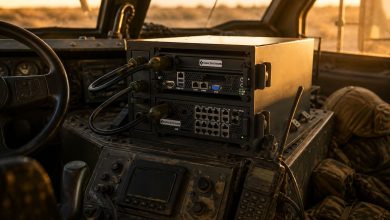
The US Army has launched a Data Operations Center to streamline access to and use of operational data across the force.
It consolidates data management functions previously spread across multiple systems and commands.
Operating under US Army Cyber Command, the center will act as a service layer to connect data sources, enable secure access, and deliver relevant information to units in real-time, including across joint and coalition systems and networks.
Rather than expanding data collection, the initiative focuses on usability, ensuring existing information can be processed and applied more effectively in operational contexts.
Optimizing Use of Data
Officials describe the center as a support structure for units facing data access or connectivity issues, reducing the technical burden on operational formations.
“We have tons of data on our battlefield and in our enterprise,” said Army Lt. Gen. Jeth Rey, deputy chief of staff for the Army G-6.
“We have a data management problem, and data becomes the ammunition that we need to provide to our senior leaders in order for them to make quick and informed decisions and gain decision dominance.”
A 180-day pilot program is underway to refine the concept, supported by a dedicated task force.
As the center develops, it is expected to support AI and machine learning applications, including managing datasets and enabling faster integration of sensor data into operational workflows.

Expanding Data Infrastructure
The launch of the Data Operations Center comes alongside broader efforts to scale underlying data infrastructure, with a focus on AI technologies.
Last month, the US Army selected the Carlyle Group and CyrusOne to develop large-scale data centers at installations in Texas and Utah, aimed at increasing computing capacity to support AI applications.
The initiative aligns with a White House directive issued in 2025 to expand data center infrastructure on federal land to support data processing needs.
The order aims to accelerate the deployment of AI infrastructure by easing permitting requirements and enabling private companies to build facilities under long-term lease agreements.