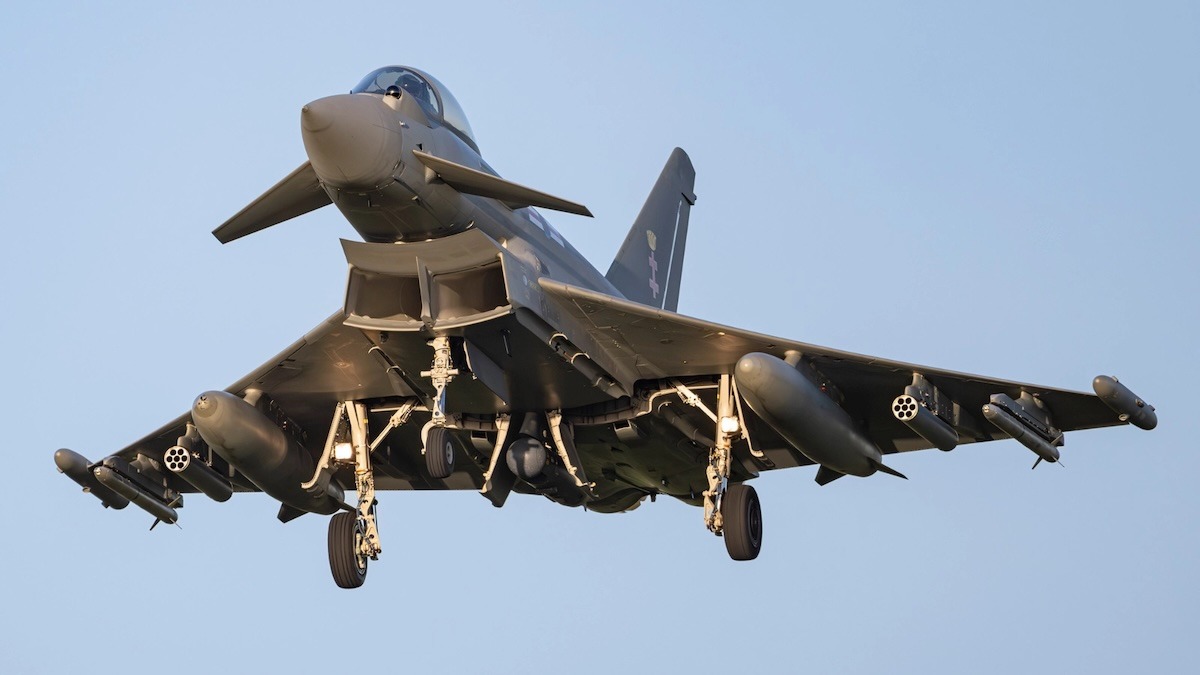
The Royal Air Force’s (RAF) Eurofighter Typhoon test and evaluation aircraft successfully fired a counter-drone rocket at BAE Systems’ flight test development center in Warton, Lancashire.
Equipped with a laser-guided Advanced Precision Kill Weapon System (APKWS), the Typhoon struck its ground target at the UK military testing range.
The trial follows BAE’s feasibility studies exploring the integration of a low-cost counter-drone option on the Typhoon, with APKWS seen as a way to complement the jet’s more expensive air-to-air missiles.
The development also reflects the growing demand for cost-efficient solutions as drones increasingly pose operational threats.
In March, the UK Defence Ministry disclosed that an RAF Typhoon from the joint UK–Qatar Typhoon Squadron launched an unidentified missile against a drone approaching Qatar.
Richard Hamilton, Managing Director of Air Operations at BAE Systems’ Air sector, described the trial as showing “a game-changing capability and a cost-effective solution that would enhance Typhoon’s already impressive range of weapons capabilities.”
The Typhoon will next undergo air-to-air testing.
Low-Cost Counter-Drone Solution
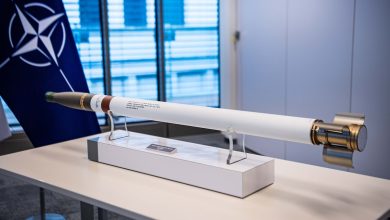
The APKWS converts unguided 2.75-inch (70-millimeter) rockets into laser-guided munitions capable of precision strikes against light armored vehicles, personnel, and drones with minimal collateral damage.
With unit costs estimated around $20,000 — far below traditional missiles — the APKWS is positioned as an economical solution against expendable threats such as one-way attack drones, including Shahed types deployed in Ukraine and across the Middle East.
BAE continues to develop the APKWS for mission-specific roles, including the addition of an infrared seeker to improve target acquisition.
Several air forces and manufacturers have explored integrating APKWS onto fighter jets as a cost-conscious counter-drone option, including the US Air Force’s F-15E Strike Eagle and Saab’s JAS 39 Gripen.