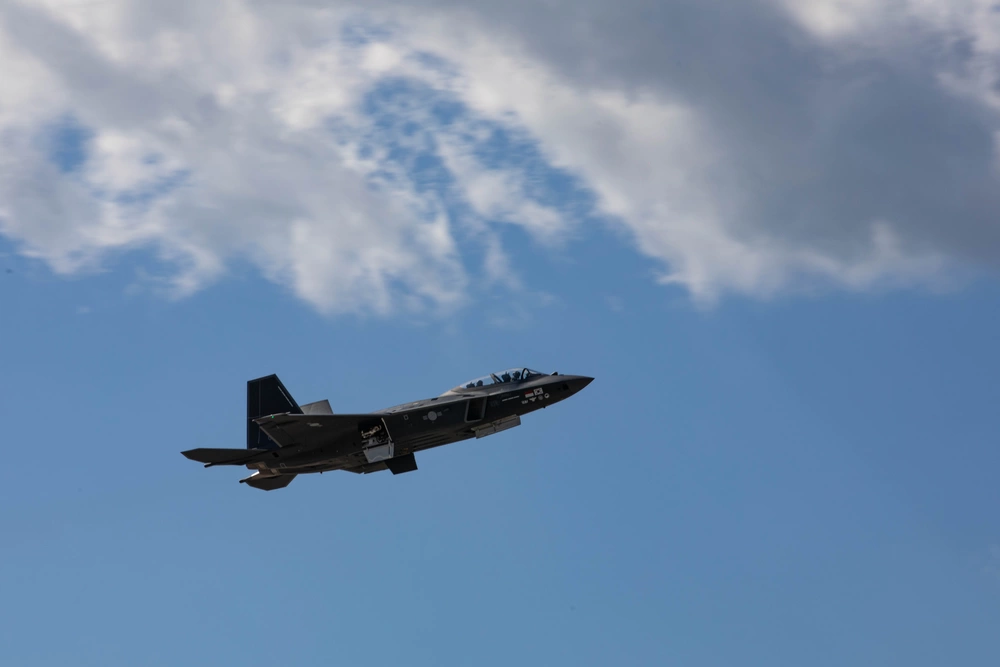
Beating Stealth Without Stealth: How South Korea Can Blunt China’s J-20 Surge
Seoul doesn’t need to match China’s stealth fleet to defend its skies.

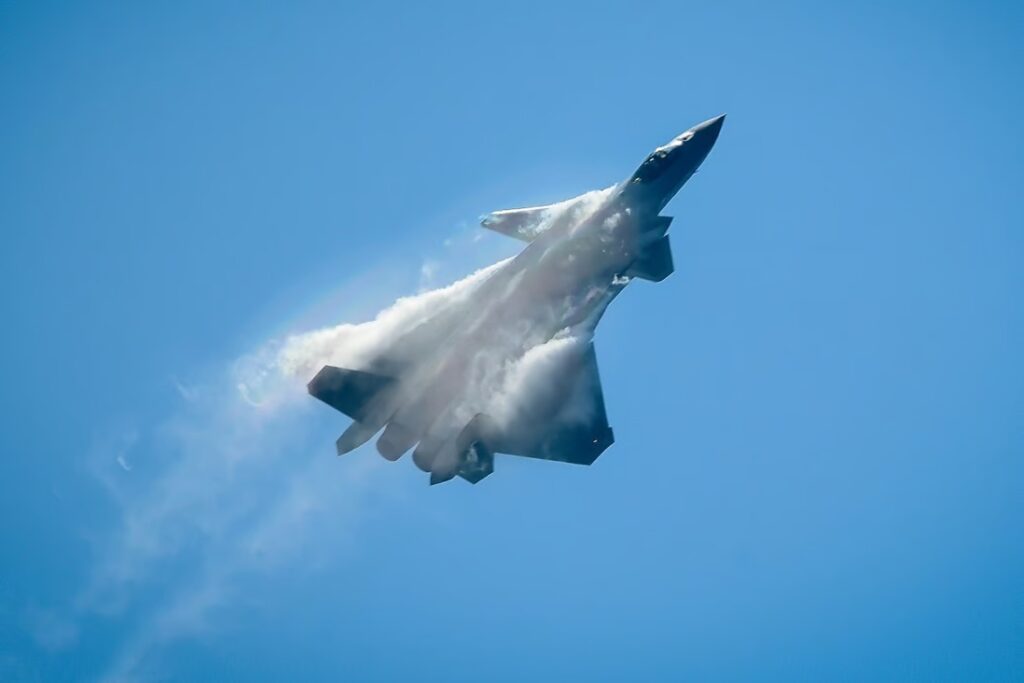
By the end of this decade, China could field nearly 1,000 Chengdu J-20 stealth fighters—more than any country except the United States.
That rapid buildup has many analysts assuming that Chinese air dominance in Northeast Asia is inevitable. But conventional wisdom about stealth is misleading. South Korea doesn’t need to match China aircraft-for-aircraft to complicate Beijing’s plans.
The risk becomes urgent in a dual contingency scenario: a Chinese invasion of Taiwan coinciding with opportunistic provocations from North Korea.
In such a crisis, US air assets would inevitably thin out, Japan’s bases would face missile threats, and South Korea would have to confront both Pyongyang and an expanded Chinese air force at the same time.
If Seoul assumes that fourth-generation fighters are irrelevant against stealth, it risks falling into a self-fulfilling prophecy.
The Myth of Stealth Dominance
The problem is often overstated. Exercises show that legacy fighters are vulnerable in radar-centric fights against stealth. Many analysts conclude that deterrence collapses without parity in stealth platforms.
But this misses the point: stealth does not make aircraft invincible. The J-20’s advantage lies in controlling the engagement sequence, not hiding entirely from modern sensors.
Chinese pilots rely on passive operations, long-range missile cues from off-board sensors, and high-altitude, high-speed strikes. Their assumption: opponents detect them too late to respond.
That assumption is increasingly questionable. Stealth shaping reduces radar cross-section but does not eliminate heat signatures. As J-20s climb and accelerate to gain firing advantage, their engines generate intense infrared emissions.
The Limits of Low Observability
Modern Infrared Search and Track (IRST) systems exploit this reality. Unlike radar, infrared sensors passively detect targets, making them survivable even in contested electronic environments.
Platforms like the Legion Pod and Europe’s PIRATE IRST demonstrate that non-stealth fighters can track and target stealth aircraft. Improvements in sensor resolution, processing, and network integration only widen this capability.
In other words, stealth is not invincible; detection is still possible, and engagement can be coordinated across platforms.
Building a Networked Counter-Stealth Force
For South Korea, this has major operational implications.
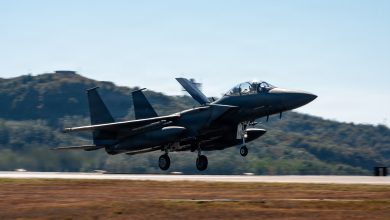
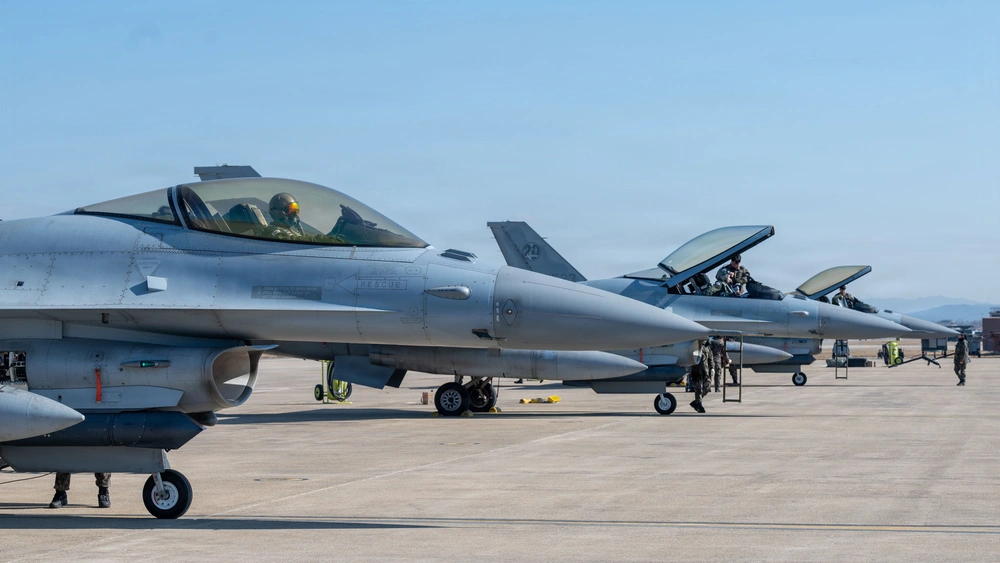
The Republic of Korea Air Force’s upgraded KF-16s and F-15K Slam Eagles, if equipped with IRST pods and integrated into a networked targeting system, could detect stealth fighters without emitting radar signals.
These fighters could then relay targeting data to other aircraft, enabling long-range engagements before the J-20 can react. The “first shot” is no longer guaranteed for the attacker.
This is where Seoul’s indigenous KF-21 Boramae enters the picture.
While not a full fifth-generation fighter, the KF-21 is designed as a missile carrier within a distributed sensor network. Armed with long-range air-to-air missiles, KF-21s could take targeting cues from IRST-equipped fighters hundreds of kilometers away.
Detection, targeting, and engagement are no longer confined to one aircraft. The kill chain becomes collective.
This means J-20s approaching from the Yellow Sea or Shandong Peninsula could be spotted before they achieve firing positions, even if South Korean fighters remain in their own airspace.
Once detected, missiles can strike from ranges the J-20s cannot monitor, blunting the stealth advantage.
Beyond the Peninsula: Alliance Implications
Strategic implications extend beyond air defense.
In a Taiwan-Korea dual contingency scenario, US stealth assets would likely concentrate near Taiwan, while Japan’s air and naval forces would be stretched defending its southwestern islands.
A South Korean air force capable of independent area denial against Chinese stealth fighters would reduce reliance on scarce US fifth-generation platforms, giving Washington strategic flexibility and Tokyo operational depth, while forcing Beijing to weigh higher costs for limited gains.
Deterrence does not require parity in stealth numbers. What matters is unpredictability and risk imposition.
If Chinese planners cannot assume that J-20s can operate freely around the Korean Peninsula, cost-benefit calculations for opportunistic actions change.
A networked South Korean force equipped for emissions-controlled, passive detection warfare could effectively deny China confidence in its air supremacy.
This logic challenges the fixation on stealth as a silver bullet. Airpower competition is not determined by platform prestige alone; it depends on integration, networking, and operational concept.
A force that combines passive detection, long-range missiles, and distributed command and control can constrain even numerically superior stealth adversaries.
Deterrence Through Denial, Not Parity
China’s airpower buildup is real and its scale is impressive, but quantity does not guarantee dominance. A stealth-versus-network equation tells a different story.
For South Korea, decisive action — IRST integration, distributed command, and realistic training — could transform vulnerability into deterrent strength.
In a region increasingly defined by simultaneous crises, denying confidence may stabilize more than any single aircraft procurement could.
Ultimately, the goal of deterrence is not total victory in the air. It is to convince all parties that winning is too costly and uncertain, a lesson that networked South Korean airpower is uniquely positioned to deliver.

Dr. Ju Hyung Kim currently serves as the President at the Security Management Institute, a defense think tank affiliated with the South Korean National Assembly.
He has been involved in numerous defense projects and has provided consultation to several key organizations, including the Republic of Korea Joint Chiefs of Staff, the Defense Acquisition Program Administration, the Ministry of National Defense, the Korea Institute for Defense Analysis, the Agency for Defense Development, and the Korea Research Institute for Defense Technology Planning and Advancement.
He holds a doctoral degree in international relations from the National Graduate Institute for Policy Studies in Japan, a master’s degree in conflict management from the Johns Hopkins University School of Advanced International Studies, and a degree in public policy from Seoul National University’s Graduate School of Public Administration.
Dr. Kim has published extensively across leading international security and defense platforms, including The Diplomat, War on the Rocks, the Modern War Institute, 38 North, Asia Times, Small Wars Journal, RealClearDefense, Modern Diplomacy, the Lowy Institute, Global Security Review, the Geopolitics, and Global Defense Insight, among others.
The views and opinions expressed here are those of the author and do not necessarily reflect the editorial position of The Defense Post.
The Defense Post aims to publish a wide range of high-quality opinion and analysis from a diverse array of people – do you want to send us yours? Click here to submit an op-ed.