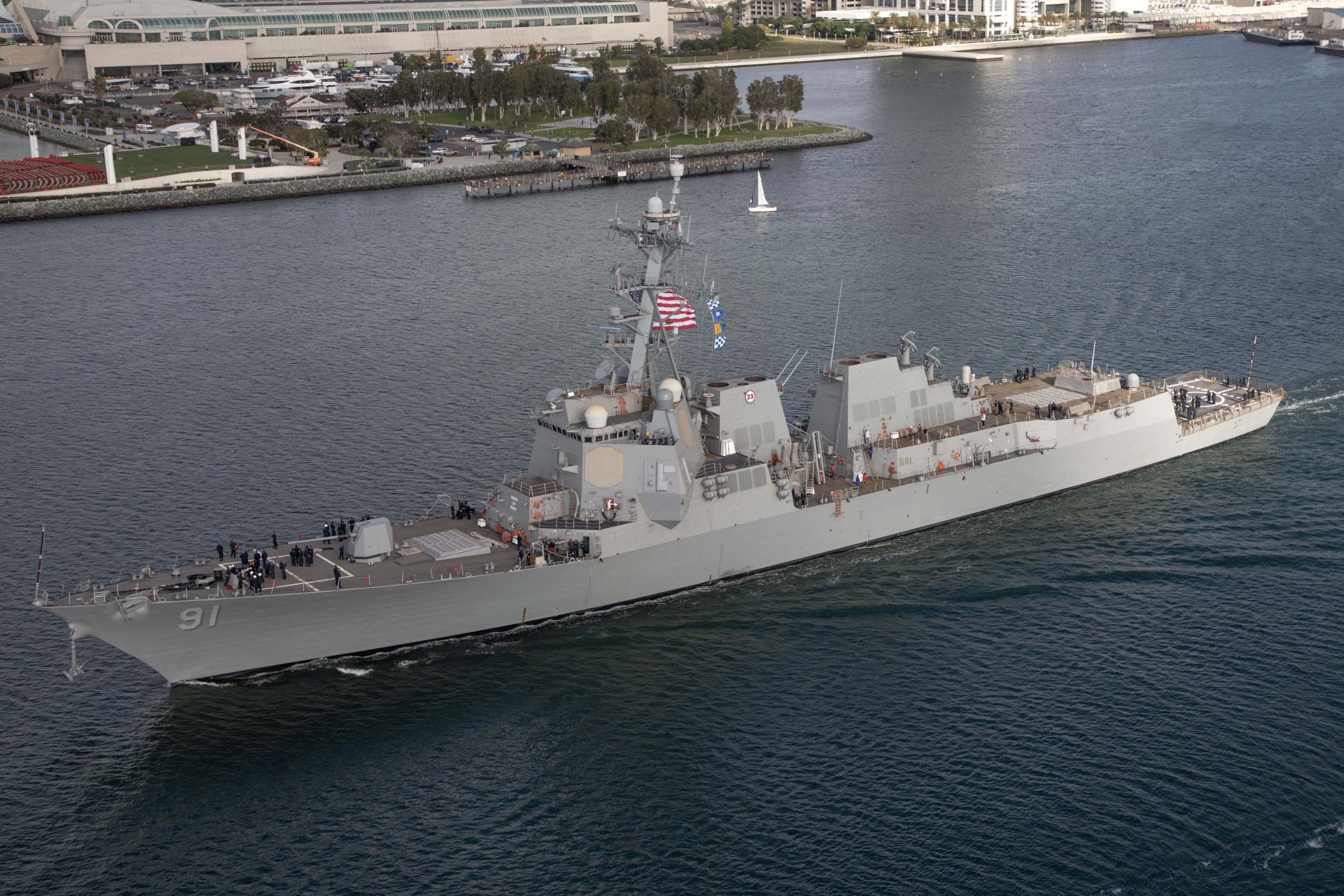
The US Navy has awarded Northrop Grumman a contract modification to produce up to nine additional Surface Electronic Warfare Improvement Program (SEWIP) Block 3 electronic warfare systems, expanding ship defenses against missile threats.
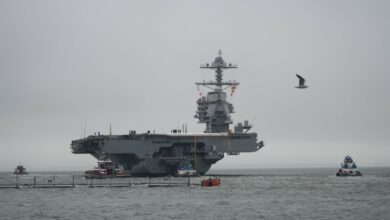
Building on a $334-million deal in December 2025, this latest award includes the first SEWIP Block 3 shipset for installation on an aircraft carrier.
With this latest order, Northrop Grumman is now under contract to deliver up to 24 systems.
SEWIP Block 3 provides advanced electronic attack capabilities that allow ships to detect, jam, and disrupt incoming missile threats before they strike. The system is central to efforts to improve survivability as naval threats become more complex.
At the same time, the company is advancing Scaled Onboard Electronic Attack (SOEA), a lighter system derived from SEWIP Block 3. Built with reduced size, weight, and power requirements, SOEA is intended for ships that cannot support the full system while still offering electronic attack capabilities.
Northrop said SOEA is currently in a rapid prototyping phase under a US Navy contract, as the service looks to extend electronic warfare protection across more of its fleet.
“The SEWIP Block 3 technology transforms the future of electronic warfare by enhancing the adaptability and resilience of our fleet in a rapidly evolving threat landscape,” Northrop Grumman Land and Maritime Systems vice president Lara Kopf said.
Wider Electronic Attack Push Across Fleet
Efforts to expand shipboard jamming are part of a broader, multi-company push to strengthen US Navy electronic warfare capabilities.
In May 2025, Raytheon secured a $580-million follow-on contract for the Next Generation Jammer Mid-Band, a system deployed on the Boeing EA-18G Growler to disrupt enemy radar and communications across a wide frequency range.
That system replaces the aging ALQ-99 jammer and introduces digital, active electronically scanned array technology capable of targeting multiple threats simultaneously and operating at extended ranges.
Meanwhile, L3Harris Technologies is developing the Next Generation Jammer Low Band under a $587.4-million contract awarded in September 2024. The effort includes prototype jamming pods for the Growler, with expected operational capability later in the decade.
Work on airborne electronic attack is also expanding beyond traditional platforms. In January, the US Navy tapped ELTA North America to develop stand-off jammers designed to disrupt communications from a distance, reducing risk to aircraft operating in contested environments.