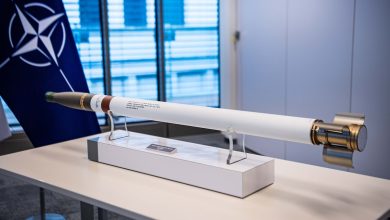
Estonia’s Frankenburg Technologies and Poland’s Polska Grupa Zbrojeniowa (PGZ) have signed a framework agreement to produce Frankenburg’s Mark I anti-drone missiles in Poland.
Under the deal, a production facility is planned in the country with a capacity of up to 10,000 missiles annually.
“Lessons learned from the war in Ukraine clearly demonstrate that attacks carried out by dangerous yet inexpensive drones are mass in scale,” President of the Management Board of PGZ, Adam Leszkiewicz, said.
“Countering them with advanced – and therefore more costly – air defense systems is operationally and economically unjustified. The response to this type of threat must be effective and cost‑appropriate.
Cooperation with Frankenburg will enable us to jointly produce and offer the Polish Armed Forces and other customers the most economically advantageous effector to date for countering this specific category of drone threats.”
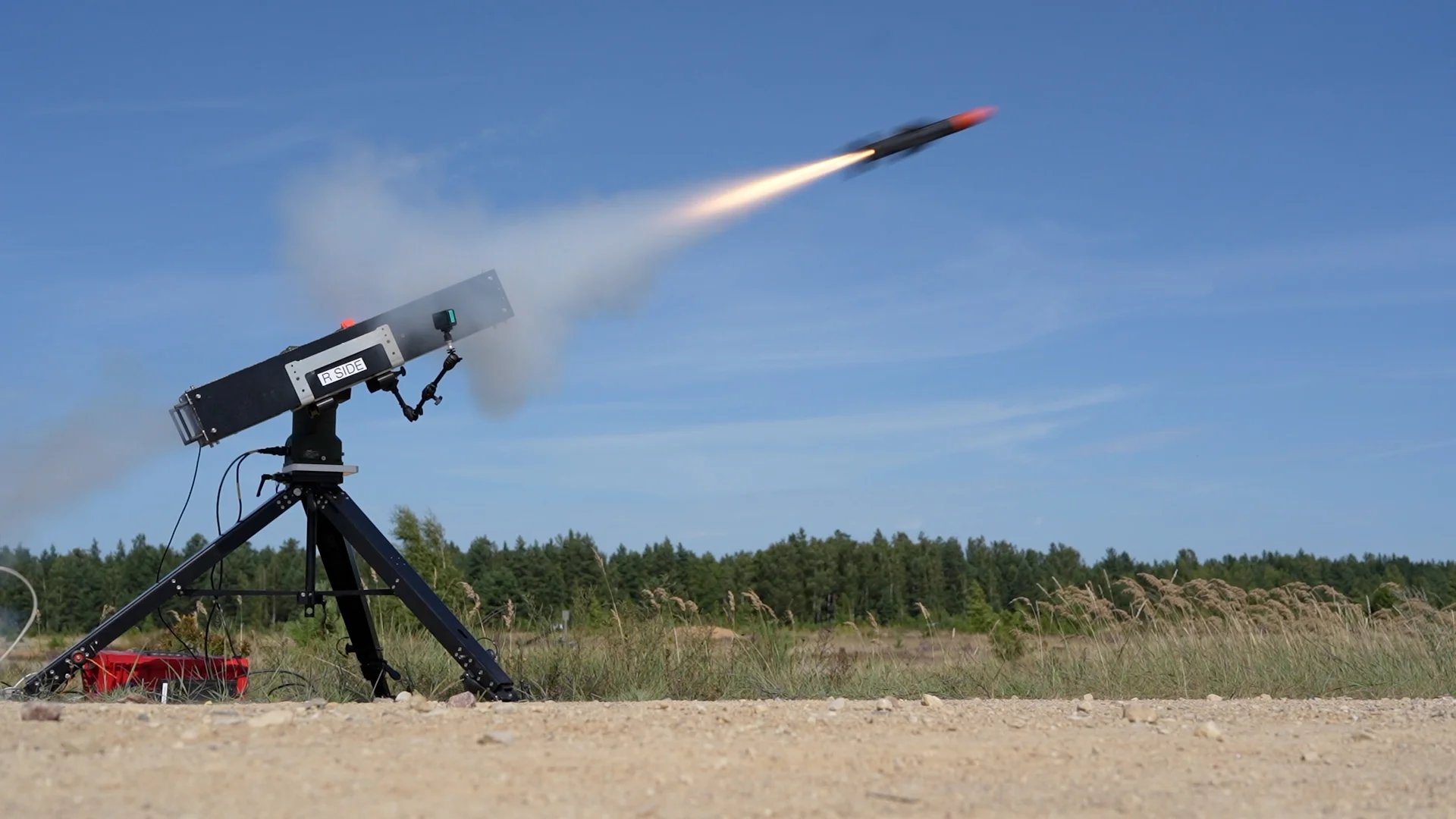
Mark I Anti-Drone Missile
Frankenburg developed the Mark I in just 13 months using off-the-shelf components, with its first demonstration conducted in December.
The system is designed to counter fast-moving unmanned aerial threats traveling at speeds of up to 200 kilometers (124 miles) per hour, offering a range of 2 kilometers (1.24 miles) and supporting both fire-and-forget and lock-on-after-launch modes for all-weather operations.
The agreement also lays the groundwork for future systems, including the Mark II variant, expected to extend engagement ranges to between 5 and 8 kilometers (3 to 5 miles), further enhancing layered air defense capabilities.
“Air defense today is defined by scale – how many interceptors you can produce, deploy, and sustain,” Frankenburg Technologies CEO Kusti Salm said.
“This agreement brings Mark I into production in Poland together with PGZ and creates a clear pathway to deploy it for Poland’s defence needs.”
To Expand Poland’s Defense Industrial Base
The partnership builds on a November agreement to integrate and jointly market advanced counter-unmanned aerial system and air defense solutions, targeting growing regional demand.
It enables joint project development, coordinated production, and future investment planning, while supporting the expansion of Poland’s industrial base to strengthen national defense capacity.
“Our partnership with Frankenburg also opens further opportunities. We are signing an agreement with a European entity, which means there may be an opportunity to seek project funding through SAFE,” Vice President of the Management Board of PGZ, Marcin Idzik, explained.