Advanced manufacturing firm Hadrian has opened a new large-scale facility in Cherokee, Alabama, dedicated to producing components for US Navy submarine programs.
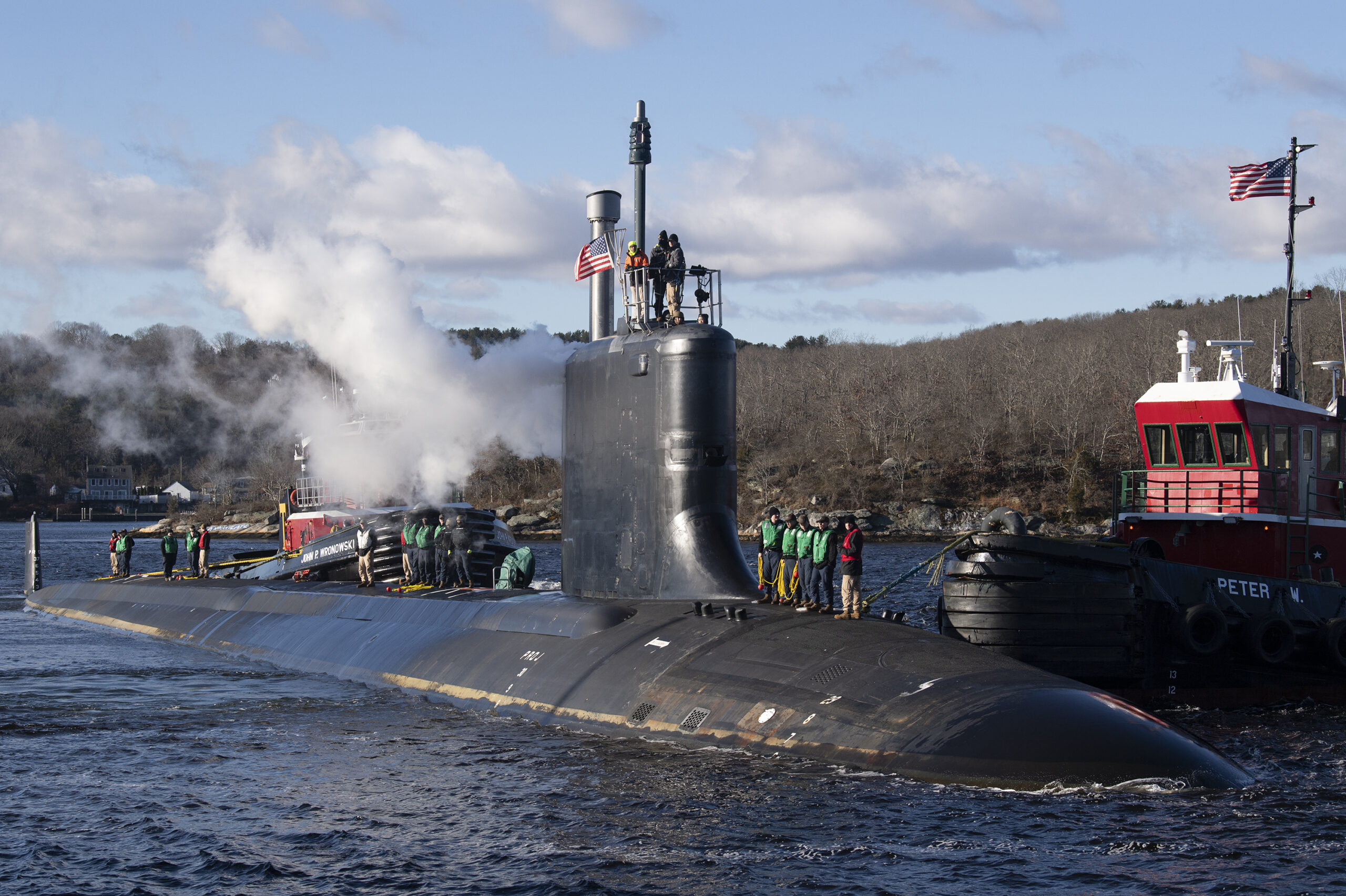
The plant is specifically designed to produce components for Virginia-class nuclear-powered attack submarines and Columbia-class ballistic missile submarines, which support Washington’s nuclear deterrent at sea.
Structured as a highly automated production environment focused on high-volume and precision manufacturing, the site will span approximately 2.2 million square feet (204,000 square meters).
The project combines public and private funding, with about $900 million provided through US Navy allocations under the One Big Beautiful Bill Act and roughly $1.5 billion in private investment, bringing total funding to more than $2.4 billion.
The facility is intended to ease long-standing constraints across the US maritime supply chain, including supplier limitations and restricted shipyard capacity.
“I look forward to building on this progress together in the months ahead, because we are just getting started,” said US Secretary of the Navy John C. Phelan.
“This factory is the first of three facilities designed to address the most critical bottlenecks in the maritime industrial base.”
Production Model
The facility is designed to take over large-scale manufacturing of key submarine components, shifting part of the workload off-site to ease pressure on shipyards, increase production rates, and shorten delivery timelines.
It reflects a broader shift toward “distributed shipbuilding,” in which component manufacturing is moved to specialized sites rather than concentrated in shipyards.
This allows naval yards to prioritize final assembly, module integration, and other complex, schedule-critical activities.
Production is carried out through highly automated lines, integrated digital systems, and standardized fabrication processes to ensure consistent quality at higher output.
The facility is expected to reach full-rate production in 18 to 24 months.
This phase includes installing and calibrating automated systems, qualifying components, and meeting strict naval safety requirements.
Production will begin at a low rate before scaling up, with stable output anticipated by the third year of operations.