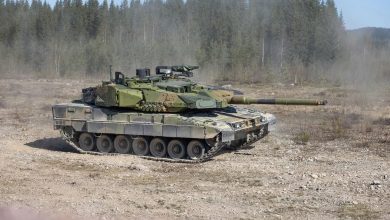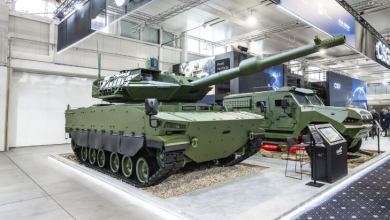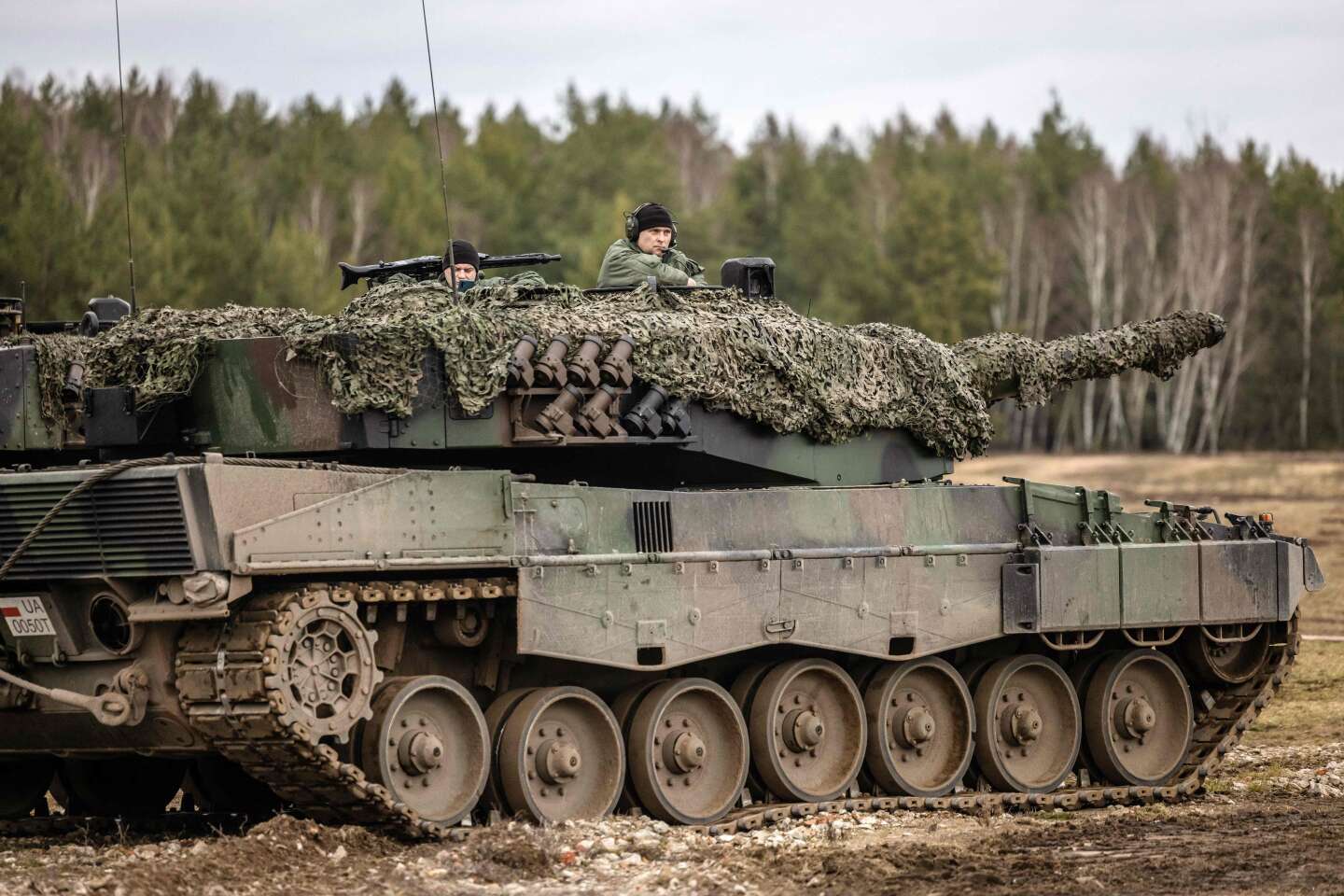
Fast, lethal, and adaptable, that is how the Leopard tank has been defined for decades.
From its origins in war to today’s networked variants with advanced armor and fire control, this battle-tested machine blends firepower, protection, and speed, remaining a trusted benchmark worldwide.
Dive into this guide to discover why the Leopard tank remains one of the most respected and versatile main battle tanks (MBTs) worldwide.
History and Design Philosophy
First developed during the Cold War to meet the demands of high-intensity armored warfare in Europe, the Leopard series was designed to combine combat capability, battlefield resilience, and mobility in a balanced and adaptable package.
The program began in the early 1960s as part of West Germany’s effort to field a modern armored force capable of countering potential Soviet armored formations in Central Europe.
Over decades of continuous upgrades and international sales, the tank has become one of the most widely respected MBTs in service worldwide.
Leopard 1, the first production model, entered service in 1965, prioritizing mobility and firepower over heavy armor. The Leopard 2, which entered service in 1979, also emphasized survivability while retaining mobility.
These models reflect the design philosophy that speed and accurate long-range gunnery could offset vulnerability to anti-tank weapons.
Understanding the Leopard Tank Series
The Leopard tank series is Germany’s premier line of main battle tanks, developed by Krauss-Maffei Wegmann (now KNDS), renowned for combining mobility, survivability, and striking power in a single platform.
The series began with the Leopard 1, which featured a 105mm L7 rifled gun and a reliable diesel engine, making it highly maneuverable across European terrain. Exported widely, the Leopard 1 set the stage for modern armored warfare and influenced tank design globally.
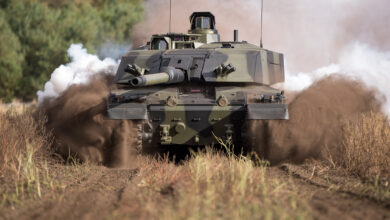
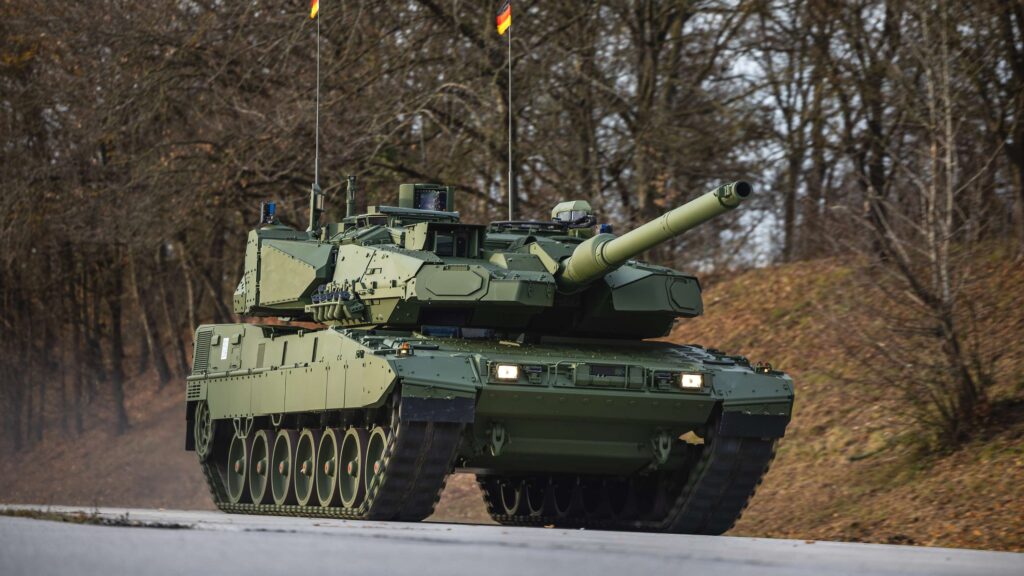
The Leopard 2 represents a major evolution, introducing composite armor, a 120mm smoothbore gun, and advanced fire control systems.
Successive upgrades — from 2A4 to 2A7 — enhanced protection against kinetic and chemical energy threats, featured improved sensors, and integrated networked battlefield systems.
Known for being battle-tested, upgradeable, and highly reliable, the Leopard 2 continues to serve in Germany and allied forces worldwide, offering flexible deployment across diverse land and coastal theaters.
Variants
| Variant | Entry to Service | Main Gun | Armor / Protection | Engine / Mobility | Key Features and Upgrades |
| Leopard 1 | 1965 | 105mm L7 rifled gun | Rolled steel; lighter armor for mobility | MTU diesel, 1,500 hp | High speed and maneuverability; emphasis on mobility; widely exported |
| Leopard 2A4 | 1985 | 120mm Rheinmetall smoothbore | Composite frontal and turret armor | MTU MB 873 Ka-501, 1,500 hp | Advanced fire control, stabilized gun, night vision; baseline for further upgrades |
| Leopard 2A5 | 1995 | 120mm smoothbore | Wedge-shaped composite turret armor | Same as 2A4 | Enhanced frontal protection, improved electronics, modular armor |
| Leopard 2A6 | 2001 | 120mm L55 longer-barrel smoothbore | Upgraded composite and side armor | Same as 2A4 | Longer gun for better penetration, improved suspension and battlefield electronics |
| Leopard 2A7 | 2014 | 120mm L55 smoothbore | Advanced modular armor; mine protection | Same as 2A4 | Urban operations kit, enhanced survivability, networked systems, modern fire control |
| Leopard 2A8 | In development (mid-to-late 2020s) | 120 mm Rheinmetall L55A1 smoothbore gun | Enhanced modular composite armor, improved roof and side protection | Same as 2A4 | Integrated active protection system, enhanced situational awareness sensors, improved digital architecture for networked operations, strengthened underbody protection against mines and IEDs |
Global Service and Combat History
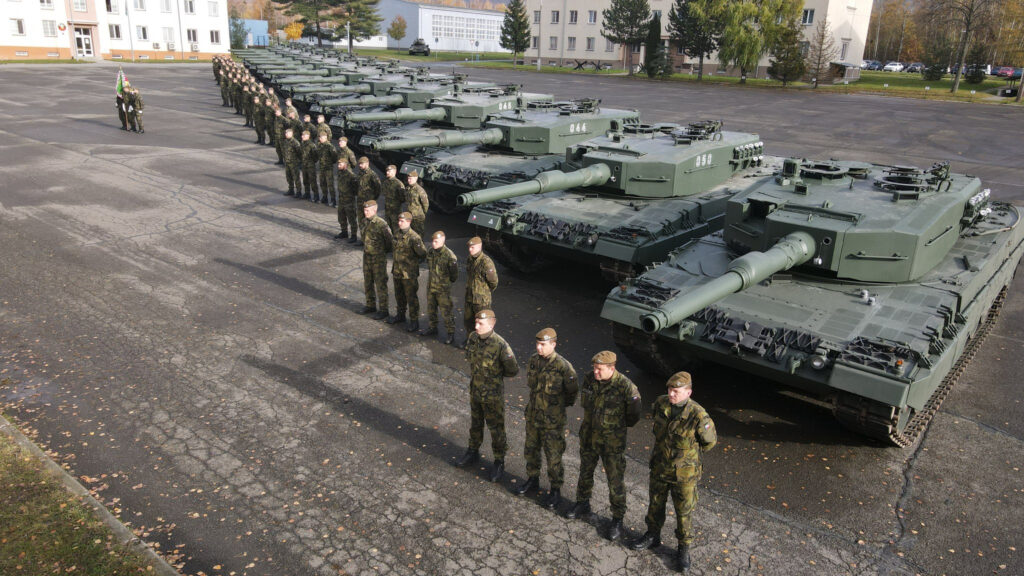
The Leopard tank has been exported widely, with users including Canada, Norway, Sweden, Czech Republic, Brazil, Hungary, and, more recently, Ukraine, reflecting its international reputation for reliability and effectiveness.
While it has seen limited combat compared with tanks like the US-developed M1 Abrams, it has been deployed in peacekeeping, stabilization, and training operations worldwide.
Modern upgrades have kept it relevant against 21st-century threats, including anti-tank guided missiles and improvised explosive devices.
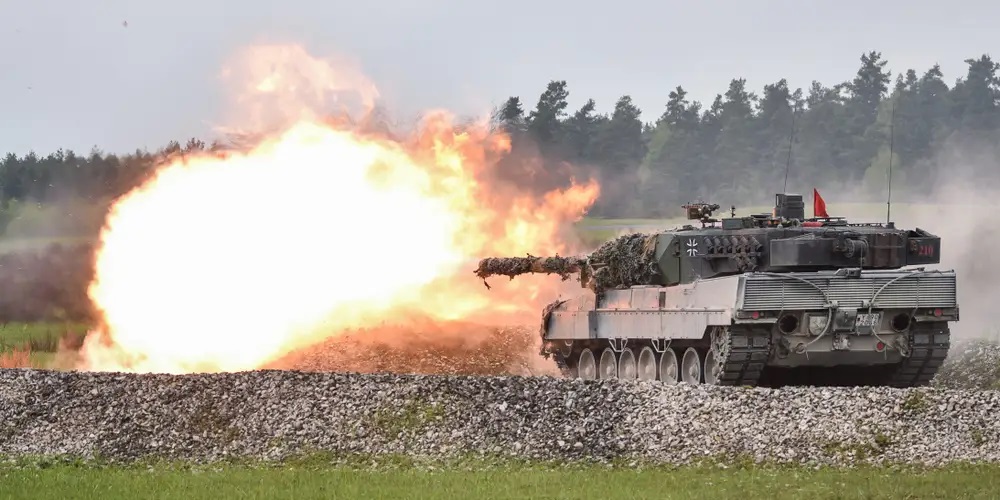
Through decades of evolution — from the Leopard 1’s speed-focused design to the highly survivable and networked Leopard 2 variants — the tank has proven adaptable to changing battlefield conditions and remains central to German armored forces.
Its combination of reliability, lethality, and upgrade potential ensures the Leopard tank will remain a pivotal force in modern armored warfare.