When seconds matter and the sky is crowded with fast, low-signature threats, the sensor that sees first often decides the outcome.
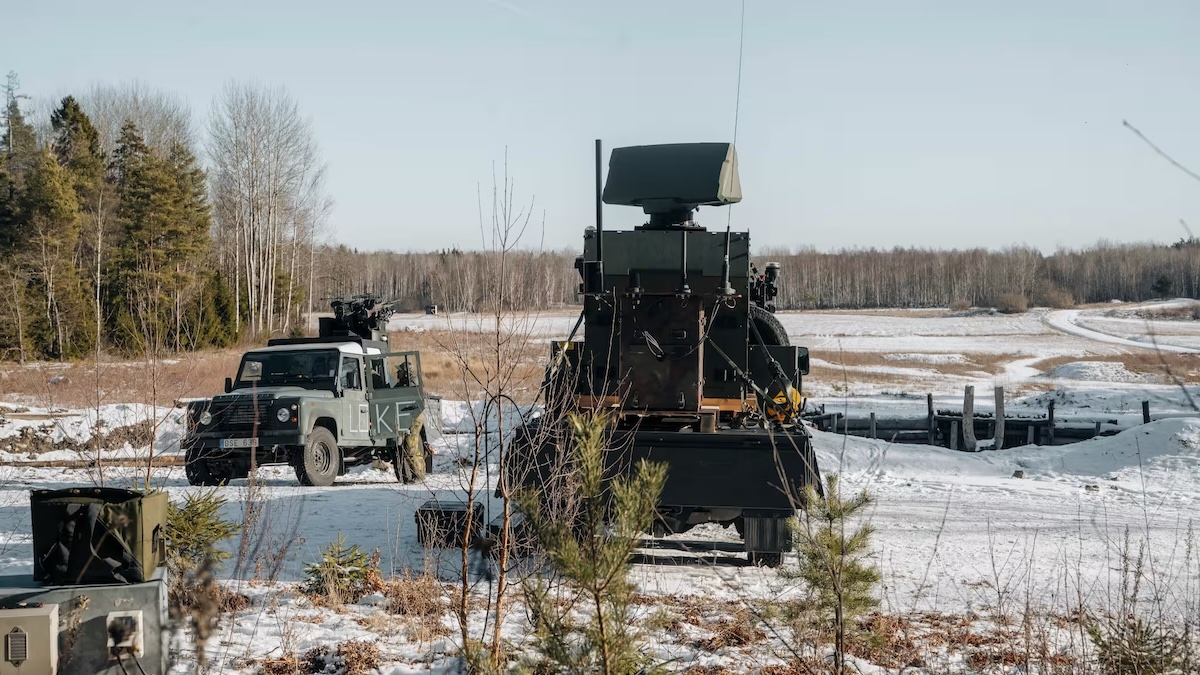
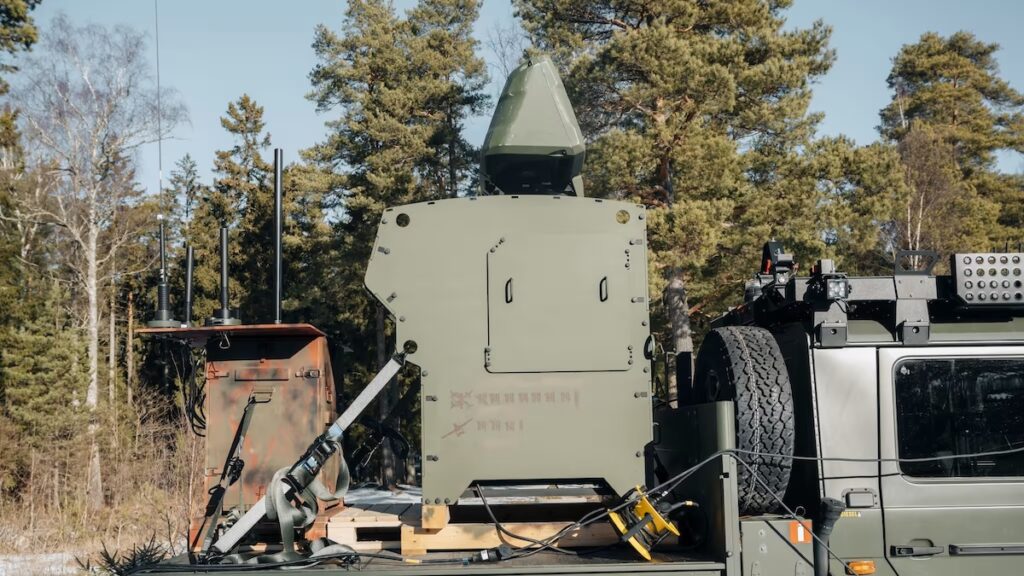
Saab’s Giraffe 1X radar brings that edge to the front line, delivering mobile, 360-degree air and surface surveillance in a compact, rapidly deployable package.
Its network-ready architecture enables rapid detection and tracking of drones, aircraft, and indirect-fire threats, feeding real-time data into networked command and air defense systems.
This explainer provides a quick but deep dive into the radar’s capabilities, operational impact, and global value.
Deconstructing the Giraffe 1X
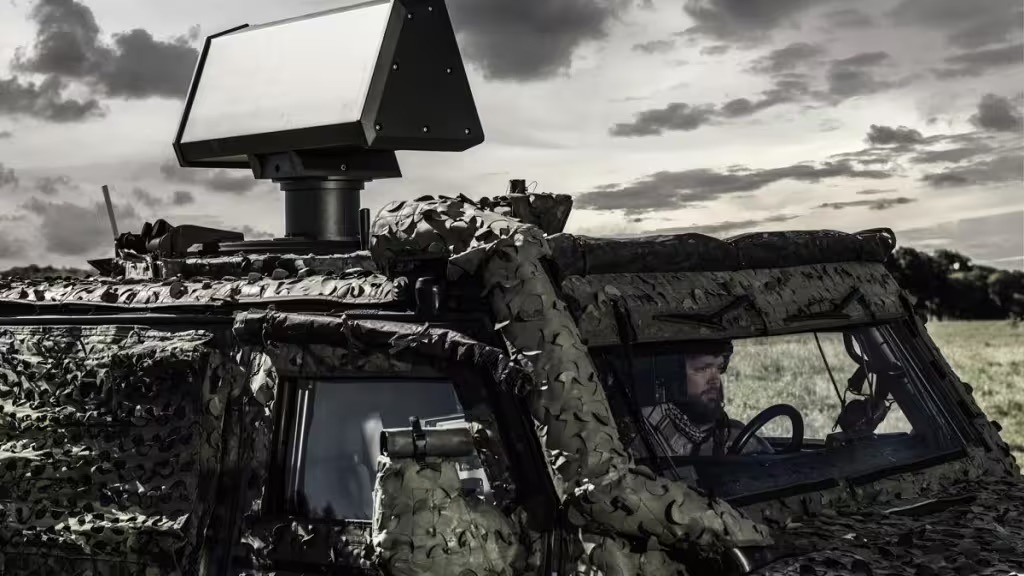
The Giraffe 1X is a compact, 3D Active Electronically Scanned Array (AESA) radar developed by Swedish firm Saab to provide air and surface situational awareness at the tactical level.
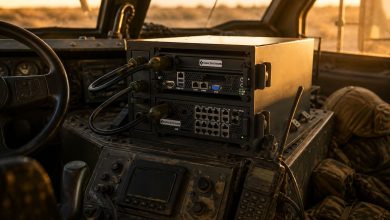
Unlike large fixed air-defense radars, the Giraffe 1X is designed for mobility, rapid deployment, and integration with small units. It weighs under 150 kilograms (330 pounds) and features a compact form factor that allows it to be mounted on light vehicles, transported by small teams, or deployed on a mast or tripod.
Its primary mission is to detect, track, and classify low-altitude aerial threats, including drones, helicopters, and slow-flying aircraft, while also monitoring ground and surface activity.
This makes it particularly well-suited for protecting forward bases, maneuver units, and critical assets against emerging short-range threats.
| Category | Details |
| Type | 3D, (AESA) short-range surveillance radar |
| Primary Missions | Air surveillance; ground-based air defense target acquisition; counter-drone; and counter-artillery, rocket, and mortar (C-RAM) sense-and-warn |
| Search Volume and Refresh | 360-degree coverage with full volume every second |
| Frequency Band | X-band operation for high-resolution detection |
| Range | ~75 kilometers (47 miles) instrumented range for land version (naval variant ~100 kilometers/62 miles) |
| Detection Highlights | Detects low, slow, small targets; dedicated Drone Tracker reduces false alarms |
| Weight and Mobility | Total system <150 kilograms (330 pounds) (topsides ~100 kilograms/220 pounds); suitable for vehicle, mast, or fixed platform integration |
| Deployment Modes | Mobile, deployable, fixed; can be operated locally or remotely |
| Power Consumption | ~2.3 kW peak, enabling low logistical footprint |
| Environmental Suitability | Operates in all climate zones (inland, coastal, desert, arctic) |
| Integration | Flexible interfaces for C2 systems, tactical data links, and weapon cueing |
| Special Capabilities | Simultaneous air/surface surveillance, RAM sense-and-warn, search-on-the-move functionality |
| Use Cases | Mounted on light vehicles, tactical units, fixed sites, or integrated into naval platforms (Sea Giraffe 1X) |
How the Radar Works
At the core of the Giraffe 1X is an AESA radar array, which allows it to steer its radar beams electronically rather than mechanically. This enables faster scanning, improved reliability, and the ability to track multiple targets simultaneously.
The radar provides three-dimensional tracking, meaning it can determine a target’s range, bearing, and altitude. This is critical when dealing with small drones or low-flying threats that can blend into ground clutter.
Advanced signal processing enables the system to distinguish real targets from birds, terrain, and weather effects, improving detection accuracy in congested environments.
Strengths, Limitations, and Upgrades
The defining strength of the Giraffe 1X is its balance of capability and portability. The addition of the Compact Radar Module has turned the already portable radar into a true rapid‑deployment solution, but it is not without limitations.
- Range and coverage constraints: Its maximum detection range (~180 kilometers/112 miles for aircraft; shorter for small drones or low-radar cross-section targets) limits its ability to cover large areas without multiple systems.
- Mobility trade-offs: Deployment still requires road access and setup time.
- Electronic warfare vulnerabilities: Susceptible to jamming, spoofing, or cyber attack if not integrated with countermeasures or resistant communication links.
- Weather and terrain effects: Extreme weather can degrade detection performance, while mountainous terrain may create blind spots.
However, its relatively low logistical footprint makes it attractive for expeditionary forces and smaller militaries, particularly those facing growing drone and rocket threats without the resources for large integrated air defense networks.
Role on the Battlefield
The Giraffe 1X is not a standalone air defense weapon; it is a sensor node. By continuously feeding high-quality targeting data to command systems, missile launchers, and other effectors, decision-makers can respond faster and more accurately.
This connectivity ensures that even small, mobile units benefit from the same situational awareness as larger formations, creating a layered, coordinated defense.
In practice, the radar supports:
- Short-range air defense units by cueing missile or gun systems.
- Counter-drone operations where early detection of small unmanned systems is essential.
- Force protection, providing early warning around bases, convoys, or temporary positions.
- Situational awareness for commanders operating in dispersed or expeditionary environments.
As air threats become smaller, cheaper, and more numerous, detection is no longer just a strategic problem; it is a tactical one. Countries such as the US, Sweden, Latvia, and the UK are procuring Giraffe 1X to enable their troops to respond more quickly and survive in increasingly contested airspace.