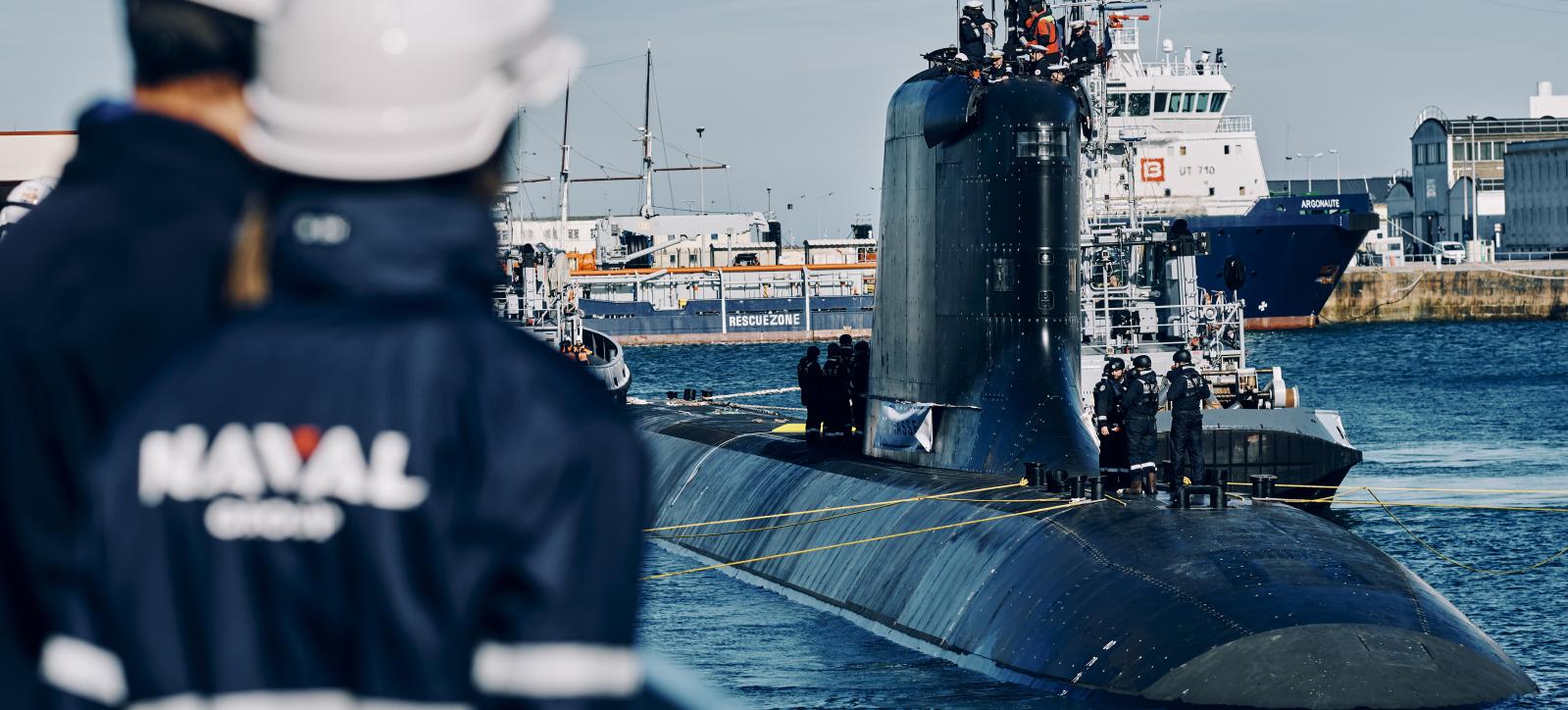
Naval Group has begun the initial sea trials of the French Navy’s fourth Barracuda-class nuclear-powered attack submarine.
The phase will include a series of activities to evaluate De Grasse’s (S638) capabilities in preparation for its commissioning into service later in 2026.
It follows continuous dock tests for equipment and systems after the vessel’s launch in 2025 and the induction of its nuclear reactor the same year.
The Suffren Submarine Program
The Barracuda initiative, also called the Suffren-class program, was launched in the early 2000s to replace Paris’ aging Rubis nuclear submarines, operational since the 1980s.
The new fleet will include six platforms that are all expected to be fully operational by 2030, with each system having a lifespan of approximately 30 years.
To date, the French Navy has admitted three Barracudas from 2022 to 2025. The remaining ships, alongside De Grasse, are now in different stages of development.
“The Barracuda program commits submarine forces until at least 2060, making it one of the major weapons systems of this century,” Naval Group said.
“A total of 2,500 women and men, including around 800 subcontractors from Naval Group, are currently contributing to the production of the Barracuda series.”
Specifications
The Barracuda system measures 100 meters (328 feet) in length, has a beam of 9 meters (30 meters), and can accommodate 60 personnel.
It is equipped with a K15 nuclear reactor that has an output of about 200,000 horsepower, two 13,000-horsepower turbo generators, two 640-horsepower emergency diesel generators, and an electric pumpjet.
The submarine carries multiple sensors for navigation and countermeasures, and is armed with land-attack missiles, anti-ship missiles, heavyweight torpedoes, and underwater mines.
The Barracuda can operate at more than 350 meters (1,148 feet) of depth, has a speed greater than 25 knots (29 miles/46 kilometers per hour), and supports up to 70 days of straight deployment.