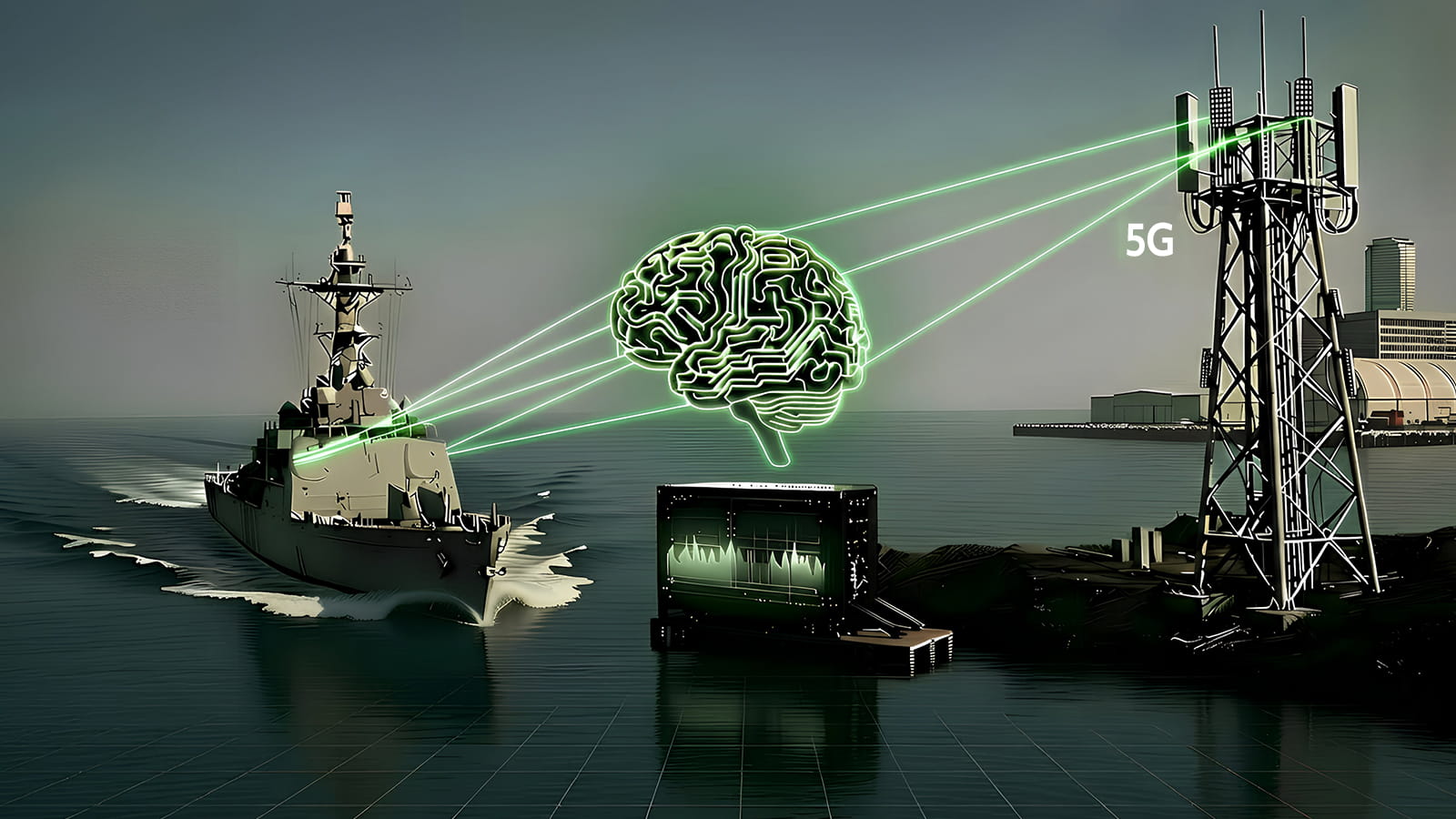
RTX’s BBN Technologies has been tapped to lead a multi-team effort aimed at allowing 5G networks and critical defense radars to operate on the same frequencies without interference.
The Advanced Spectrum Coexistence Demonstration program, sponsored by the US Department of Defense (DoD) and the National Spectrum Consortium, seeks to replace slow, manual spectrum reallocation methods with automated, real-time systems that detect and prevent conflicts between commercial and military users.
Current spectrum-sharing approaches can take tens of minutes to resolve interference, leaving both civilian 5G users and radar operators at risk.
In its first phase, the BBN-led team will develop a “smart spectrum manager” capable of predicting when a radar is active and reroute 5G traffic within seconds to avoid interference.
Later phases will expand this into a fully self-managing platform that follows preset rules to optimize spectrum usage automatically, with minimal human oversight.
The integrated system aims to boost usable 5G capacity by 50 percent, reduce unwanted radar interference by 20 decibels, and improve 5G link quality by a factor of 1,000 when both operate concurrently.
Testing and development will take place across Massachusetts, Texas, Virginia, and Indiana.
To build the system, BBN is coordinating a broad team of industry and academic partners.
Raytheon Advanced Technology will supply real radar signals and testing equipment. Ericsson Federal Technologies Group will bring 5G network expertise. Signal Processing Technologies and Novowi will contribute advanced interference detection and machine-learning-based spectrum sensing.
Federated Wireless will manage dynamic spectrum allocation, while Purdue University will provide machine learning models to accelerate interference predictions.
Advanced Spectrum Coexistence Demonstration
The Advanced Spectrum Coexistence Demonstration is part of a broader push by the US DoD to ensure that commercial spectrum expansion does not compromise national security.
Recent years have seen similar government-backed initiatives aimed at modernizing spectrum management.
In October 2025, InterDigital was awarded a contract to lead research and demonstration work on advanced spectrum coexistence for both civil and military applications, focusing on mid‑band dynamic spectrum sharing technologies.
Earlier projects, such as DARPA’s Spectrum Collaboration Challenge in 2024, tested AI-driven methods for multi-network coexistence, demonstrating that machine learning could substantially reduce downtime and improve reliability on congested bands.