US Navy Seeks Runway-Independent Maritime and Expeditionary Strike Drone

The US Navy is seeking a runway-independent maritime drone capable of long-range strikes to counter increasingly capable anti-ship threats.
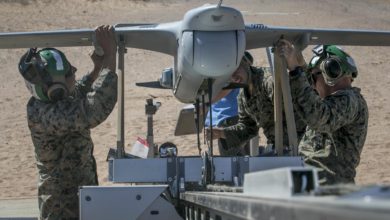
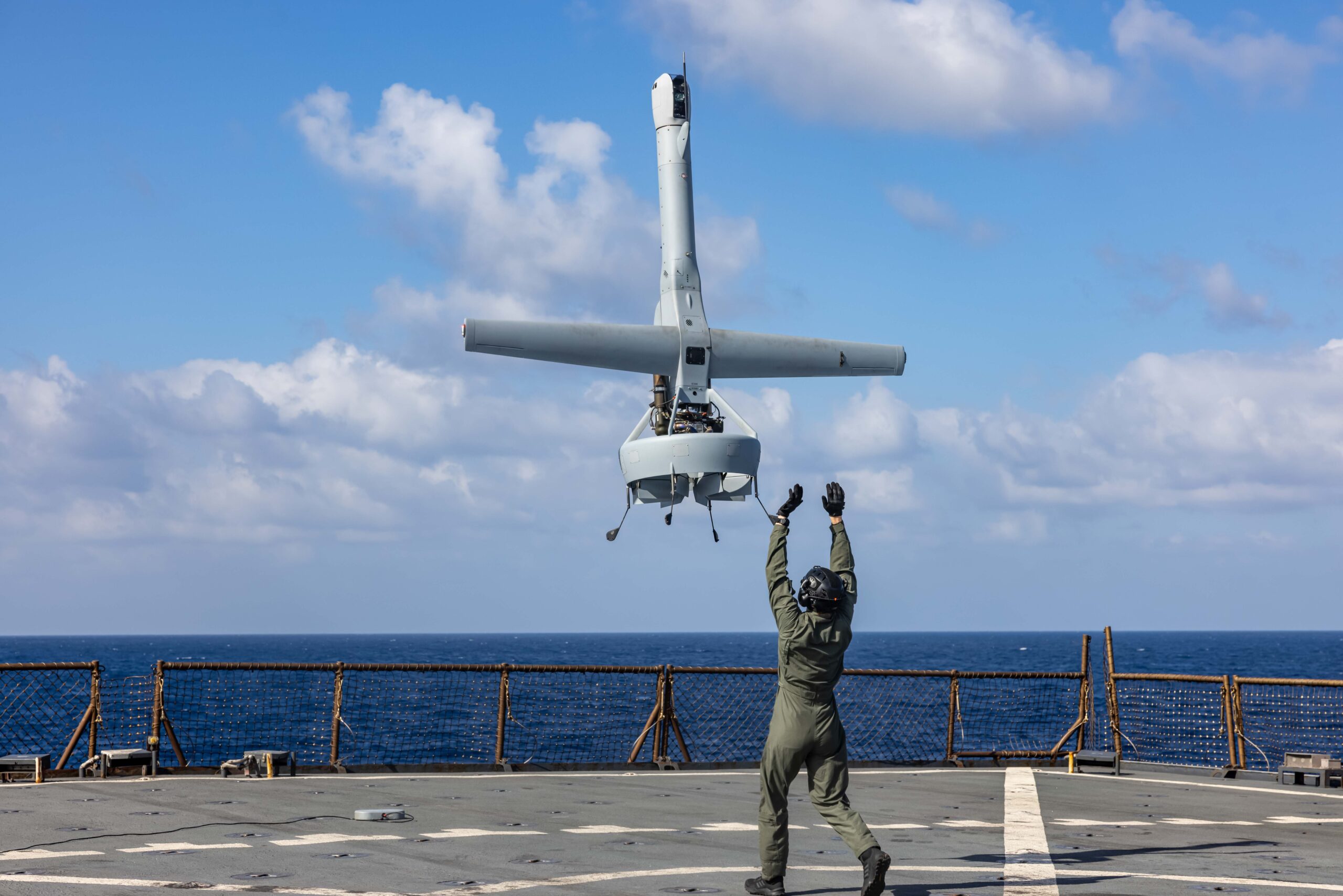
Dubbed the Runway Independent Maritime & Expeditionary Strike (RIMES), the platform must be an unmanned aerial system (UAS) that can launch, recover, rearm, and refuel with minimal infrastructure while providing persistent strike support to naval surface forces.
The effort is intended to mitigate constraints naval combatants face, including limited missile inventories, restricted at-sea replenishment, and reliance on fixed runways or large-deck carriers that may be vulnerable during high-end conflict, according to the Defense Innovation Unit’s solicitation notice.
The solicitation is open to US and foreign-owned companies, with responses due by February 27.
Expected Profile
The RIMES system must be able to carry 1,000-pound-class (454 kilograms) munitions already deployed by aircraft such as the F/A-18 and F-35B/C.
It must achieve a one-way range of at least 1,400 nautical miles (2,593 kilometers/1,611 miles) without reserves, translating to an operational radius of roughly 600 nautical miles (1,111 kilometers/690 miles) while carrying payload.
Its cruising speed is expected to be comparable to existing long-range strike systems.
The UAS must be capable of operating from expeditionary locations with limited support equipment and personnel.
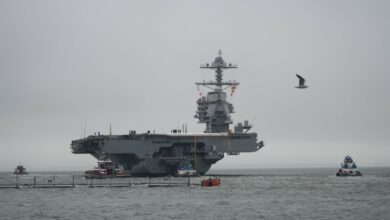
As a secondary objective, the navy is interested in solutions able to operate from vessels without large flight decks, such as the DDG-51 Arleigh Burke-class destroyer and littoral combat ships.
Solutions must also demonstrate readiness for significant physical prototyping within 12 months of an award.
Additional Capability Requirements
Beyond range and payload, the solicitation outlined a broad set of operational and technical requirements.
The UAS must integrate with existing naval combat systems and align with current operator workflows. It must also adopt a modular open systems architecture to support future upgrades.
It must function in contested environments and feature mission autonomy, including dynamic route replanning and in-flight retasking.
Cost effectiveness is a priority, with the navy seeking to balance survivability and mission success against procurement and development costs. Designs may emphasize either survivability or attritability, provided they remain viable in contested airspace.
The system must also require minimal personnel for launch, flight, recovery, maintenance, navigation, and communication, as well as minimize time and cost for maintenance and repair.