UAS Pioneer GA-ASI Set to Chart the Next Course in Aviation History

General Atomics Aeronautical Systems, Inc. (GA-ASI) does things differently.
In today’s defense industry landscape, big companies seem to want the Pentagon to do all the thinking for them. They get to work on solutions only after it’s clear there is money to be made and shareholders to keep happy.
Not GA-ASI.
From the first, the company has valued independent research and development over chasing contracts — seeing a need and building a solution before the customer realizes it’s an indispensable capability.
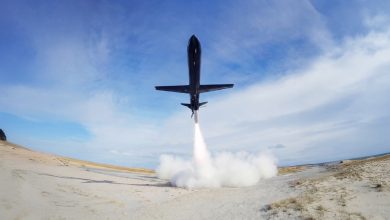
For example, in November 2023 GA-ASI’s self-funded Mojave Short Takeoff and Landing (STOL) aircraft took off from the deck of a British aircraft carrier, marking the first flight of a remotely piloted aircraft from a carrier outside the United States.
Mojave STOL’s historic first flight led to another such flight off the decks of a Korean amphibious landing ship a year later. Today, both countries are looking to field seaborne STOL uncrewed aircraft.
That’s just how GA-ASI does it: It’s a company of relentless innovators.
GA-ASI’s engineers, supported by its dedicated owners, are never content to wait for the threat to force them into innovation. Instead, the GA-ASI way is to always push the boundaries of what’s possible, advancing the state of the art, and putting relevant capabilities in the hands of its customers at speeds the company’s competitors struggle to match.
After more than three decades, GA-ASI is the global leader in Uncrewed Aerial Systems (UAS), mission payloads, software, and support.
At its founding in 1992 by Neal Blue, who remains the company’s chairman, GA-ASI was just a handful of engineers with an idea for a system that could be remotely piloted via a satellite connection to provide persistent real-time surveillance information from anywhere on the globe.
Today, GA-ASI has grown to nearly 10,000 employees, delivered more than 1,200 aircraft, amassed more than 9 million flight hours, and boasts more than 5 million square feet of advanced manufacturing space from which it continues to produce class-defining systems day in and day out.
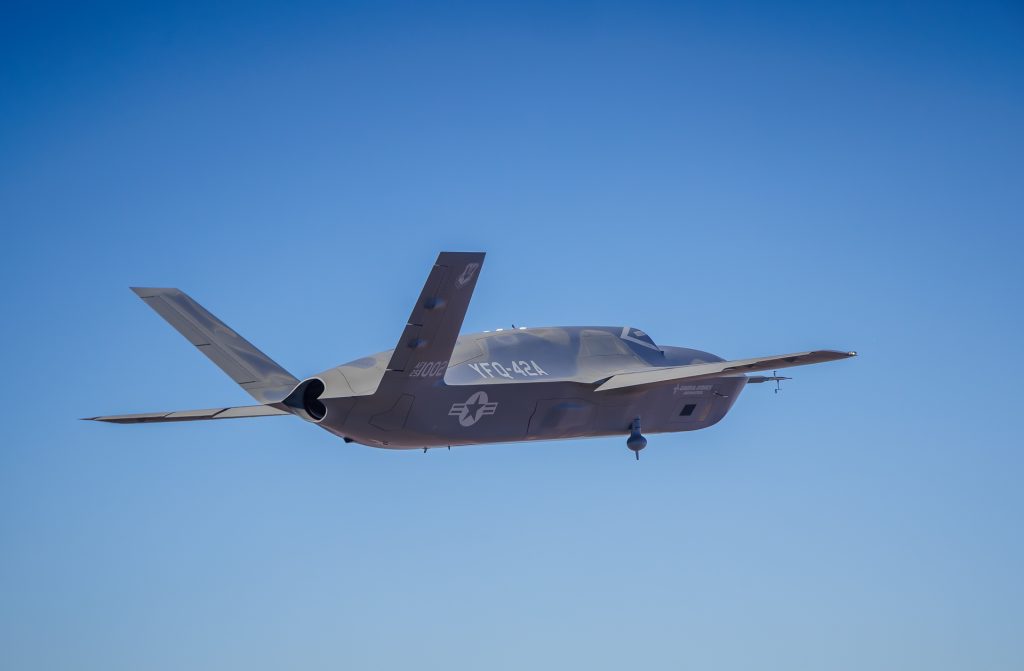
And while it continues to improve and upgrade legacy systems for its customers, true to its brand, the company today is pioneering the next generation of UAS powered by the latest advancements in computing, said David Alexander, GA-ASI’s president.
“We’re only at the very beginning of what advanced autonomy, artificial intelligence, and machine learning will do to revolutionize the way nations design their military forces, secure their borders, and protect their populations,” Alexander said.
👉 Read our full interview with GA-ASI’s president here: Leaning Into the Future of Uncrewed Airpower: A Conversation With GA-ASI President David R. Alexander
It Starts at the Top
Today, UAS are so ubiquitous, so integral to the modern battlefield, that it’s easy to forget that before GA-ASI developed the RQ-1 Predator® in the early 1990s, UAS were little more than small-scale research projects.
Then the world changed. After the 9/11 terrorist attacks, persistent unmanned surveillance and long-range aerial strike capabilities became core requirements for US military operations. Predator’s moment had arrived, and GA-ASI was about to take off.
So, how was it that a small San Diego-based company with an interest in unmanned aircraft was in the right place at the right time to change the field of aviation forever? According to Alexander, it was because the company was built from day one to anticipate customer needs for UAS.
“It starts at the top,” Alexander continued. “Unlike the big publicly traded defense companies, we’ve always been a privately held company. Our chairman, Neal Blue, is a lifelong aviation enthusiast and patriot who has dedicated his life to realizing his vision for uncrewed systems. With the support of the Blue family, from the very beginning we’ve been able to enjoy a significantly higher independent research and development budget than what you find among the other major primes. That’s how we stay ahead of need.”
Mojave STOL, mentioned earlier, was designed in 2021 as a demonstrator to showcase the myriad advantages of an unmanned platform able to operate from austere, unimproved, or even combat-damaged runways.
Following its game-changing flights from the decks of British and Korean warships, it’s clear that the aircraft is poised to expand what’s possible in naval aviation and amphibious operations in the 21st century.
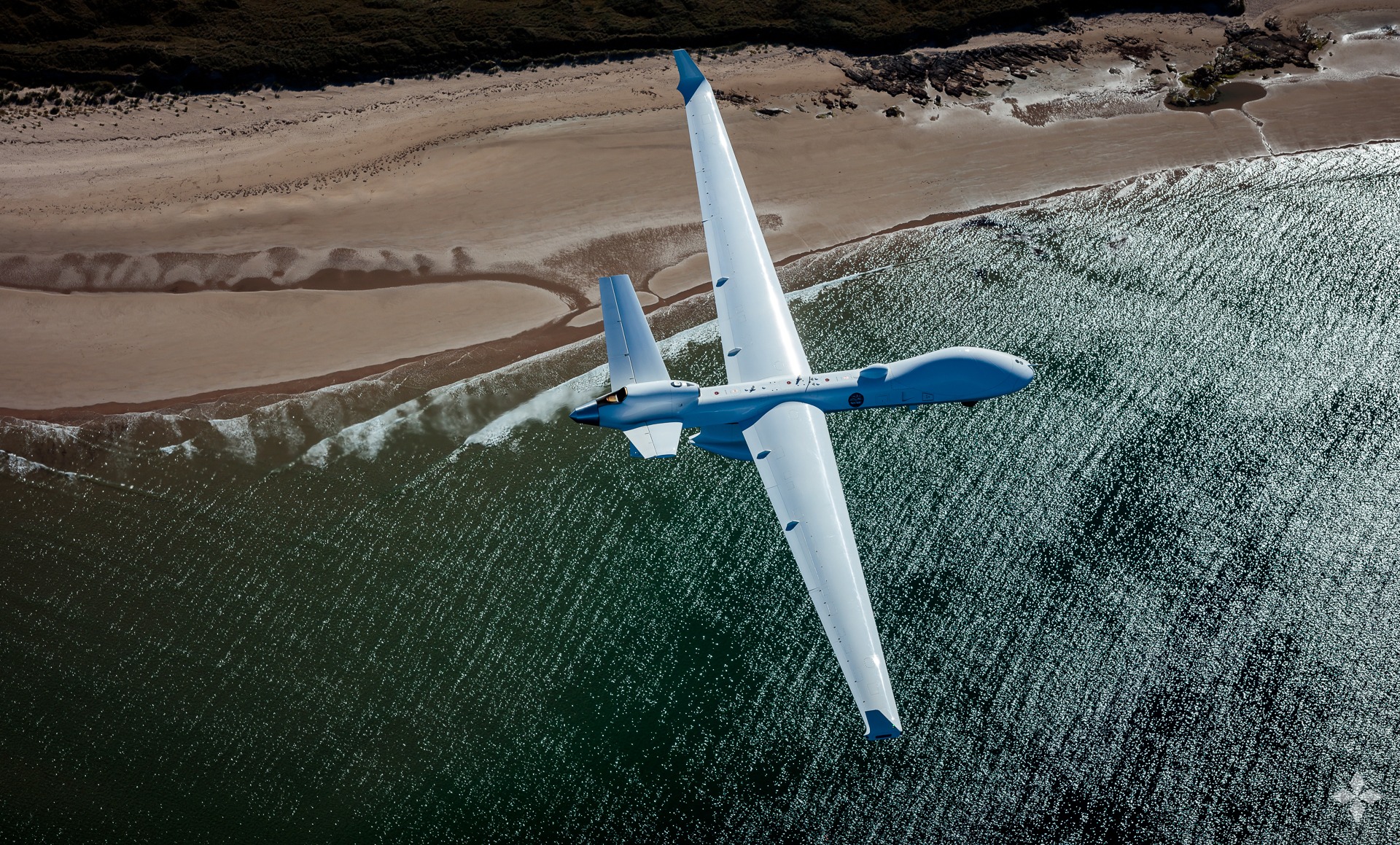
The company is expanding its STOL investment with versions of its Medium-Altitude, Long-Endurance (MALE) MQ-9B SkyGuardian® and SeaGuardian® aircraft, bringing unparalleled agility to the most capable and versatile UAS in their class.
Changing the Game Again
GA-ASI has continued to pioneer unmanned aviation, and today it’s bringing unmanned aerial systems into the age of autonomy and jet-powered combat aviation.
The company’s modular Gambit Series of aircraft is at the forefront of the effort to field the world’s first uncrewed fighter jets, which will semi-autonomously collaborate with advanced crewed fighters to extend the reach and strike capacity of air wings in the very near future.
Built around a common core platform, Gambit aircraft share essential hardware such as the landing gear, baseline avionics, and chassis. This modular approach reduces costs, accelerates production, and enhances interoperability across variants.
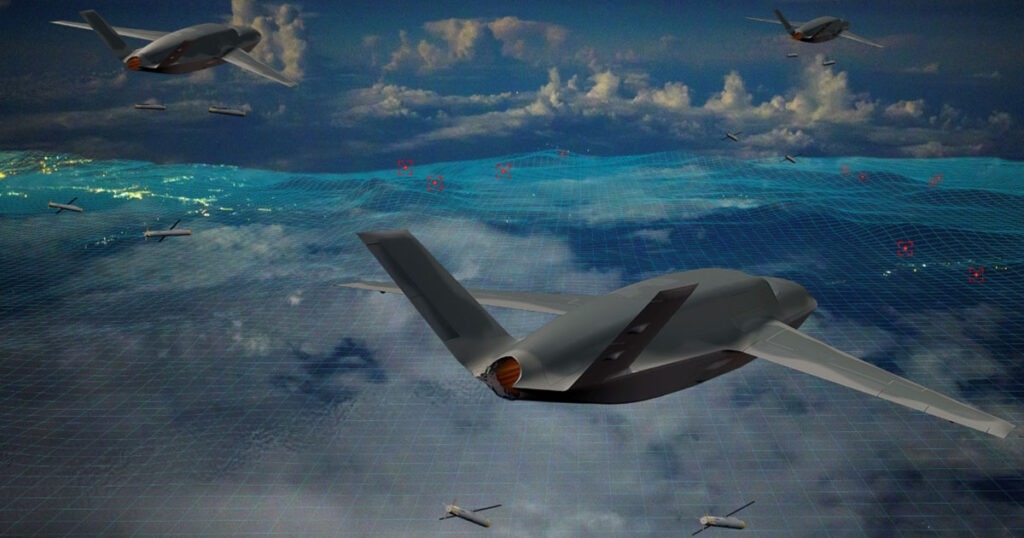
capabilities for air-to-ground missions. Image: Artist’s rendering/GA-ASI
On the MALE UAS front, GA-ASI is adding a powerful Airborne Early Warning and Control (AEW&C) capability to its MQ-9B lineup to provide highly reliable and accessible AEW capabilities to nations that may not have the need or the resources for traditional crewed AEW&C platforms.
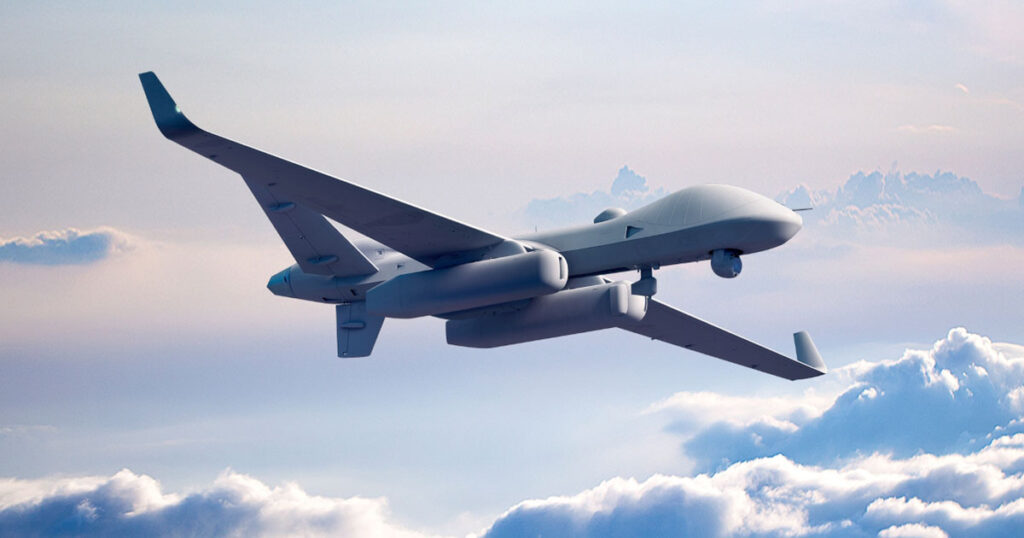
It’s that commitment to advancing capabilities while driving down operating costs that has led nations from every corner of the globe to operate GA-ASI’s aircraft.
From India to Canada, Poland to Japan, the United Kingdom to the UAE, and the United States to the Netherlands — countries like these and more rely every day on the company’s products to safeguard their borders and national interests, protect the lives of their service members, execute search and rescue operations, and respond to natural disasters.
And with its zeal to innovate the autonomous and intelligent systems of the future, GA-ASI is poised once again to make aviation history.