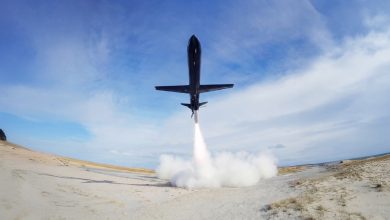
Leaning Into the Future of Uncrewed Airpower: A Conversation With GA-ASI President David R. Alexander

General Atomics Aeronautical Systems, Inc. (GA-ASI) has been a global leader in uncrewed aerial systems (UAS) for over 30 years, making them an indispensable tool for militaries in the 21st century.
But with the return of competition between great powers and a renewed focus on high-tech conflict, GA-ASI finds itself entering a new era and evolving to meet new kinds of threats.
In an interview, GA-ASI President David Alexander delves into how the company plans to stay ahead in this rapidly evolving defense landscape.
Whether it’s developing new capabilities for the company’s flagship MQ-9B program or breaking new ground with the US Air Force’s first uncrewed fighter jet, Alexander discusses the strategic investments and forward-thinking approach that have positioned GA-ASI to tackle the problems of the 21st-century battlefield.
Q: GA-ASI has been at the forefront of UAS for over three decades. How do you stay ahead of the rapidly evolving demands of the modern battlefield?
Our experience gives us a unique advantage.
With over 9 million flight hours logged across all kinds of operational environments — ranging from permissive to highly contested — our systems encounter the realities of modern conflict every day. This operational insight allows us to adapt our platforms to emerging threats quickly.
Another key factor is our commitment to anticipating future needs rather than reacting to them. Being privately held by the Blue family has allowed us to focus on long-term innovation.
Unlike publicly traded defense companies, we’re not constrained by quarterly earnings pressures. This freedom has enabled us to consistently invest in independent research and development (IRAD) at levels that exceed those of our competitors. That investment is what keeps us ahead of the curve.
Q: Can you share an example of how your independent investment has helped you deliver cutting-edge solutions?
Certainly. A great example is our work on the US Air Force’s Collaborative Combat Aircraft (CCA) program. The Air Force provided a clear vision of the challenges they wanted to solve and the capabilities they needed, which allowed us to conduct extensive testing and evaluation independently.
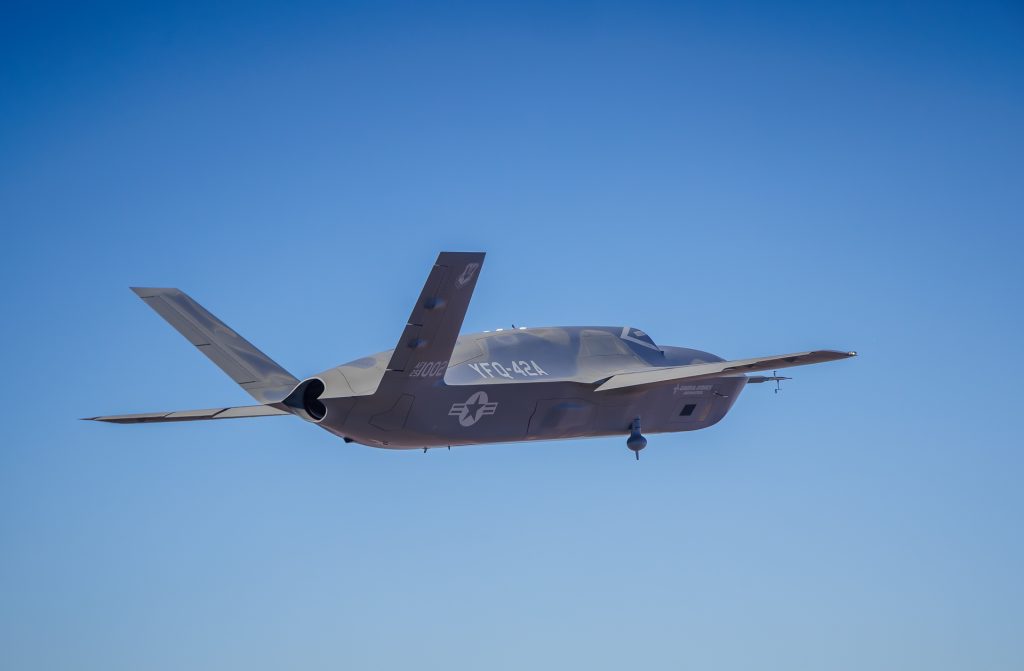
Through early IRAD investments, we’ve been able to reduce risk across the entire system — from the nose to the tail — and ensure that it can be mass-produced using our existing facilities. This proactive approach enabled us to begin serial production of the YFQ-42A CCA as soon as the program launched.
Today, we’re building these aircraft at scale, and that progress is a direct result of the groundwork laid through independent investment.
Q: The MQ-9B has seen global adoption, but CCAs are gaining significant attention. How do you balance focus between these two platforms?
It’s important to understand that these platforms address different mission requirements and complement each other. Think of them as tools in a toolbox — each designed for specific tasks.
The MQ-9B remains an essential part of our portfolio, offering unmatched multi-mission, long-endurance capabilities at a fraction of the cost of crewed aircraft. It’s particularly well suited for missions in regions like the Indo-Pacific or the Arctic, where persistent ISR and long-range capabilities are critical.
We’re also constantly enhancing the MQ-9B to ensure its relevance. In 2025, we partnered with Saab to develop an Airborne Early Warning and Control (AEW&C) mission package for MQ-9B SkyGuardian®, achieved military type certification in the United Kingdom on their version of MQ-9B, known as Protector, and advanced the platform’s cooperative engagement capabilities to work seamlessly with crewed fighters.
At the same time, CCAs are crucial for generating affordable mass and achieving air superiority in high-end conflicts. Our YFQ-42A, the first CCA to take flight, is a testament to our leadership in this area.
Both platforms are indispensable, and we’re committed to advancing them simultaneously.
Q: How do you ensure CCAs remain cost-effective while delivering cutting-edge capabilities?
Affordability and relevance are central to our approach. To achieve this, we developed the Gambit Series to be a modular family of uncrewed aircraft built around a common core. This design philosophy allows us to tailor aircraft to specific missions while maintaining significant component commonality, reducing costs and speeding up development.
So far, the Gambit Series includes six mission-specific variants, covering areas such as ISR, air-to-air combat, stealth reconnaissance, advanced training, carrier-based operations, and air-to-ground missions.
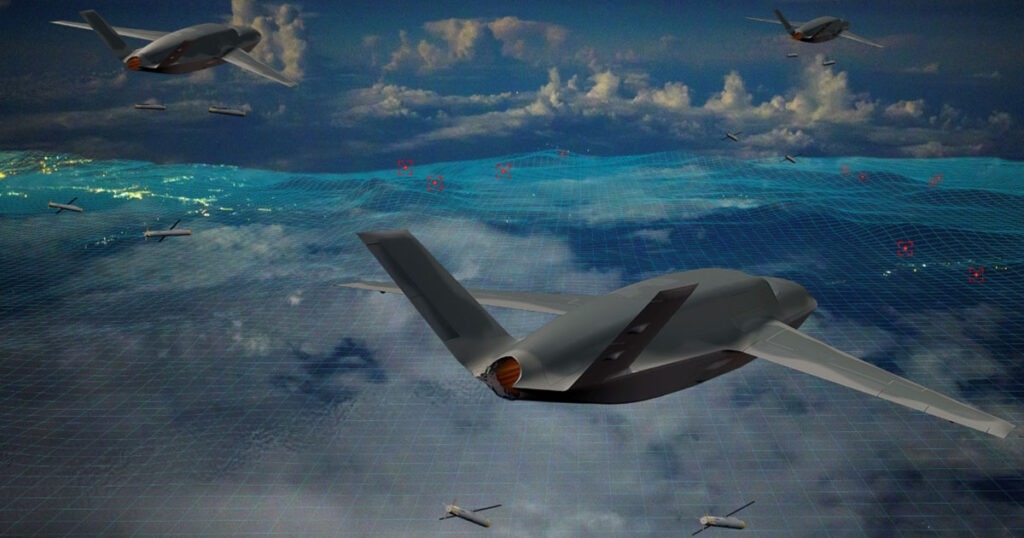
By sharing 70 percent of components — such as the landing gear, avionics, and chassis — we’ve created a scalable and interoperable solution that meets diverse operational needs without driving up costs.
Q: What’s on the horizon for GA-ASI as you continue to innovate in 2026?
We’re focused on expanding the boundaries of what’s possible. For the MQ-9B, we’re preparing to test our AEW&C mission package later this year. On the CCA front, we’re advancing the YFQ-42A toward fielding as quickly as possible. We’re also continuing live flight tests with platforms like our MQ-20 Avenger® to explore new levels of operational autonomy.
Our ultimate goal is to equip militaries with the right tools for the right missions, ensuring they can meet the challenges of today and tomorrow.
I have every confidence in our team’s ability to deliver on that promise.