Pentagon Urges Low-Cost Physical Defenses to Counter Drone Threats

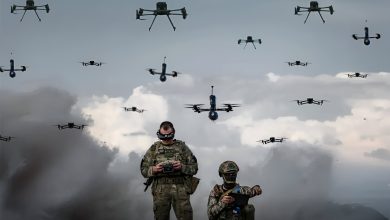
The US Department of Defense has released a three-page guidance document calling for expanded use of passive physical measures to protect critical infrastructure from drone threats.
The recommendation, published by the Pentagon’s dedicated counter-drone unit Joint Interagency Task Force 401 (JIATF 401), is intended for military installation commanders, local law enforcement, and security forces responsible for safeguarding sensitive defense and civilian sites.
It advised a revamp in infrastructure security planning, warning that traditional access-controlled areas are now vulnerable to actors just outside such locations.
‘Harden, Obscure, Perimeter’
Central to the guidance is the “Harden, Obscure, Perimeter” strategy, which focuses on transforming the physical environment to cut “access, visibility, and opportunity” instead of relying on commonly deployed anti-drone systems.
It cited low-cost, readily available solutions that can be implemented immediately and deter even consumer-grade drones.
Suggested measures include structural shielding, overhead netting, tensioned cables, structural shielding, visual clutter, permanent and temporary barriers, decoy equipment, and revision of crowd and workforce flow design.
The paper also pushed for expanded perimeter, using increased patrols, checkpoints, layered zones, and staff training to spot suspicious behaviors.
This approach is expected to strain unmanned aerial system (UAS) batteries, degrade links, expose operators, and create a larger safety buffer.
Moreover, the guidance highlighted susceptibility beyond military facilities, including events and transit centers, power and communications sites, and public institutions with predictable routines.
Vital to Homeland Defense
US Army Brig. Gen. Matt Ross, director of JIATF 401, framed the guidance as a critical piece to the broader domestic security mission.
“When we talk about Homeland defense, we’re not just talking about military bases, power grids and ports; we’re talking about places where Americans gather,” Ross said.
With major international events such as the World Cup approaching, he added, “the security of our stadiums, for example, is a national priority.”
Issues on Counter-UAS Rules
The guidance follows a late January warning from the Pentagon’s Office of the Inspector General, which revealed that unclear policies are leaving some American bases exposed to UAS incursions.
That report claimed that confusion over which bases qualify as “covered assets” under federal law is limiting commanders’ ability to detect or neutralize drones, even at sites tied to sensitive operations.