How Washington Is Turning Security Into a Manufacturing Strategy
Allies face a new price for US protection: aligning their industries with Washington’s defense priorities or risk falling behind.

With the 2026 National Defense Authorization Act (NDAA) signed into law on December 18, the United States is no longer merely defending a “rules-based order.” It is building what increasingly looks like a “factory-based order,” where influence is measured in production lines rather than diplomatic norms alone.
At $900.6 billion, the NDAA’s scale is striking. But the deeper shift is cultural.
For middle powers and much of the Global South, the message is becoming harder to ignore: partnership with Washington now comes with industrial expectations.
Access to US protection increasingly depends on contributions to the American defense industrial base, privileging co-production and supply chain alignment over traditional soft power.

Diplomacy on the Assembly Line
For decades, US primacy rested on a dual track of military dominance and diplomatic persuasion. That balance is now visibly tilting. The State Department’s 2026–2030 strategic plan emphasizes securing access to critical infrastructure and leveraging the US industrial base as core diplomatic objectives.
While the NDAA itself does not mandate foreign aid cuts, it aligns with FY2026 budget proposals that slash State Department and USAID funding by as much as 22 percent.
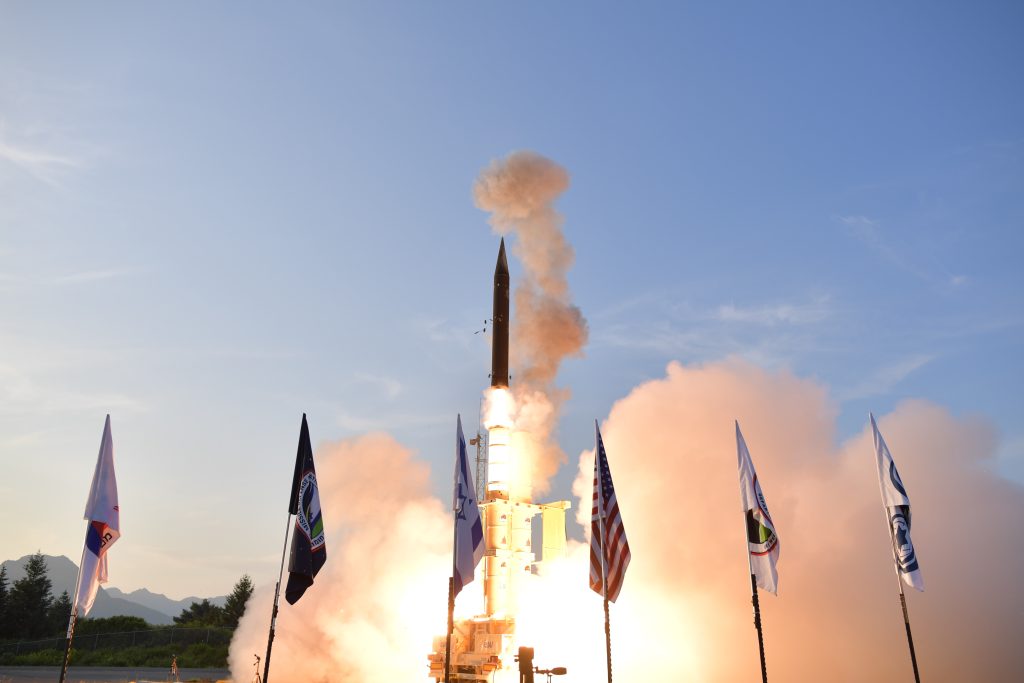
Diplomacy risks becoming less about mediation and more about facilitating arms transfers, with systems like Patriot and THAAD emerging as a form of geopolitical currency. The diplomat of the future, in this model, looks less like a negotiator and more like a procurement closer.
The Limits of Hardware-First Policy
The limitations of this hardware-first approach are already visible in the Middle East. Syria’s fragile post-Assad transition illustrates the gap between military provisioning and political stabilization.
The NDAA allocates billions for regional missile defense and US-Israel co-production, but offers little to address the social, sectarian, and economic fractures that define post-conflict governance.
Treating security as a subscription service may provide shields, but it cannot extinguish the fires beneath them, leaving ideological vacuums that extremist groups or rival powers are eager to fill.
Industrializing the US Defense Sector
This industrial turn is not limited to foreign policy. At home, Washington is imposing unprecedented discipline on its own defense sector.
The January 7 executive order on “Prioritizing the Warfighter in Defense Contracting” restricts stock buybacks and dividends for major contractors that fail to meet production timelines or underinvest in capacity.
Combined with NDAA provisions such as the SPEED and FoRGED Acts, the message is blunt: deterrence now depends on output.
By raising innovation award thresholds and streamlining procurement, the United States is betting that industrial velocity — not technological elegance alone — will define power in a multipolar world. It is a wartime posture imposed during nominal peace.
The Cost to Allies
For allies, however, this shift comes with costs. The NDAA’s Partnership for Indo-Pacific Industrial Resilience pressures countries such as Japan and India to align domestic manufacturing with US technical standards.
While framed as cooperation, many partners view this as an attempt to Americanize global supply chains, forcing a choice between US-centric systems and cheaper, more flexible alternatives offered by China’s Belt and Road Initiative.
Across Europe, similar anxieties are taking shape. NATO allies facing increased scrutiny of their industrial contributions are accelerating parallel initiatives, such as the European Sky Shield, to hedge against overdependence on US systems.
The goal is not to abandon Washington, but to maintain strategic autonomy in a world where security partnerships increasingly resemble supply contracts.

The Strategic Trade-Off
The United States may succeed in revitalizing its manufacturing base and strengthening deterrence through sheer output. But there is a strategic risk embedded in this approach.
Diplomacy requires patience, credibility, and empathy — qualities not easily captured on a balance sheet. A nation fluent only in the mechanics of power may struggle with the art of leadership.
Partners seeking cooperation on climate change, economic inequality, or digital governance will find little reassurance in relationships defined primarily by production quotas and weapons transfers.
As the American Century evolves into an American Arsenal, Washington faces a choice. Industrial strength can underpin leadership, but it cannot replace persuasion.
Power without persuasion is force, and force alone rarely sustains alliances. A policy that values the bolt over the olive branch risks leaving Washington with fewer friends, even as its factories hum at full capacity.

Imran Khalid is a geostrategic analyst and columnist on international affairs, with regular contributions to international outlets including Newsweek, The Hill, Foreign Policy in Focus, Nikkei Asia, Brussels Morning, Munich Eye, InfoLibre, DC Journal, Devex, Boston Herald, Japan Times, Mail & Guardian, and EU Reporter.
His commentaries have also appeared across leading European, African, and Asia-Pacific publications.
The views and opinions expressed here are those of the author and do not necessarily reflect the editorial position of The Defense Post.
The Defense Post aims to publish a wide range of high-quality opinion and analysis from a diverse array of people – do you want to send us yours? Click here to submit an op-ed.