Leonardo DRS has won a subcontract to provide advanced infrared sensor payloads for the Space Development Agency (SDA)’s Tracking Layer Tranche 3, marking a key contribution to the US military’s expanding space‑based missile defense architecture.
Under the award, Leonardo will design, build, integrate and test infrared mission payloads that will fly aboard satellites in the SDA’s Tracking Layer Tranche 3 constellation.
The sensors are intended to detect and track ballistic and hypersonic missiles from launch through interception, supplying precision tracking data that can feed into missile defense interceptors and command systems.
John Baylouny, Leonardo’s chief executive officer, said that “these investments allow our people to push the boundaries of advanced sensing and space payload manufacturing to support a wide range of national security priorities.”
Advancing Missile Defense
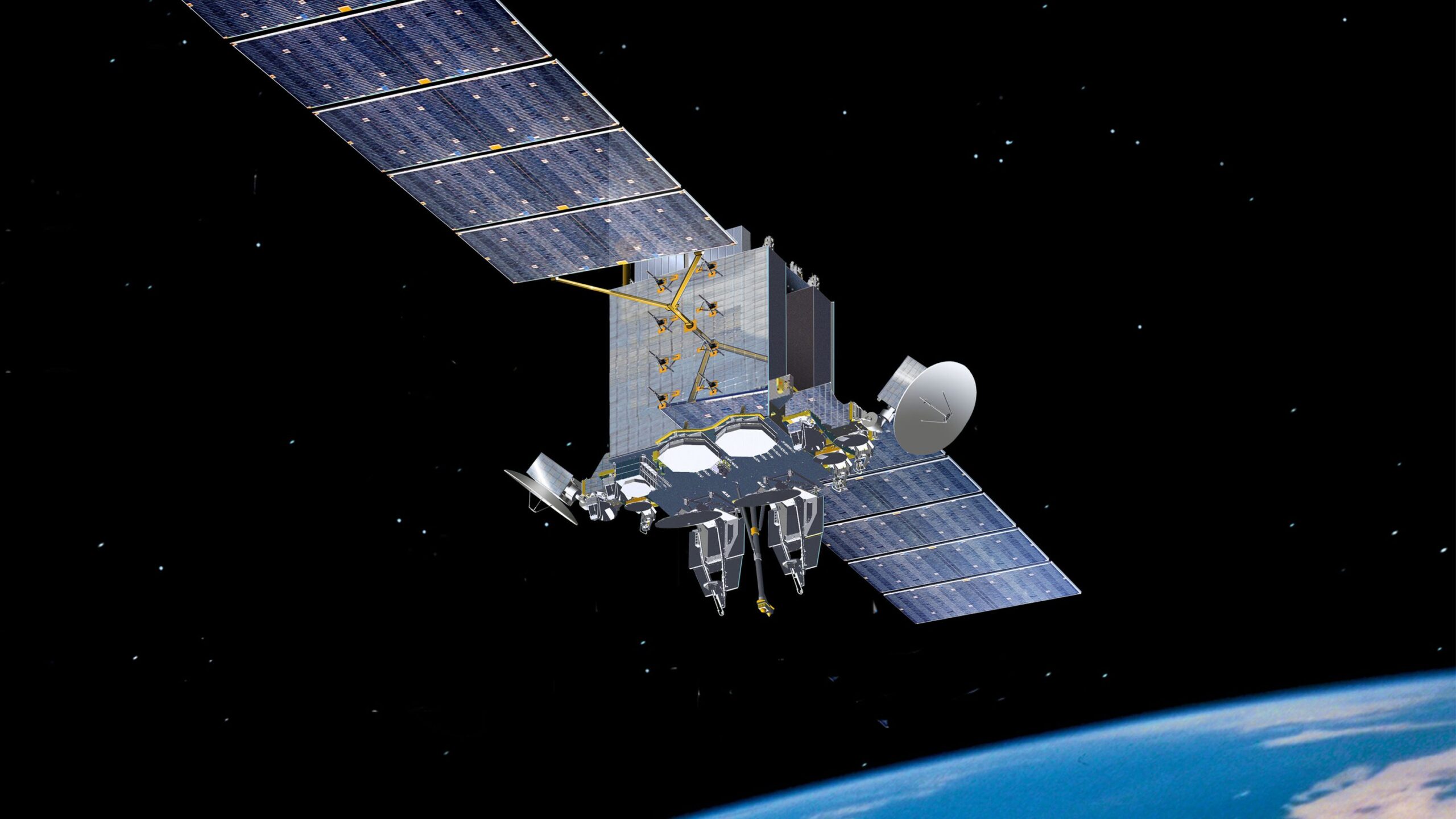
The Tracking Layer Tranche is part of SDA’s Proliferated Warfighter Space Architecture, a growing network of low Earth orbit satellites built to provide continuous, global missile warning and tracking capability.
In December 2025, SDA awarded $3.5 billion in contracts across four major defense firms — Lockheed Martin, Rocket Lab USA, Northrop Grumman, and L3Harris Technologies — to build 72 Tracking Layer satellites slated for launch beginning in fiscal year 2029.
The satellites will form an integrated constellation designed to work with SDA’s Transport Layer — a mesh network that moves data quickly between space and terrestrial systems — offering near‑continuous coverage and faster kill‑chain closure against evolving missile threats.
SDA’s approach refreshes space assets roughly every two years, accelerating deployment of the latest sensors and data links to stay ahead of emerging threats.