Diffraqtion, a US startup developing quantum-enabled imaging satellites, has raised $4.2 million in pre-seed funding to advance its “quantum camera” technology, which could enhance space situational awareness and reduce the cost of high-resolution orbital imaging.
The funding combines venture investment with a non-dilutive SBIR Direct-to-Phase 2 contract from DARPA, focused on tracking and characterizing objects in congested Earth orbits.
Quantum Imaging for Faster, Cheaper Space Monitoring
Diffraqtion, spun out of research at MIT and the University of Maryland, is developing a “quantum camera” based on years of academic work in quantum optics and photonics.
The system is designed to improve resolution and processing speed compared with conventional optical sensors, potentially allowing smaller and lower-cost satellites to perform tasks currently requiring larger platforms.
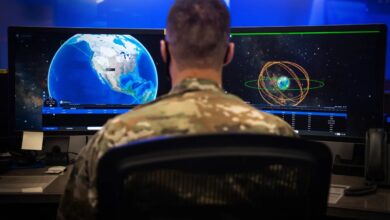
The technology could help governments and commercial operators better monitor small or fast-moving objects in congested orbits, a growing concern as the number of satellites and orbital debris increases.
Diffraqtion also sees potential for Earth observation applications — including environmental monitoring, agriculture, and disaster response — though these remain at an early stage.
Early Recognition, Upcoming Demos
In recent months, the company has won multiple awards, including first place at the SLUSH 100 startup competition and a “Best Space Innovation” award from TechConnect.
It is currently participating in the US Space Force’s Apollo Accelerator program, which supports early-stage space companies developing dual-use technologies.
Looking ahead, Diffraqtion plans ground-based “on-sky” demonstrations of its imaging system with the University of California Observatories in early 2026, followed by space-based tests at a later date.
The company has not disclosed a timeline for operational satellite deployment.