Turkish defense shipbuilder Desan will establish its first overseas facility in Malaysia, marking a significant expansion of Ankara’s growing maritime footprint in Southeast Asia.
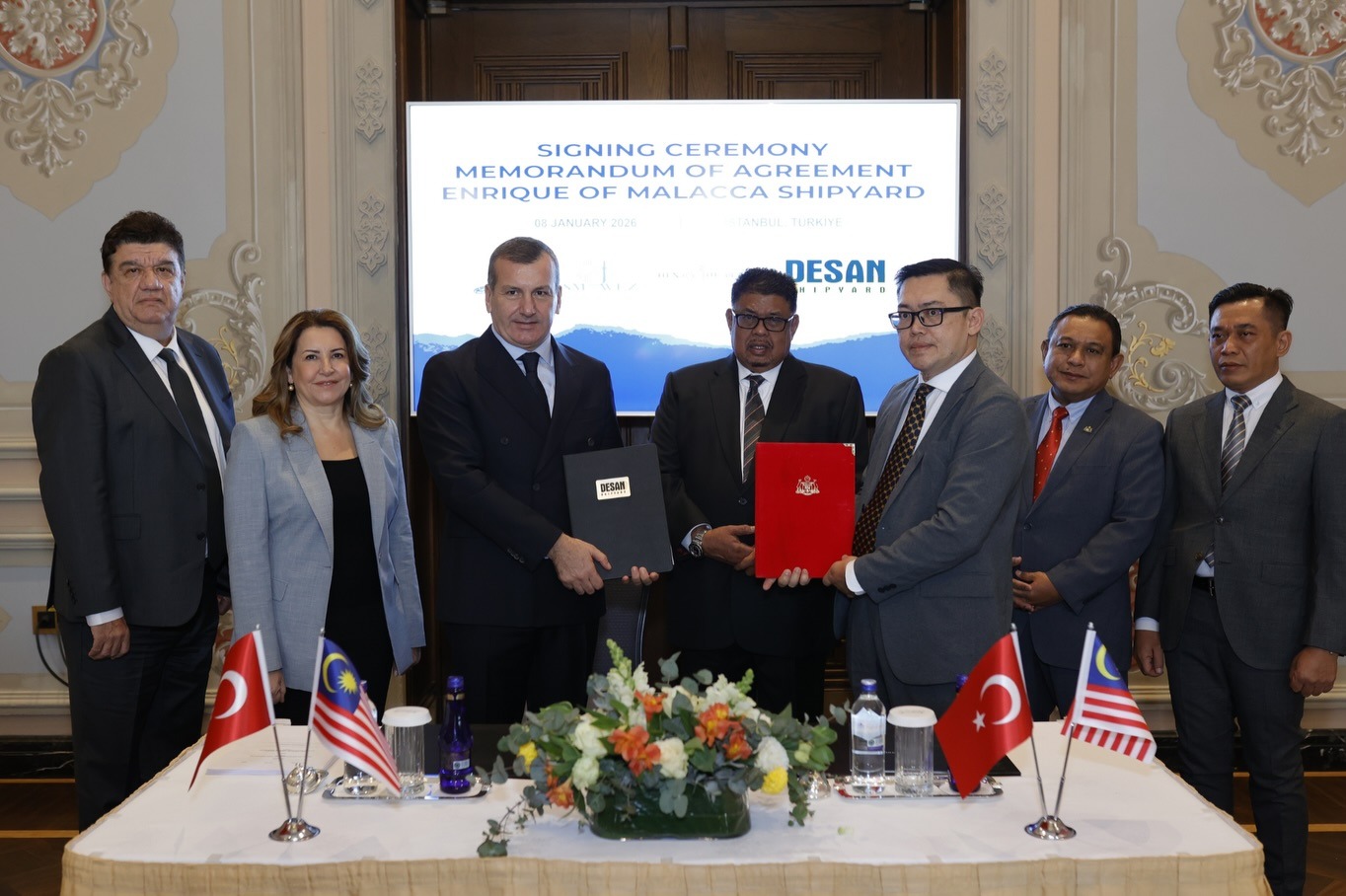
The company signed a joint venture and cooperation agreement with Straits of Melaka Waterfront Economic Zone (SM-WEZ), a state-owned entity under Malaysia’s Malacca government, to develop the hub within the coastal region.
The project was formally launched in Istanbul, where officials specified that the future center will cover sustainment, overhaul, and upgrades of both military and commercial vessels on top of assembly works.
Engineering studies for the project have begun, with bathymetric surveys and soil assessments already finalized.
The shipyard will span approximately 171 acres (69 hectares) and is expected to break ground in early 2026. Desan aims to make the facility operational within two years, positioning it along one of the world’s busiest maritime trade corridors.
Building Second Coast Guard Vessel
The investment builds on Desan’s existing cooperation with Kuala Lumpur, particularly the construction of a Multi-Purpose Mission Ship (MPMS-1) for the Malaysian Maritime Enforcement Agency, the government’s official coast guard service.
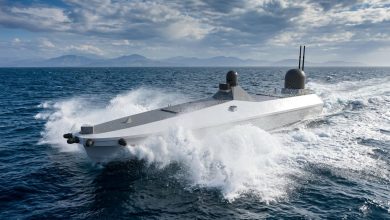
Days prior to announcing the Malacca effort, the Turkish company secured a contract for a second platform under the MPMS program, which will be fitted with advanced sensors, weapons, communications systems, and an unmanned surface vessel.
The steel-cutting ceremony for MPMS-1 was held in July 2025, and the patrol boat is expected to be delivered by 2029.
Commenting on the recent milestones, Desan board Chairman Cenk İsmail Kaptanoğlu said the company’s growing cooperation with Malaysia opens a long-term industrial partnership focused on technology transfer and shared capacity building.
“We believe that both developments will further deepen the strategic cooperation between Turkey and Malaysia and contribute to creating lasting value for the regional maritime ecosystem,” he said.