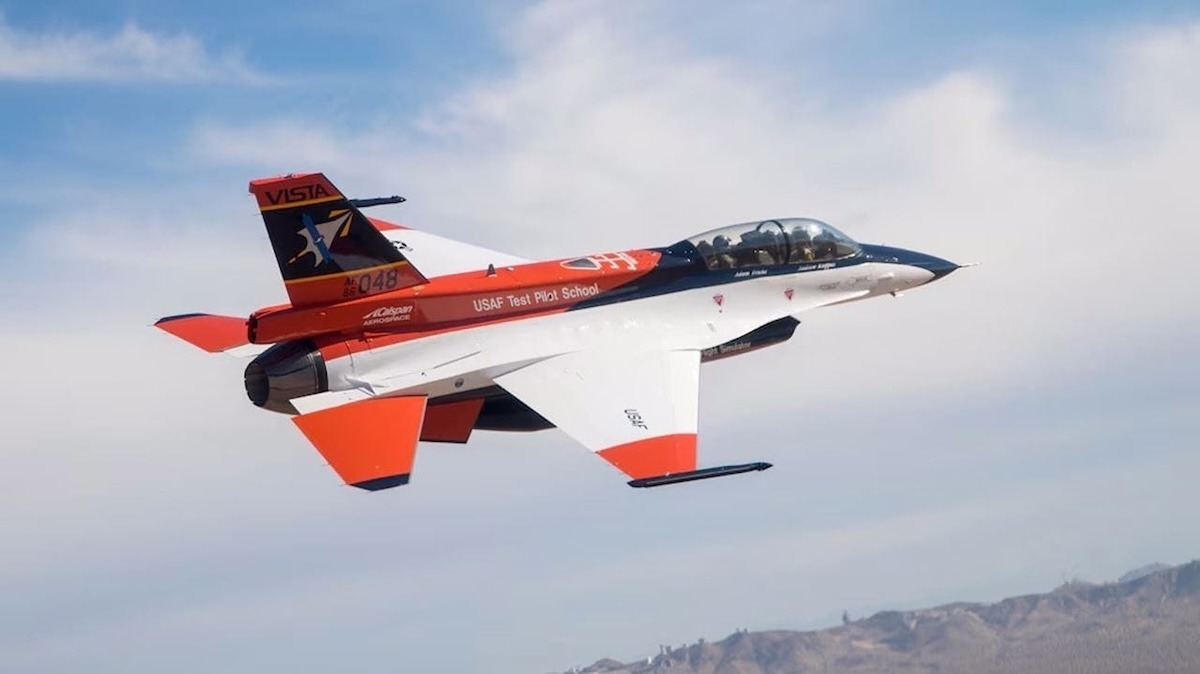
The US Air Force (USAF) has selected Raytheon’s PhantomStrike radar for its autonomous X-62A Variable In-flight Simulation Test Aircraft (VISTA) as part of a series of upgrades.
PhantomStrike is a compact, air-cooled fire-control radar built around gallium nitride technology, engineered to reduce size, weight, and power demands compared with current AESA systems.
Weighing in at under 150 pounds (68 kilograms), the radar is designed for uncrewed aerial vehicles, light-attack aircraft, and rotorcraft.
Through digital beamforming and steering, the radar supports multiple operating modes and can interweave ground and air targeting at a lower cost compared to similar systems, according to Raytheon.
PhantomStrike completed its maiden flight test in May.
As autonomous aircraft help strengthen US air superiority, PhantomStrike is “uniquely designed to help them do it,” said Dan Theisen, president of Advanced Products & Solutions at Raytheon.
In addition to the VISTA, the PhantomStrike radar is integrated into South Korea’s FA-50 light combat aircraft.
X-62A VISTA
Developed by Lockheed Martin Skunk Works in collaboration with Calspan Corporation for the USAF Test Pilot School at Edwards Air Force Base in California, VISTA is a modified F-16D Block 30 that incorporates Block 40 avionics and features an open systems architecture.
It serves as a hybrid test aircraft for machine-learning applications and specialized software, and complements a similar USAF program, the Viper Experimentation and Next-Gen Operations Model – Autonomy Flying Testbed (VENOM-AFT), based on the F-16.
In February 2023, the VISTA completed its first-ever trial piloted by an artificial intelligence agent, demonstrating within-visual-range maneuvering capability against AI red-team agents.
In 2025, the experimental aircraft will receive upgrades that will be “pushing the aircraft into more complex scenarios, and will evaluate AI systems integration, collaboration, and make decisions in real time,” Defense News reported.