The US has selected the Damen Shipyards’ LST-100 design as its future medium landing ship (LSM) after a year-long reset of the program.
In a video statement, navy and marine corps leaders said the decision reflects a broader overhaul in how the services acquire ships, emphasizing speed, affordability, and real-world readiness.
Secretary of the Navy John Phelan, who approved the design in November, described the LST-100 choice as the next major step in reshaping naval shipbuilding, pointing to its rapid fielding potential and lower risk compared to previous custom concepts.
The US Navy will begin with a full 3D design and standardized equipment layout to ensure long-term maintainability and reliability.
Phelan said the service is adopting a build-to-print, commercially influenced approach to reduce technical risk and speed up construction. A competitively awarded vessel construction manager will oversee execution while multiple US shipyards compete for production work.
The navy paid Damen $3.3 million for the LST-100 technical data package, according to a report by USNI News.
The program’s reset followed last year’s cancellation of initial LSM proposals, which the navy deemed unaffordable. Admiral Daryl Caudle, Chief of Naval Operations, said the service applied “common sense,” reassessing existing hulls that satisfied marine corps requirements and then evaluating them for producibility and cost.
The LST-100 Landing Ship Transport
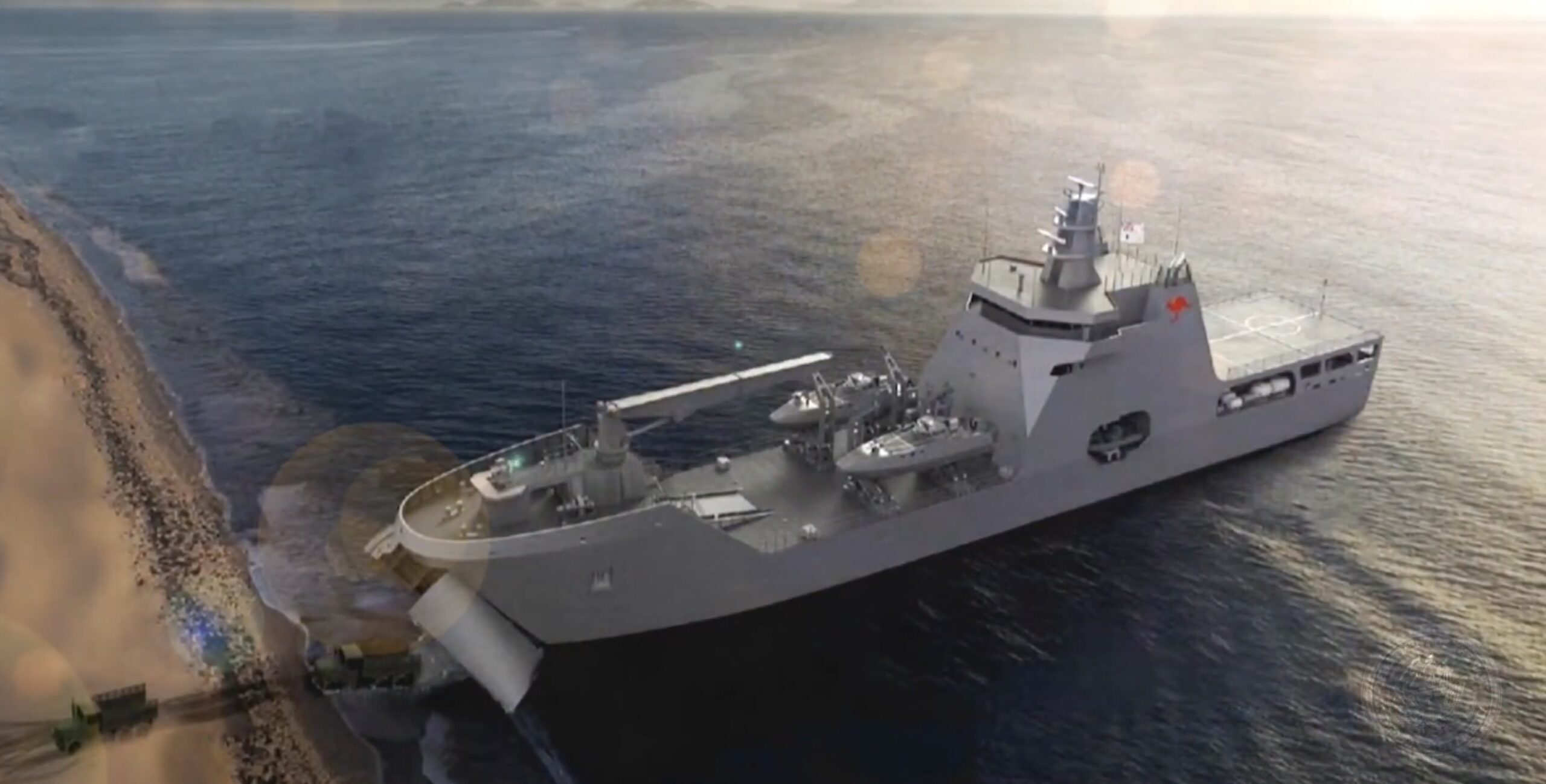
The LST-100 is a compact ocean-going landing ship tailored for amphibious lift, logistics support, and littoral maneuver.
At roughly 100 meters (328 feet) long and about 4,000 tons in displacement, the vessel can transport troops, vehicles, ammunition, and supplies directly onto unimproved beaches using its bow ramp.
With a range of more than 3,400 nautical miles (3,912 miles/6,296 kilometers), the LST-100 fits the niche between large amphibious assault ships and small connectors, making it well-suited for distributed marine operations in contested environments.
Naval Sea Systems Command called the non-developmental design a key enabler for “rapid fielding of this urgently needed capability.”
Marine Corps Commandant General Eric Smith highlighted the operational need behind the selection, calling the medium landing ship essential for theater mobility in the Indo-Pacific and other contested regions.
US-Damen Relationship
In recent years, Damen Shipyards has contributed designs and technical expertise to US and allied vessel programs.
The US has used the company’s Stan Patrol platforms as the basis for maritime security vessels supplied to partner nations in the Caribbean and West Africa, helping those countries expand their coastal patrol and interdiction capabilities.
These vessels were also the basis of the US Coast Guard’s fast response cutters.
Damen’s technical cooperation and licensing agreements have led to over 200 vessel builds under license in the US since the mid-1990s, including patrol boats and other support craft, supplying design data and engineering support to US yards.