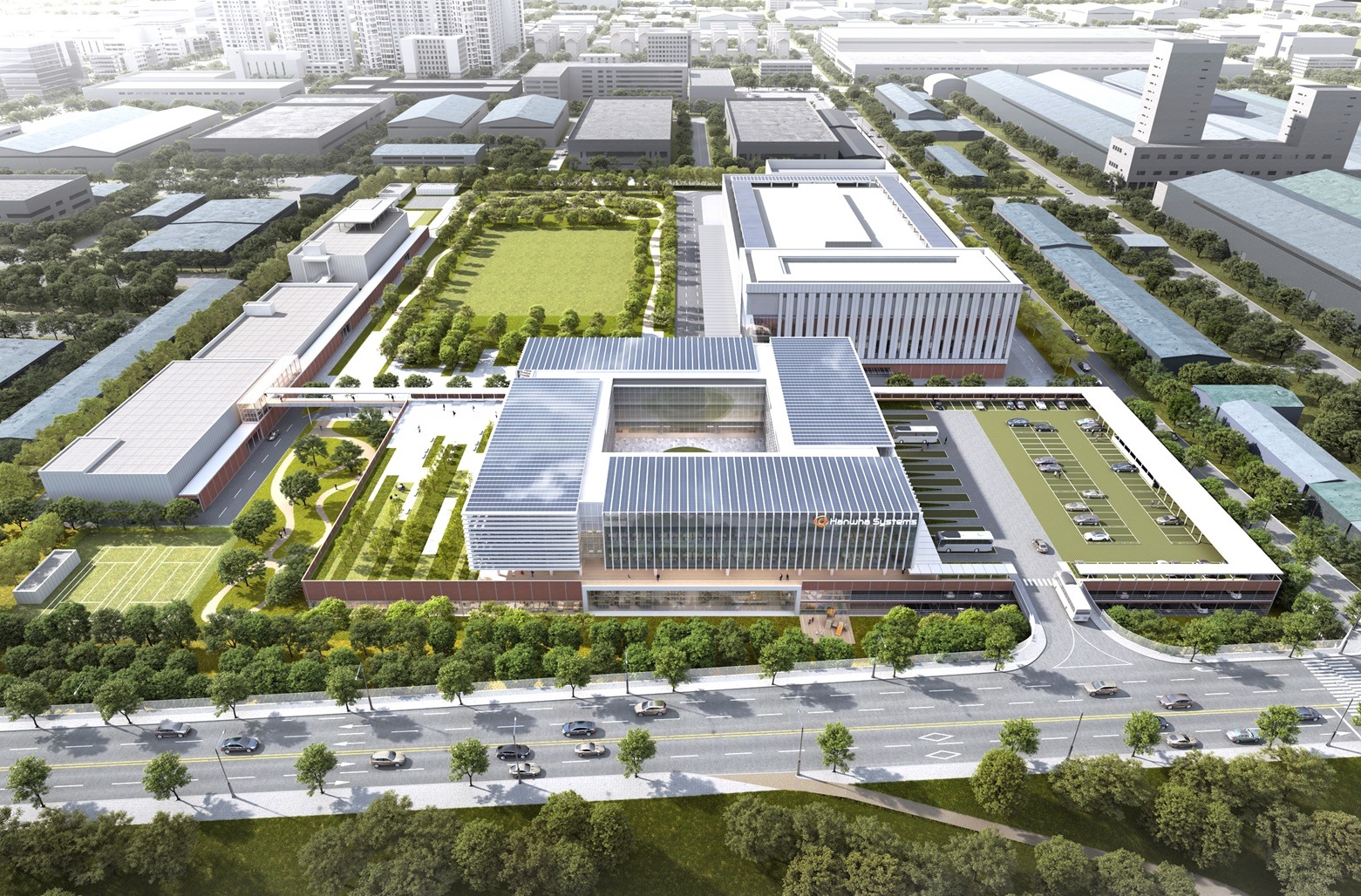
Hanwha Systems has completed the expansion and relocation of its production base in Gumi, South Korea, moving from a 45,000-square-meter (484,375-square-foot) facility to a new 89,000-square-meter (957,639-square-foot) facility.
Under an investment of 280 billion won ($190 million), the facility will support domestic projects aimed at strengthening self-reliant national defense, expanding technology development and production to meet global security demands.
The new site includes a cleanroom of approximately 5,000 square meters (53,820 square feet), the largest in South Korea’s defense industry. It is dedicated to the production of electro-optical products and core radar components for various weapon systems.
Additionally, the facility features a 2,300-square-meter (24,730-square-foot) materials management room, equipped with logistics robots and automated systems. It handles over 20,000 types of raw materials and components.
It is designed to maintain optimal material conditions and ensure production stability and supply efficiency.
Moreover, the upgraded production base will support Hanwha Systems’ work on AI-enabled combat systems, unmanned ships, autonomous navigation, and intelligent propulsion control.
Export Production
The new Gumi facility supports the production and export of key naval defense systems, including multi-function radars and combat systems, which are central to the company’s international projects.
In recent years, Hanwha Systems has exported Cheongung-II multi-function radars to Iraq, Saudi Arabia, and the United Arab Emirates.
The UAE contract is valued at approximately $1.1 billion, the Saudi Arabia contract at around $867 million, and the Iraqi deal at about $644 million.
On the combat system side, recent exports to the Philippines equipped six 2,400-ton offshore patrol vessels.
This followed installations on two 3,100-ton corvettes in April 2022.
Earlier projects included combat system performance upgrades on three additional frigates in 2019.