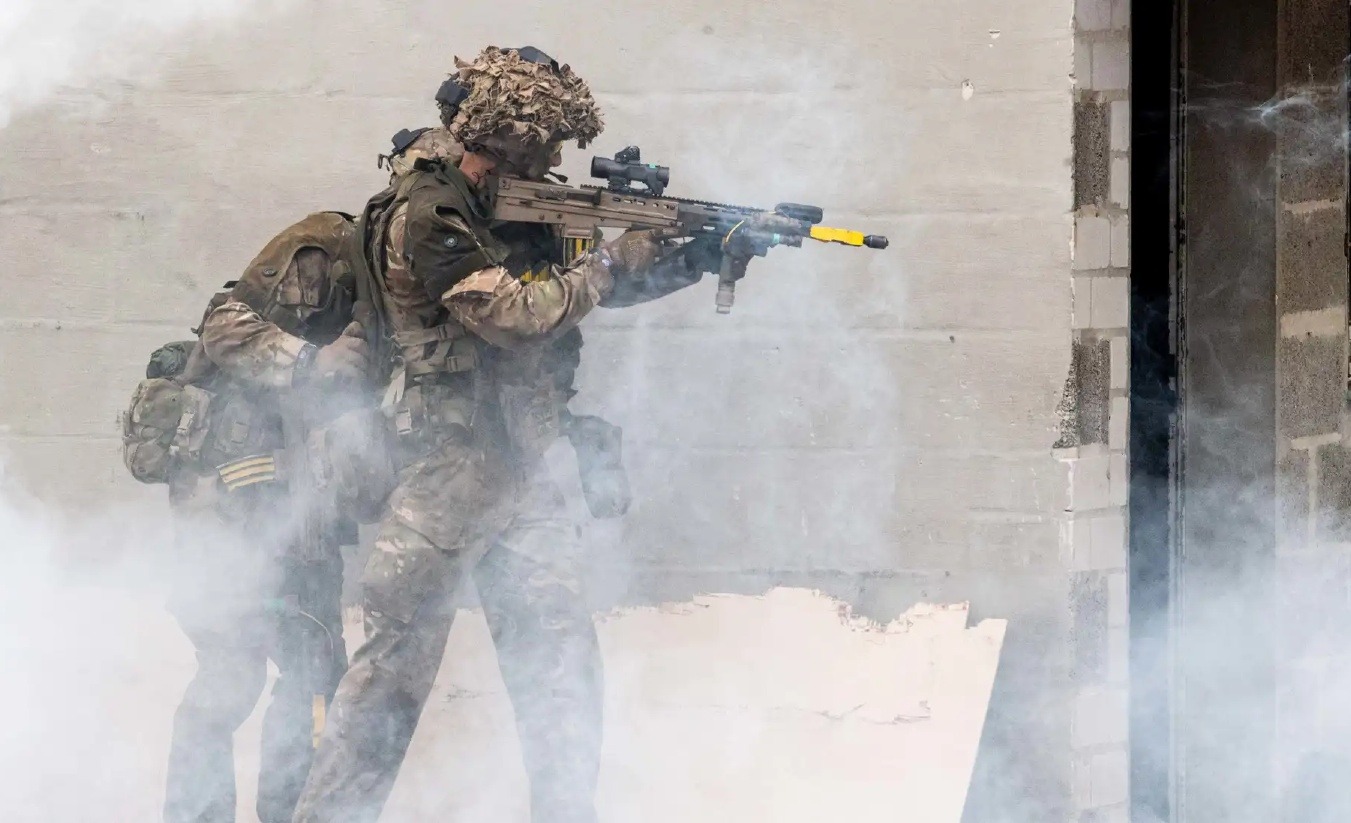
Over 800 soldiers from Britain’s 19th Light Brigade have been deployed to Germany for Exercise Rhino Heart, marking the largest army reserve deployment overseas since the mid-1980s.
The two-week exercise at Sennelager Training Area brought together UK reservists with Canadian and Estonian troops to test their ability to operate under complex and high-pressure conditions.
Designed to mirror the unpredictability of modern conflict, the exercise tested everything from logistics and reconnaissance to urban operations, while demonstrating Britain’s readiness to reinforce NATO allies in the face of Russian aggression.
Brigadier Lisa Brooks, commander of the brigade, praised her troops for showing that reservists could deploy rapidly and operate effectively on the European continent, noting that the exercise also strengthened teamwork and interoperability among NATO forces.
Efforts in Other Countries to Train Reservists
Across Europe, nations are investing in reservist readiness to complement full-time forces, highlighting a shared recognition among NATO members that reservists play a crucial role in deterrence and rapid response.
Poland recently launched a new national training initiative aimed at integrating reservists into its rapid-reaction brigades, allowing them to practice full-scale deployments alongside active-duty units.
In Germany, the military regularly conducts “Total Force” exercises where reserve units train alongside regular forces in realistic combat scenarios, improving coordination and mobilization speed.
Similarly, Canada’s Primary Reserve participates in multinational exercises designed to test operational integration with allies, while Estonia maintains a highly active volunteer reserve system that emphasizes quick deployment and interoperability.