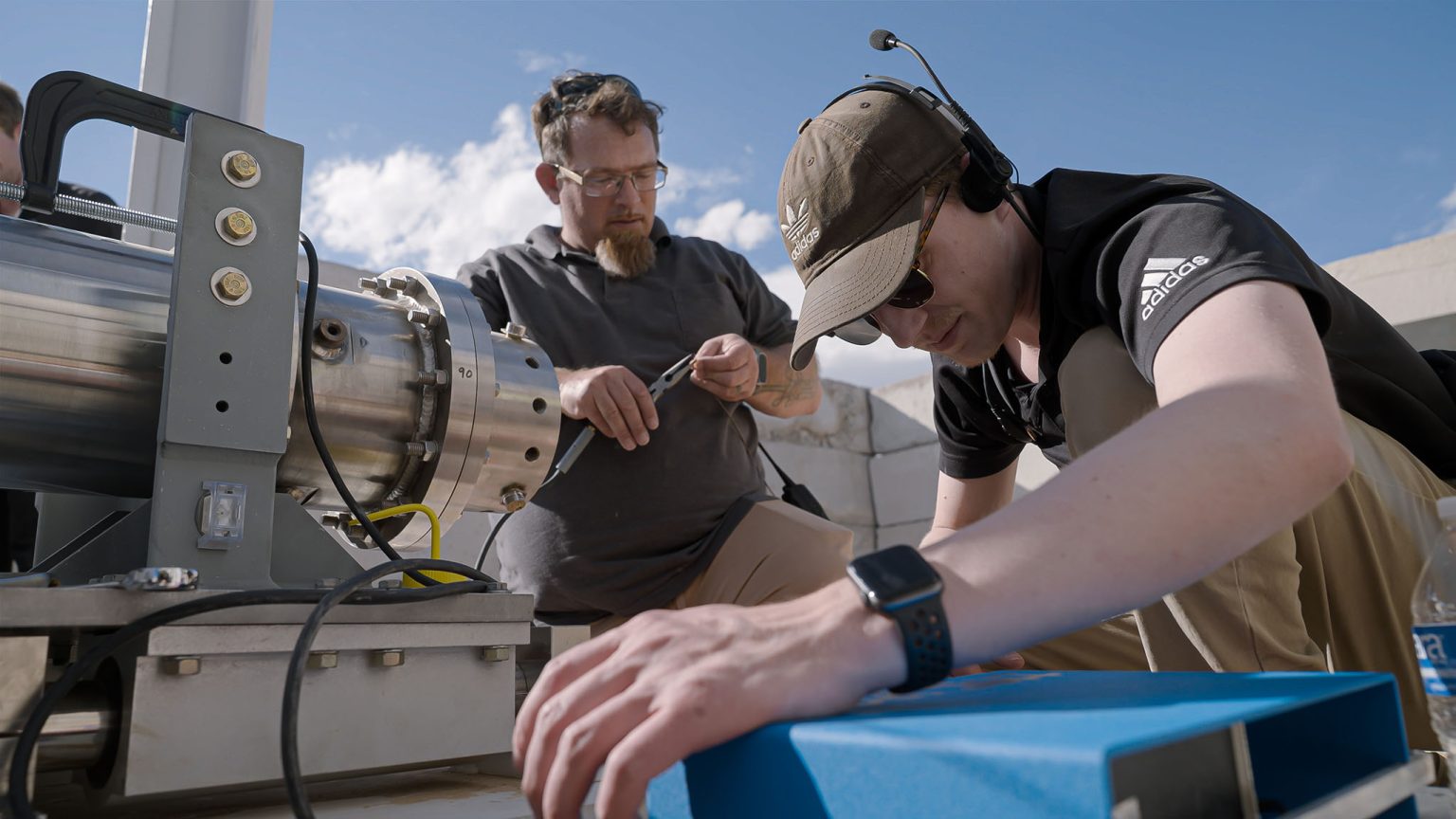
Defense startup Firehawk Aerospace has landed a $4-million contract from the US Air Force to develop 3D-printed solid rocket propellants designed to extend missile range.
Firehawk is developing thermoplastic-based propellants — a departure from conventional solid rocket fuels — to meet the requirements of a program jointly managed by the Air Force Research Laboratory and SpaceWERX, the US Space Force’s innovation arm.
The company said that it aims to “leverage its additive manufacturing techniques to enable safer, more flexible, and higher-performing rocket propulsion systems.”
Traditional rocket production relies on labor-intensive processes with long lead times, while 3D printing allows for rapid iteration, more complex geometries, and potentially improved performance.
“We’re building for the operational realities our forces face today and those that lie ahead, to give our warfighters the edge,” Firehawk CEO Will Edwards said.
3D Printing Military Components
The funding will be under the SBIR/STTR program, which aims to accelerate innovation by funding small businesses across a wide spectrum of technologies with potential defense applications.
Companies like Firehawk represent a new wave of suppliers capable of moving rapidly from concept to demonstration, a stark contrast to the decades-long cycles of traditional contractors.
The investment highlights the push to integrate advanced manufacturing into systems that demand both speed and reliability, ensuring US forces maintain flexibility and reach in contested environments.
In September, the US Army announced it is leveraging 3D printing to rapidly produce critical components without relying on faraway factories. The technology has already been applied to maintain tactical platforms, including infantry squad vehicles and M777 lightweight 155-millimeter howitzers.