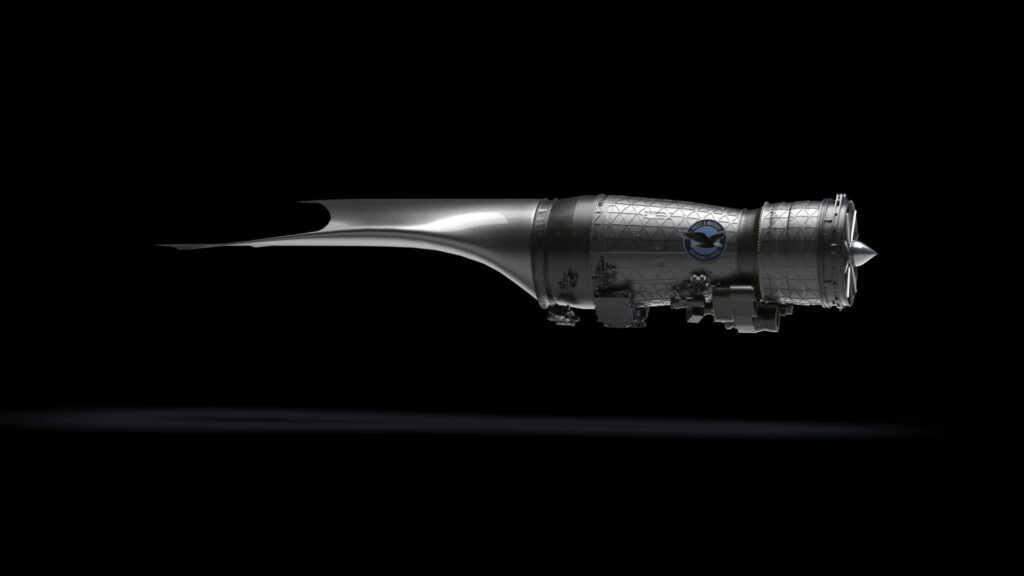
Pratt & Whitney is leveraging digital engineering tools to advance the development of its XA103 engine for the US Air Force’s Next Generation Adaptive Propulsion (NGAP) program.
The RTX subsidiary said it managed to cut development times and costs while increasing design efficiency by embedding “stringent digital requirements” across its supply base and engineering teams.
The company has also adopted an advanced model-based design approach that allows rapid design iteration, smoother supplier integration, better manufacturing forecasting, and faster digital validation before physical prototypes are built.
That transition, however, required a substantial upfront investment. The firm disclosed it spent $30 million building its digital design infrastructure while leveraging the expertise of 1,000 engineers and staff alongside contributions from more than 100 US suppliers.
This has led, Pratt & Whitney claimed, to doubling the delivery rate of XA103 technical data packages, an essential step ahead of the upcoming Assembly Readiness Review, which will determine when prototypes can move toward build and test.
“Model-based design ties all the puzzle pieces together, fostering constant collaboration, and we are applying these learnings across our engine portfolio,” Pratt & Whitney Military Engines President Jill Albertelli said.
Timeline for NGAP Engine Release
The NGAP effort is a cornerstone of the Pentagon’s push to field sixth-generation fighters under the Next Generation Air Dominance program.
The XA103 is one of two adaptive engines currently in development, alongside General Electric’s XA100.
Unlike traditional engines, adaptive cycle propulsion systems are designed to shift between high-thrust and fuel-efficient modes, giving future combat aircraft both longer range and greater survivability in contested environments.
Both designs are expected to be tested closer to 2030. But uncertainty clouds the path forward as the program has seen significant delay. It was first slated for a 2027 release, but has since been pushed to near 2030.
Pratt & Whitney was first awarded a contract worth $975 million in 2022 for the “execution of the prototype phase of the [NGAP] and is focused on delivering capability enabling propulsion systems for future air dominance platforms and digitally transforming the propulsion industrial base.”
An additional $3.5-billion contract was signed in January 2025 for “technology maturation and risk reduction services.. [which] includes design, analysis, rig testing, prototype engine build and testing, and weapon system integration.”