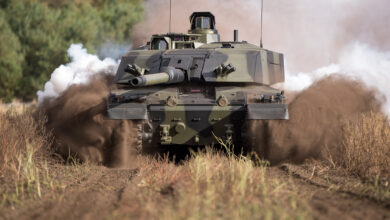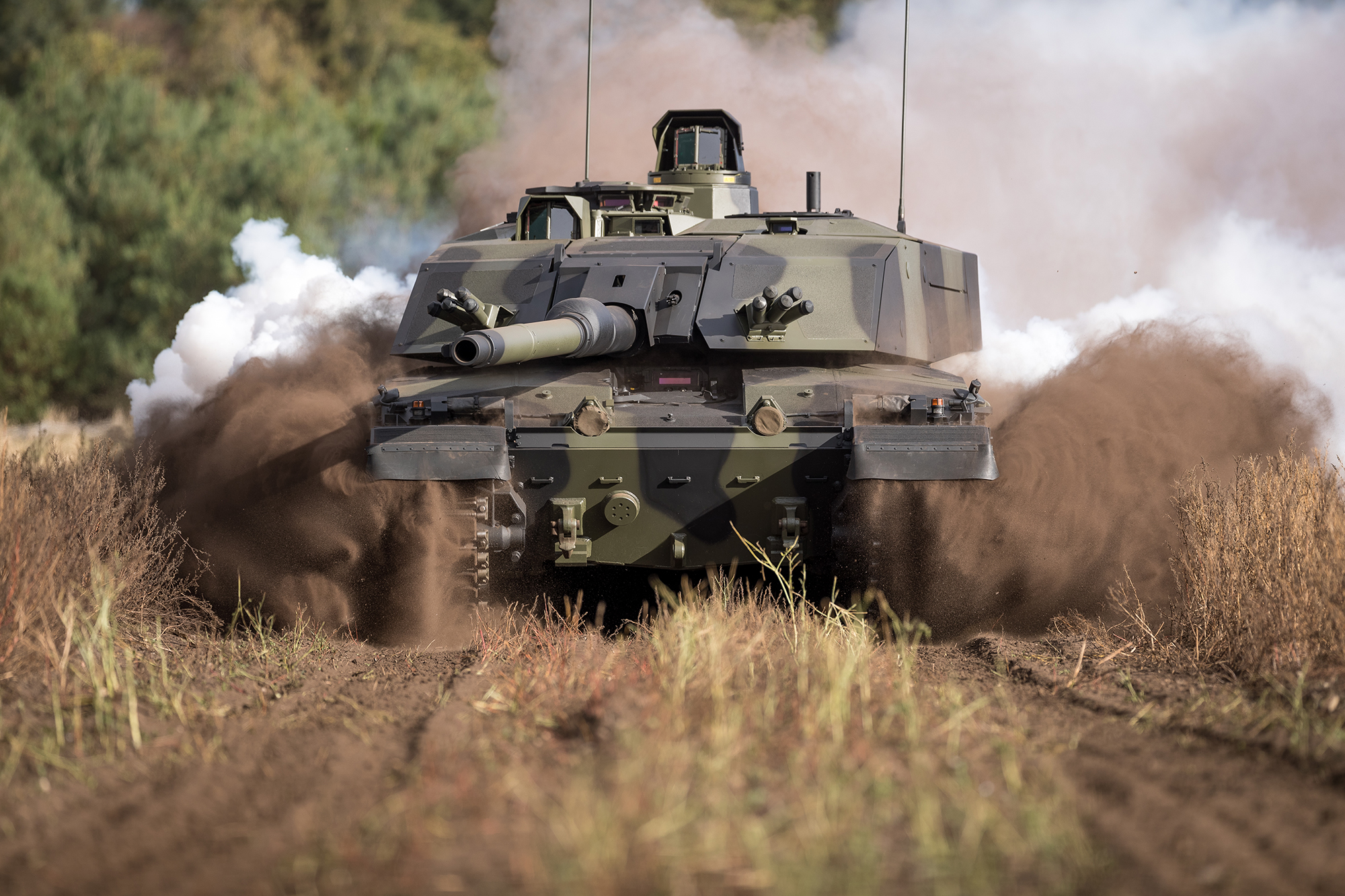
The British Army has completed mobility trials of the Challenger 3 main battle tank.
The Challenger 3 program is led by Rheinmetall BAE Systems Land (RBSL), a joint venture between BAE Systems in the UK and Germany’s Rheinmetall.
Conducted in collaboration with QinetiQ at multiple UK sites, the trials involved a pre-production vehicle covering 789 kilometers (489 miles) on both road and cross-country terrain.
The initiative assessed platform noise and vibration, crew interface, and the impact of vibration on onboard ammunition.
Final data analysis will allow RBSL to mitigate risks, refine the design, and ensure the vehicle meets customer requirements.
Future testing will involve live firing with crews on board to assess the tank’s operational safety and support further development of its weapon systems.
The tests will support the final review that establishes the production standards for the Challenger 3 fleet.
“Trials are a critical stage in developing a new armored vehicle, pushing our main battle tank to the limits to prove its performance and capability,” stated Dean Pask, Challenger 3 Program Director at RBSL.
Challenger 3 Program
Under an 800-million-pound ($1 billion) contract signed in 2021, the UK acquired 148 Challenger 3 main battle tanks, scheduled to enter service by the end of 2030.
The Challenger 3 will feature a modular armor system designed to improve crew protection and extend the tank’s operational relevance.
The program includes a 40-million-pound ($54 million) investment in RBSL’s Turret Test Rig facility in Telford, where pre-production vehicles are manufactured.
Production relies on a European supply chain, involving small- and medium-sized enterprises across the UK, including the West Midlands, Glasgow, Newcastle upon Tyne, and the Isle of Wight.