Germany has cleared the use of a Rheinmetall-developed modular simulator to train crews of its Puma infantry fighting vehicles.
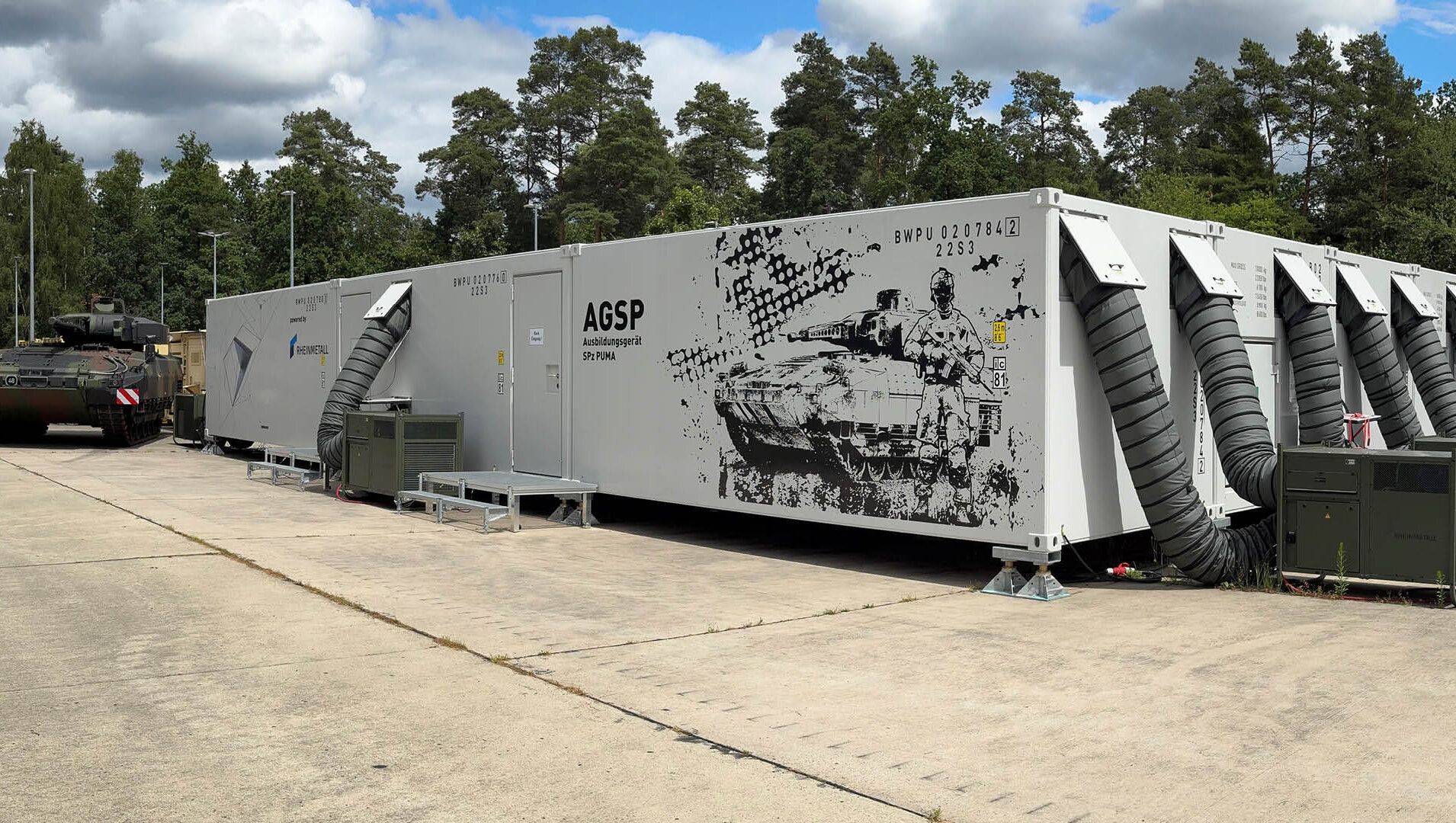
Called AGSP, the system recreates live-fire and combat scenarios for mechanized infantry. It includes a command and control station and four vehicle cabins built to mirror the Puma’s interior.
The machine replicates core functions such as vehicle mechanics, ballistics, crew controls, and targeting to provide realistic “train as you fight” exercises generated through Bohemia Interactive Simulations’ VBS4 wargaming software, already widely used by the German Armed Forces.
AGSP offers the preparation capacity for turret crew to platoon-level drills. Once networking with other simulators is validated, the system can be scaled for company-sized preparations.
Infantry squads can also train with the system, either mounted or dismounted, through integration with Berlin’s next-generation soldier equipment suite, existing battle management system, and additional monitoring tools.
AGSP is housed in 12 standard 20-foot (6-meter) containers, allowing it to be moved as needed.
The platform’s modular design lets crews swap or upgrade components such as server racks and driver cabins, while its exterior access points simplify maintenance and reduce repair time.
Digital Training Push
According to Rheinmetall, Germany’s adoption of AGSP marks another step in the country’s shift toward digital training for mechanized infantry units.
It also reflects broader efforts to modernize readiness and reduce costs as the NATO member upgrades its ground forces, including plans to field approximately 400 Puma vehicles by the end of the decade.
To support these objectives, AGSP was developed in close coordination with the German Armed Forces to align with operational requirements.
“There are many technical innovations in the AGSP, but the actual stand-alone aspect is the intensive collaboration with experts from the German Armed Forces,” said Bernd Packulat, Rheinmetall’s land simulation sales lead.
“This has led to a system that precisely echoes the operational demands of the user – developed with and for the forces, not neglecting their requirements.”