Pentagon to Send Reps Abroad for Military Tech Advancement, Taiwan and Japan Included

The US Department of Defense plans to send officials to “dozens” of partner nations, including Taiwan and Japan, to strengthen partnerships and give the US faster access to cutting-edge military technology.
By the end of the year, the agency will place a liaison officer in Taiwan to collaborate on unmanned aerial systems and “broader civilian and dual-use ecosystems, including the tech sector,” according to the Financial Times.
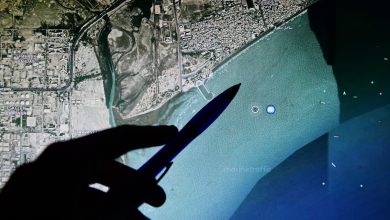
The officer will be based at the American Institute in Taiwan, the US de facto embassy located in Kaohsiung. Another representative is expected to work closely with Tokyo, according to sources familiar with the plans.
The Pentagon’s Defense Innovation Unit (DIU), responsible for accelerating the adoption of emerging solutions for modern warfare, will lead the project.
“We intend to place liaisons with allies and partners across the Indo-Pacific, Europe and the Middle East as quickly as personnel become available,” a DIU source told the outlet.
“Exchanging liaisons with like innovation organisations is an important component of the DIU’s international line of effort, as it allows [us] to seize collaboration opportunities early.”
The plan is seen as a key part of US strategy as China, considered by military leaders its top defense and technology competitor, rapidly builds new space, naval, and missile capabilities.
It is also intended to help address the US defense industry’s struggles to keep pace.
In 2021, China tested a hypersonic spacecraft that fired a missile mid-flight, drawing comparisons to the 1950s “Sputnik moment,” when the Soviet Union beat the US into space.
Project After Transition
The program was revealed shortly after DIU Director Doug Beck resigned in August. Emil Michael, the Pentagon’s chief technology officer, is now serving as the segment’s acting director. Leaders in Washington, DC, said the fresh shift will not affect the initiative.
“This Department of Defense will continue to ensure the successful transition of proven DIU initiatives that support the Secretary of Defense’s priorities,” a US defense official told the Financial Times.
Established in 2015, the DIU has in recent years focused on technologies critical for potential conflicts with major powers, including autonomous systems.
To support its objectives, the unit has engaged in cooperation agreements with Singapore, Japan, and the UAE, though the UK remains the only country hosting a permanent DIU presence.