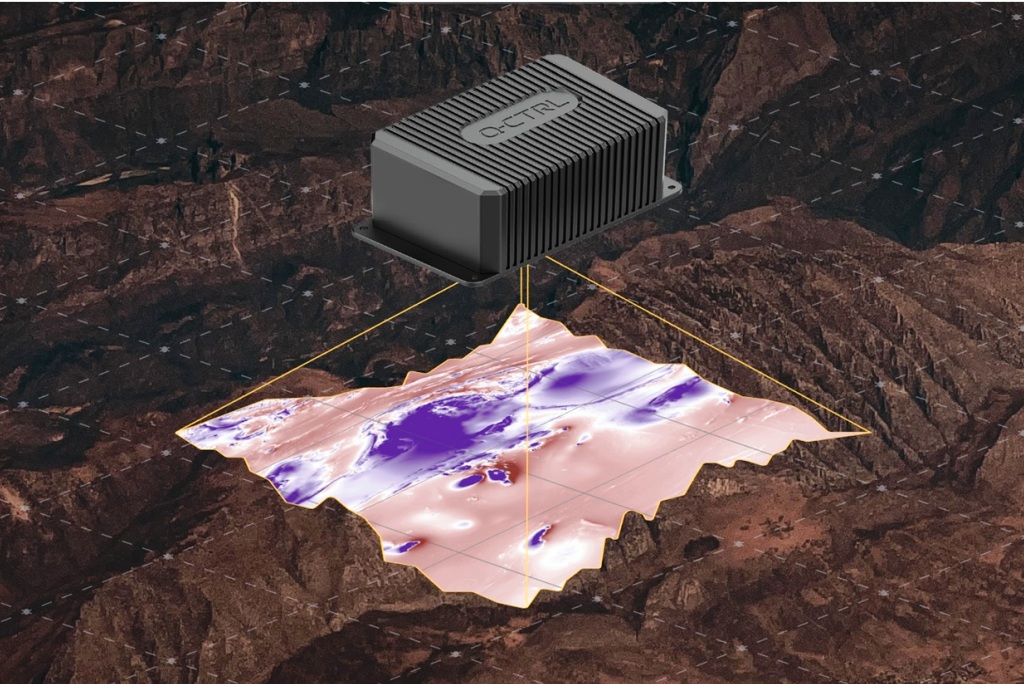
The US Defense Advanced Research Projects Agency (DARPA) has awarded Australian firm Q-CTRL contracts worth $24.4 million to enhance quantum sensing tools for military vehicles.
Quantum technologies support navigation without satellite signals in environments subject to jamming, spoofing, or signal denial.
Under the initiative, Q-CTRL will develop next-generation quantum navigation sensors, leveraging previous field trials in airborne, maritime, and ground environments.
Equipped with AI-enhanced software, the sensors can operate reliably on moving military platforms without the need for traditional shielding or isolation.
Working with Q-CTRL, Lockheed Martin will act as a subcontractor, providing its expertise in GPS and quantum technologies.
Enhancing Quantum Sensing
The initiative is part of DARPA’s Robust Quantum Sensors (RoQS) program, which seeks to accelerate the development, testing, and validation of quantum sensors for defense applications.
While quantum navigation sensors are highly precise in controlled environments, their performance degrades on moving platforms due to factors such as mechanical vibrations and electromagnetic interference.
To address these challenges, the RoQS program is developing sensors designed to maintain accuracy and stability under demanding conditions.
Latest Contracts
In recent months, Q-CTRL has been advancing quantum navigation technologies through field trials and defense contracts.
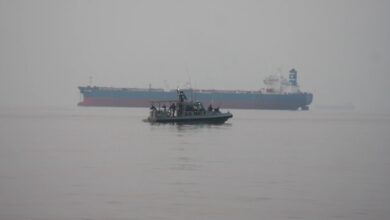
In July, the company conducted a field trial with the Royal Australian Navy, deploying its software-enhanced quantum sensors aboard the MV Sycamore, an Australian Navy support vessel.
The sensors operated continuously for 144 hours, navigating by detecting subtle variations in Earth’s gravity instead of relying on GPS signals.
Earlier this year, Q-CTRL and Lockheed Martin won a contract from the US Department of Defense’s Defense Innovation Unit to prototype a quantum-enabled inertial navigation system called QuINS.
The technology uses motion-sensitive quantum sensors to calculate a platform’s position, speed, and orientation without depending on satellite navigation.