
Blocking HPE-Juniper: A Gift to China?
The HPE-Juniper merger is a critical national security move to counter China’s telecom dominance and protect US infrastructure.

It’s easy to become ensnared in partisan or bureaucratic squabbles that leave a nation vulnerable to external threats. The costs, however, can be unacceptable, especially when those threats come from a near-peer adversary like China.
On August 1, Senators Richard Blumenthal (D-CT), Cory Booker (D-NJ), Elizabeth Warren (D-MA), and Amy Klobuchar (D-MN) sent a letter calling for an investigation into a Justice Department settlement that allowed multinational IT firm HPE to acquire competing telecom company Juniper.
The senators cited “significant concerns the deal was motivated by improper business and political considerations.” According to media reports, Roger Alford, a senior DOJ staffer who was fired for his conduct concerning this merger, echoed their calls about perceived foul play.
Partisan Politics vs. National Security
I’m not an expert on antitrust law, but I do have extensive expertise when it comes to national security.
I’ve spent decades protecting the homeland and ensuring US technological superiority across air, space, and cyberspace domains. And it was protecting our national security that led Attorney General Pam Bondi to approve the deal.
Axios reported recently that US intelligence agencies played a key role in convincing the DOJ to approve the deal.
“In light of significant national security concerns, a settlement … serves the interests of the United States by strengthening domestic capabilities and is critical to countering … China,” an unnamed senior official told the outlet.
You wouldn’t know any of this from reading the senators’ letter, which does not even include the phrase “national security” or the word “China.” Its authors fail to realize there was more at stake in the HPE-Juniper deal than consumer welfare.
The Facts on HPE-Juniper
By acquiring Juniper, HPE will increase its ability to compete in the global enterprise wireless industry, which provides network services at large facilities.
That market is currently dominated by Huawei, a Shenzhen-based firm that receives massive subsidies from the Chinese state and has deep ties to the ruling communist party.
As a former US Air Force leader, I can tell you these networks can underpin command and control systems, logistics, and the digital backbone of our most critical infrastructure.
Our government is well aware of the cybersecurity threat Huawei poses and has banned the company from the US market since 2019.
Huawei and China’s Persistent Cyber Threat
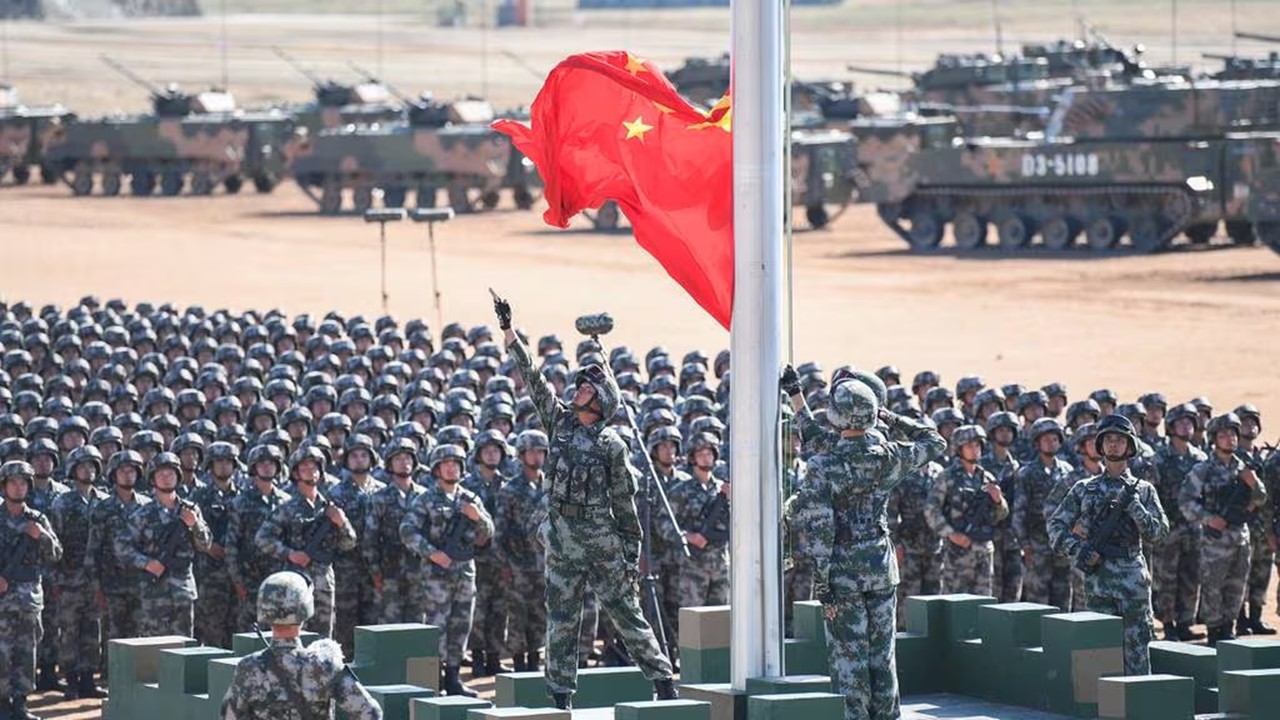
Huawei’s attempt to insert itself into America’s telecommunications infrastructure was just one operation in a massive cyberwarfare campaign.
In March 2025, the DOJ charged 12 Chinese nationals with running a 10-year cyber espionage operation that targeted US federal agencies, media outlets, and CCP critics.
The FBI alleges China’s Ministry of Public Security has been paying freelance hackers to target American citizens. A Treasury Department investigation recently revealed that PAX Technology, a Chinese Communist Party-linked firm that makes payment terminals used at banks and retail stores across the US, has sent encrypted data to unknown third parties.
This is a persistent threat to US sovereignty — the digital equivalent of a Chinese invasion fleet anchoring off the coast of Los Angeles. We must respond with urgency and resolve.
Banning Huawei was a good start, but even without a presence on US soil, the company can still undermine American interests. Clients that require enterprise network services include strategically vital facilities like hospitals, factories, research universities, government agencies, and even military bases.
The US may have banned Huawei, but many of our key allies have yet to do so.
Any facilities in those countries that use Huawei equipment are already vulnerable to CCP cyber espionage. And when (not if) China attempts to seize Taiwan, any attempt by these nations to support the embattled island could lead to a crippling cyberattack against their civilian and military infrastructure.
National Security Imperative
HPE’s acquisition of Juniper creates a new player in the industry that can work to reduce Huawei’s global market share. Blocking the deal, according to the national security official who spoke to Axios, would have “hindered American companies and empowered” Huawei.
Lawmakers and regulators should be able to agree that Huawei’s continued market dominance would be a significant setback for American security.
Instead, four US senators could be lending a hand to ensure a big win for the CCP.
As someone who’s spent decades focused on warfighter readiness and strategic deterrence, I urge policymakers to treat the HPE-Juniper deal not as a political football but as a national security imperative.
The stakes are too high to get this wrong.
Lt. Gen.  Richard Newton (US Air Force, ret.) capped his 34-year military career as the Assistant Vice Chief of Staff and Director of the Air Staff, Headquarters, US Air Force, Washington, DC, until June 2012.
After he transitioned from the Air Force, he served as Executive Vice President of the 100,000-member Air Force Association in Arlington, Virginia.
His vast experience in the US military includes serving as the Air Force Deputy Chief of Staff Manpower, Personnel and Services, the senior Air Force official responsible for the comprehensive plans and policies for nearly 670,000 military and civilian Air Force members.
The views and opinions expressed here are those of the author and do not necessarily reflect the editorial position of The Defense Post.
The Defense Post aims to publish a wide range of high-quality opinion and analysis from a diverse array of people – do you want to send us yours? Click here to submit an op-ed.