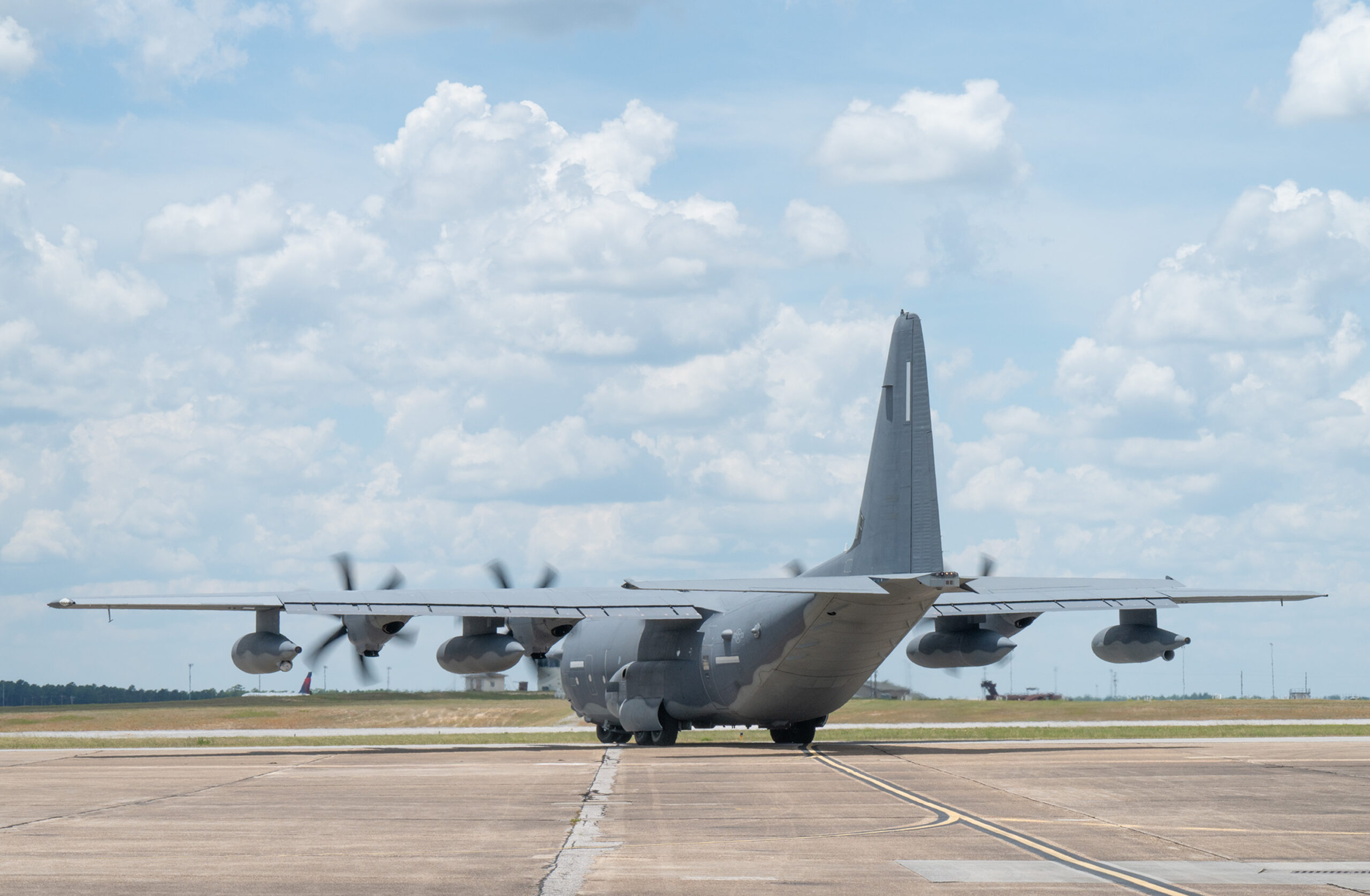
The US Air Force is testing new aerodynamic devices called finlets on MC-130J aircraft to evaluate their impact on drag reduction and fuel efficiency.
Conducted by the 417th Flight Test Squadron, flight trials began at Eglin Air Force Base in Florida and will continue with airdrop evaluations at Edwards AFB, California.
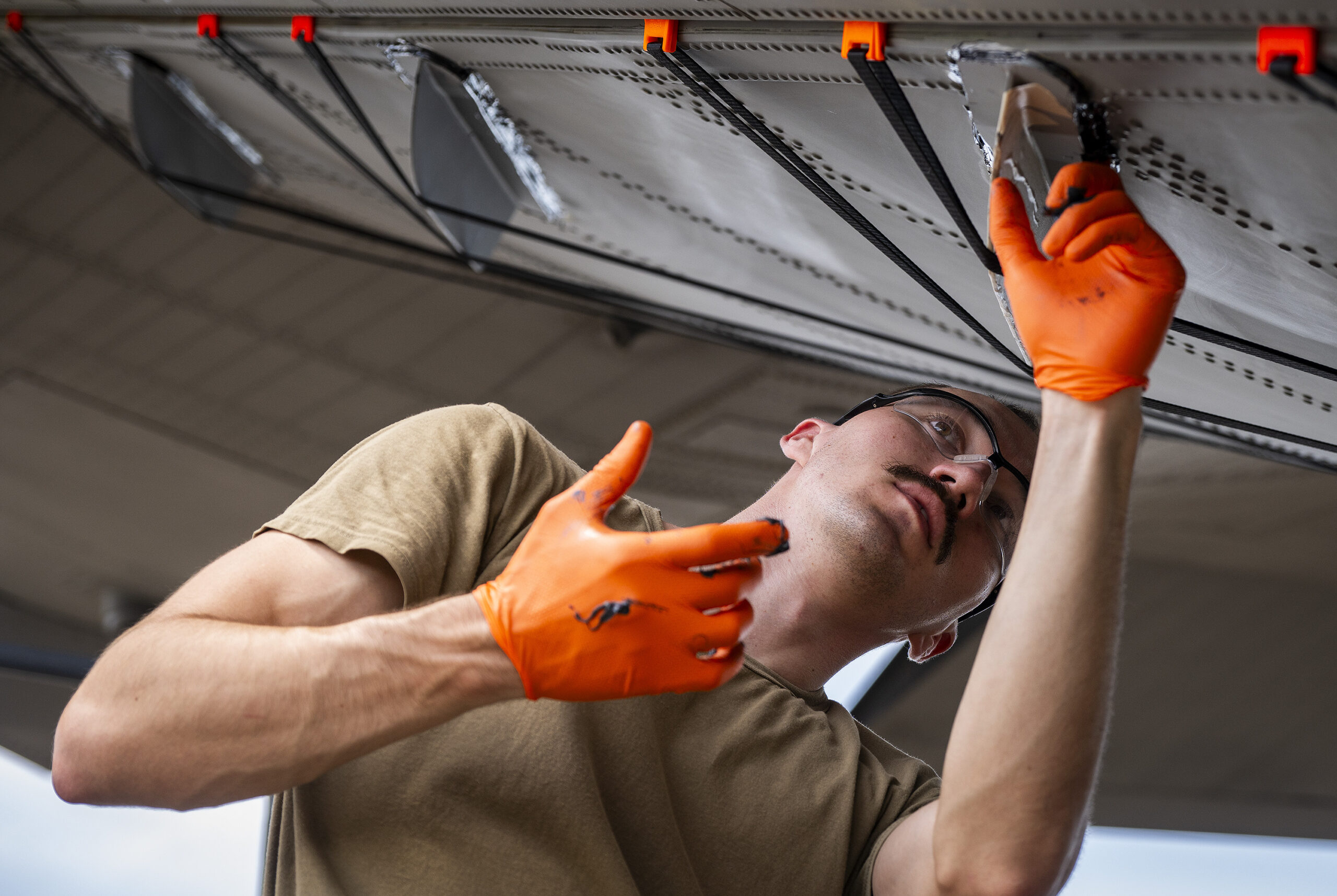
Made using 3D printing, the finlets are passive aerodynamic fin-like devices mounted on the rear cargo door and both sides of the tail fin.
The test campaign evaluates airworthiness, flight performance, and compatibility for airdrop operations.
Results will inform potential fleet-wide adoption across all C-130J aircraft as part of a broader effort to reduce operating costs and extend mission range in contested environments.
Developed by Vortex Control Technologies, the finlets’ design draws on aerodynamic concepts originally used in commercial aviation.
A broader collaboration supports the initiative, involving the Air Force Operational Energy Office, Air Force Special Operations Command, the Special Operations Forces/Personnel Recovery Program Office, and the Air Force Research Laboratory.
The Defense Innovation Unit is also contributing to the development and testing process.
MC-130J Aircraft
The MC-130J is a multi-role aircraft operated by the US Air Force Special Operations Command primarily tasked with infiltrating, exfiltrating, and resupplying special operations forces by airland or airdrop.
It is also capable of aerial refueling for special operations helicopters and tiltrotor aircraft.
Built by Lockheed Martin, the MC-130J is equipped with four Rolls-Royce AE 2100D3 turboprop engines.
The aircraft features a fully integrated digital cockpit, advanced navigation systems, and auxiliary flight deck stations.
It has a maximum takeoff weight of 164,000 pounds (74,389 kilograms).
With an unrefueled range of roughly 3,000 miles (4,828 kilometers), the aircraft can conduct extended missions without dependence on forward operating bases.
The standard crew configuration includes two pilots, one combat systems officer, and two special mission aviators.
Each unit costs approximately $114.2 million.