BlackSky Technology has announced plans to expand its satellite constellation with new multispectral satellites designed for large-area data collection.
The company is working with development partners and aims to begin launches in 2027.
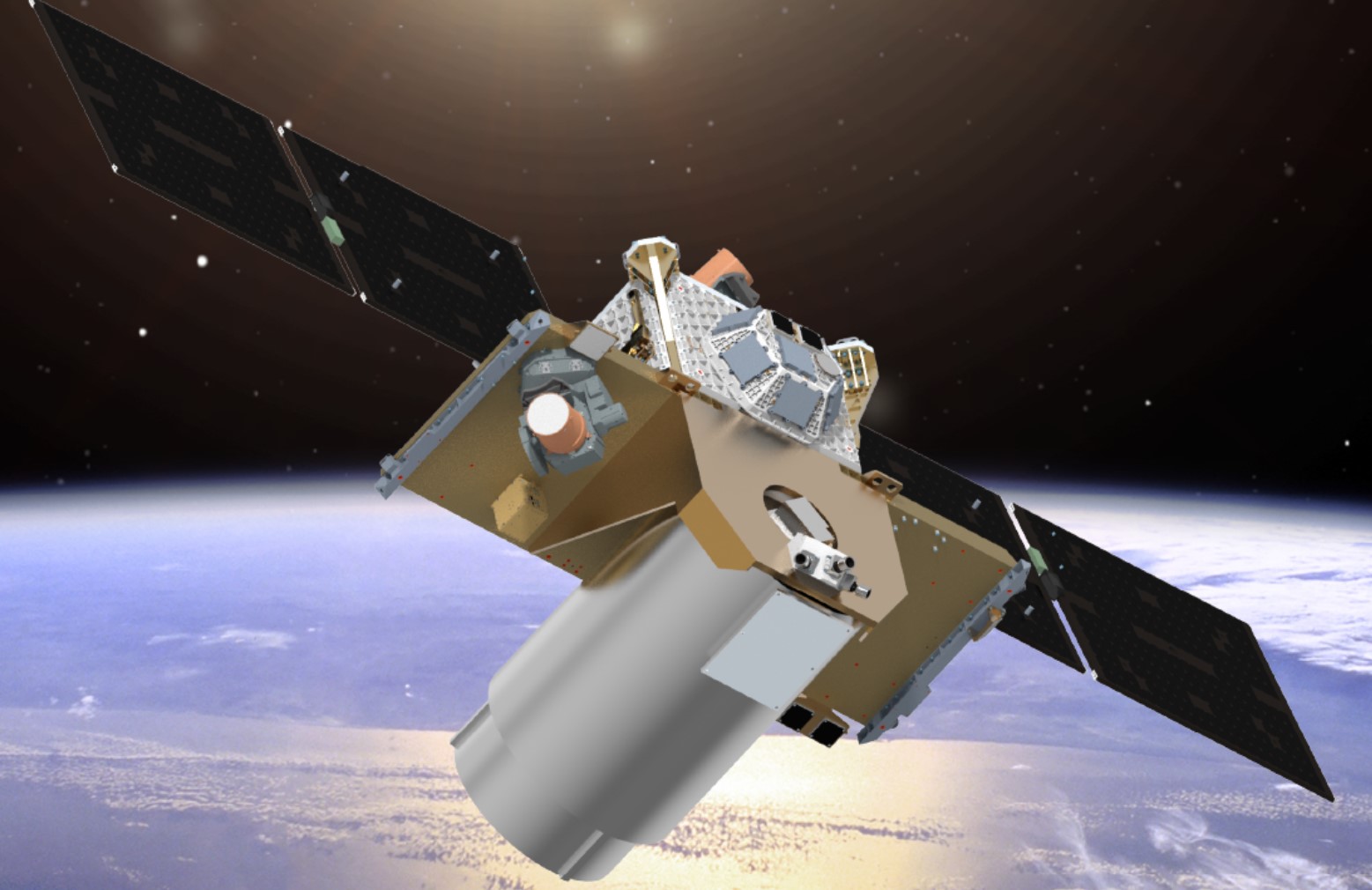
Dubbed AROS, the new satellites are being developed to support national-level digital mapping, surveillance, and 3D digital twin modeling.
The systems are also designed to support advanced maritime operations and Golden Dome-type defense systems.
Additionally, AROS aims to fill gaps left by aging satellite systems through leveraging artificial intelligence (AI) tools.
“As legacy satellites approach end-of-life, we see a critical opportunity to address market needs—not just in performance and agility—but also in affordability and AI-readiness,” said Brian O’Toole, BlackSky CEO.
AROS
Development of AROS has been underway for two years and builds on the company’s previous Gen-2 and Gen-3 satellite architectures.
AROS features optical inter-satellite links, which allow satellites to transfer data between one another in orbit before downlinking it to ground stations.
The system will also include a new proprietary data pipeline for real-time and historical analysis designed to “feed” machine learning models, AI-driven analytics, and decision support tools.
Moreover, AROS will provide efficient, high-volume imaging without compromising quality, allowing for detailed and regular monitoring of areas of interest.
Recent Milestones
Recent developments have highlighted increased speed and automation in BlackSky’s space-based operations.
Earlier this month, the company’s second Gen-3 satellite delivered its first very high-resolution image just 12 hours after launch.
Captured over Golmud Air Base in China, the 35-centimeter (13.8 inches) imagery highlighted aircraft, vehicle movements, and facility operations.
In March, BlackSky deployed its first AI-enabled analytics system using imagery from its Gen-3 satellite.
The platform automatically scanned large volumes of data, helping reduce manual workload and accelerate the identification of relevant intelligence.