A Pentagon wireless energy relay program has achieved a record transmission of power over a distance.
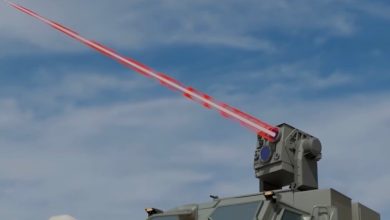
In a recent series of tests, the Persistent Optical Wireless Energy Relay (POWER) program team delivered 800 watts of power in 30 seconds from a laser 8.6 kilometers (5.3 miles) away.
It bested the previously reported record transmission of 230 watts of average power at 1.7 kilometers (1.05 miles) for 25 seconds.
The test campaign in New Mexico saw the transfer of over one megajoule of energy.
“It is beyond a doubt that we absolutely obliterated all previously reported optical power beaming demonstrations for power and distance,” POWER program manager Paul Jaffe said after the results were confirmed.
Wireless Energy Relay
The three-phase Defense Advanced Research Projects Agency (DARPA) program was envisaged as a faster, cheaper, and more reliable source of energy delivery to the battlefield.
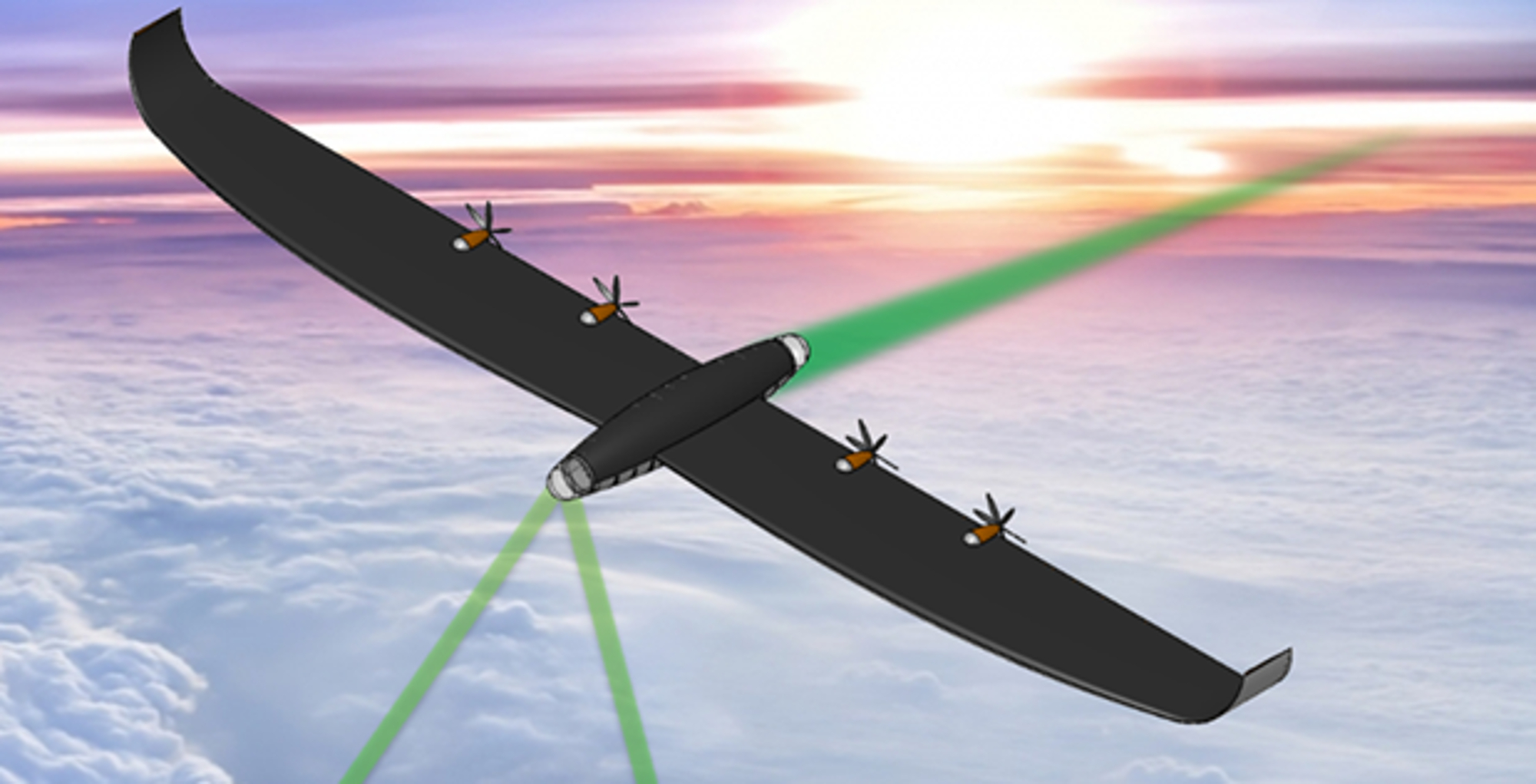
It aims to provide on-demand power to manned and unmanned platforms for a variety of missions, enhancing their endurance and capacity.
Called the POWER Receiver Array Demo, the tests demonstrated the ability to beam power from a distance to where it is needed.
New Receiver Technology
The demonstration occurred in the later stage of phase one, utilizing a new receiver technology with a compact aperture that retains the maximum light entering through the laser beam.
“Inside the receiver, the laser strikes a parabolic mirror that reflects the beam onto dozens of photovoltaic cells (solar cells) to convert the energy back to usable power,” DARPA further explained.
Virginia-based Teravec Technologies designed the receiver, with help from North Dakota-based Packet Digital and the Rochester Institute of Technology.
The scalable technology can handle higher power and be used with platforms such as unmanned aerial vehicles.
High Benchmark
What made the tests even more impressive was the fact that both the transmitter and receiver were on the ground, passing the beam through the thickest part of the atmosphere.
“It’s a lot easier to send a power beam directly up or down relative to the ground because there is so much less atmosphere to fight through,” Jaffe explained.
“For [the POWER Receiver Array Demo], we wanted to test under the maximum impact of atmospheric effects.”
Transmission efficiency was over 20 percent, with trade-offs in the test receiver’s design to maximize potential distance and validate the capability.
The receiver was completed in about three months.
“This demonstration broke through misconceptions about the limits of power beaming technology, and it is already spurring industry to reimagine what’s possible,” said Jaffe.