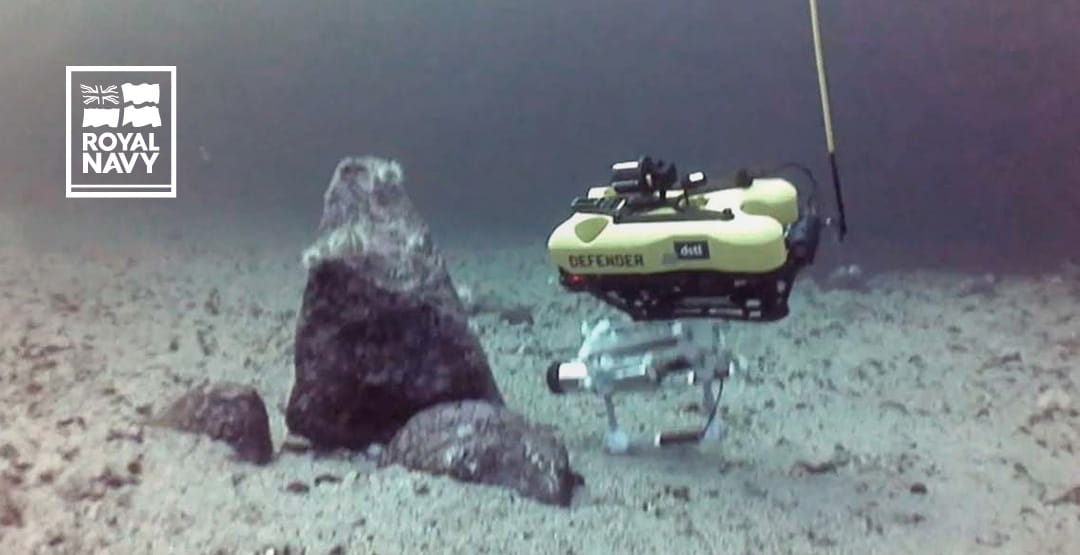
The UK’s Defence Science and Technology Laboratory (Dstl) has adopted a cutting-edge underwater robot designed to protect the country’s critical subsea infrastructure.
The commercially-available remotely operated vehicle (ROV) is capable of detecting, disarming, and removing threats that pose risks to undersea cables, pipelines, and other strategic subsea assets.
It is also capable of clearing legacy unexploded ordnance, which poses hazards to vessels and divers responding to sabotage threats.
Dstl has integrated advanced systems to enhance the ROV’s ability to identify threats and remotely place explosive charges for safe neutralization.
“This technology would be a valuable toolset for keeping our armed forces safe whilst providing the public with value for money,” an explosives engineer from the agency noted.
Trials have already been conducted at four locations to evaluate the effectiveness and resilience of the underwater robot.
An underwater robot could soon be saving lives at sea for the @RoyalNavy and preventing adversaries from sabotaging undersea cables
The #robot can be launched from a ship or a shoreline and is operated remotely, feeding video and sonar images backhttps://t.co/RtzGmJNVuT pic.twitter.com/x6Vec3sQhD
— Dstl (@dstlmod) June 9, 2025
Equipped to Detect, Disarm, and Endure
The ROV features sophisticated sensors, tools, and cameras that give operators the capability to manage underwater hazards safely, effectively, and efficiently.
It can operate at depths beyond the reach of divers and remain underwater for extended periods.
The robot can be launched from ship or shore and can stream live video and sonar images back to operators.
Its rugged design allows it to withstand sudden explosions, enabling multiple deployments.
Once officially deployed, the ROV will work alongside other underwater robotic platforms to scan the seabed for potential hazards.
Rising Undersea Threats
The push to strengthen undersea sabotage defenses comes amid rising threats to vital infrastructure, especially in regions where geopolitical tensions have sparked fears of deliberate attacks on subsea cables and pipelines.
Several undersea cables in the Baltic region were damaged last year, with many experts describing the incidents as part of a “hybrid war” by Russia targeting Western nations.
In January, NATO launched a monitoring mission following suspected sabotage of these critical underwater networks.
Last month, Polish Prime Minister Donald Tusk reported detecting “suspicious” activity by a Russian “shadow fleet” vessel near a key cable in the area.