AeroVironment to Install Data Receivers on Pentagon’s SkyRange Hypersonic Test Fleet

AeroVironment has secured a $43-million contract to install phased array receivers on the US Department of Defense’s SkyRange platforms.
SkyRange is an ongoing program led by Northrop Grumman to convert the US Air Force’s aging RQ-4 Global Hawk high-altitude surveillance unmanned aerial systems (UAS) into “Range Hawks” that can support complex hypersonic missile tests.
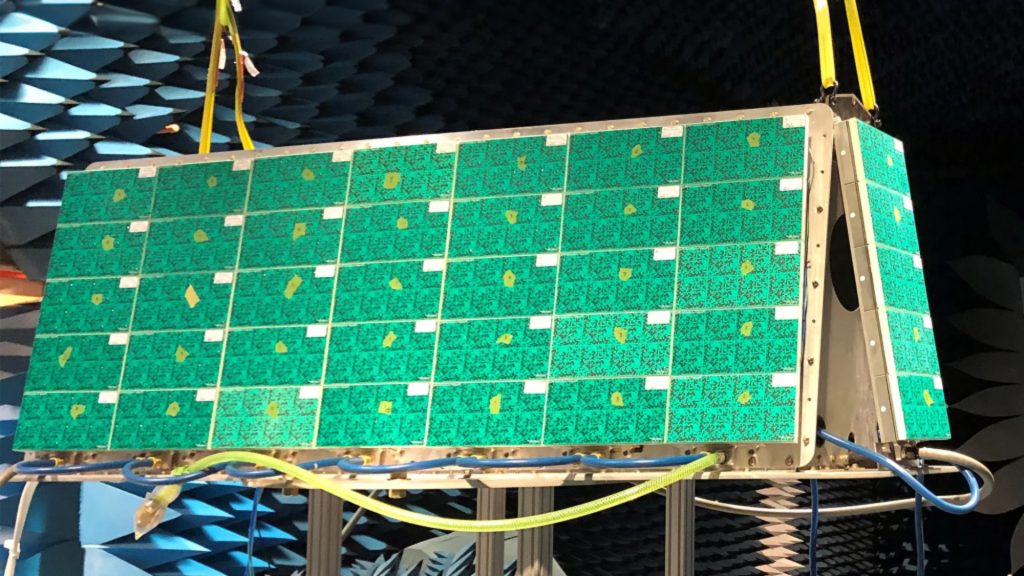
Under the contract, the company will provide that fleet with its proprietary Phased Array Next-gen Telemetry Hypersonic Emitter Receiver (PANTHER), an all-digital antenna solution to obtain, monitor, and analyze telemetry data.
Integration is expected to enhance the drones’ tracking of multiple projectiles simultaneously, optimizing assessments over systems traveling beyond Mach 5, or five times the speed of sound (3,836 miles/6,174 kilometers per hour).
Modern Antenna Panel
AeroVironment’s PANTHER offers adjustable architecture that supports multichannel communications for field and evaluative applications.
The software-defined device is controlled via remote access and offers autonomous operations, capturing signals without relying on mechanical systems.
In addition to its standard bands, the antenna panel can be expanded to additional frequencies and be mounted on both airborne and ground platforms.
‘Efficient’ Capability
According to AeroVironment, the recent award builds on its expertise supporting advanced test systems that reduce development timelines and technical risk.
The company continues its integration work for the SkyRange initiative at the GrandSKY business park in Grand Forks, North Dakota, and is now partnering with North Dakota institutions, including Bismarck State College, to open courses for future PANTHER operations and sustainment specialists.
“PANTHER provides a reliable, efficient method for gathering the critical data needed for long-range missile testing,” said Dr. Satya Ponnaluri, Vice President of Hypersonic RF and Radar at AeroVironment.
“Ultimately, this…technology will allow for more frequent testing cycles and faster weapons development timelines for our nation — neutralizing global threats and maintaining our strong national security posture.”