US Forces Korea Eyes Trilateral ‘Kill Web’ Network to Deter Indo-Pacific Threats

The US Forces Korea (USFK) has proposed integrating the military capabilities of South Korea, Japan, and potentially the Philippines into a unified “kill web” to counter rising threats from North Korea, China, and Russia.
US Army Gen. Xavier Brunson, commander of USFK, said the concept would connect allied forces across land, sea, air, space, cyber, and electromagnetic domains into a single, coordinated network.
“We have to link these complementary capabilities into a kill web that achieves combined, joint, all-domain effects,” the chief explained in an interview with The Japan Times.
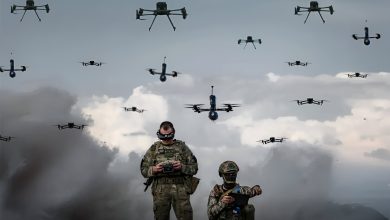
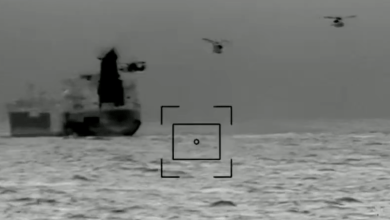
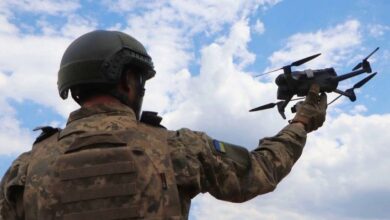
The “kill web” expands on traditional strike systems by enabling sensors, including infantry, unmanned aerial systems, and satellites, to relay live data with other combat platforms, such as aircraft, surface vessels, and warheads.
The approach allows multiple response options against a single target and shortens decision timelines.
Under the concept, Seoul would serve as a key hub due to its combat-ready ground forces and defense industry.
Tokyo, on the other hand, would contribute advanced surveillance and maritime capabilities, while Manila would provide access between the Pacific and Indian oceans.
‘Structural, Not Relational’
USKF’s proposal reflects a broader Pentagon strategy to transform the Korean Peninsula, which incorporates more than 28,000 American troops, from a standalone region into a central position within a wider Indo-Pacific defense network.
Brunson, who also leads Washington’s Republic of Korea/US Combined Forces Command and United Nations Command, emphasized that the concept would also bolster shared operational awareness, regional sustainment capacity, and expanded multinational exercises, saying coordination must become “structural, not relational.”
“[The challenge] is whether we are organized to respond together or scrambling to coordinate after the fact,” he stated, adding, “None of these (US) alliances can afford to exist in isolation.”