China is conducting an extensive seabed-mapping and ocean-monitoring effort across the Pacific, Indian, and Arctic oceans, according to Reuters.
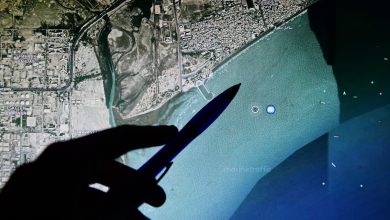
The activity involves dozens of research vessels tracking underwater terrain in areas close to US and allied military positions, including waters near Taiwan, Guam, the Philippines, and key routes such as the Malacca Strait.
Part of the effort also involves deploying and maintaining underwater sensors that collect data with potential military relevance.
According to naval experts cited by the news outlet, information on underwater terrain and ocean conditions is critical for submarine navigation, concealment, and detection of adversary vessels.
Data reviewed over several years shows vessels following structured survey patterns to map the seabed in detail, with analysts suggesting the effort may be linked to China’s approach of integrating civilian research with military development.
One example is the Dong Fang Hong 3, a research vessel operated by Ocean University of China, which conducted repeated missions between 2024 and 2025, officially described as climate research and seabed analysis.
Data, Sensors, and Submarines
The network of sensors supporting the mapping activity collects data on temperature, salinity, currents, and subsea movement.
These factors affect how sound travels underwater and are critical for sonar performance, shaping how submarines detect or avoid detection.
US officials told Reuters that this type of data can support submarine positioning and the deployment of seabed systems used to monitor undersea activity.
As the dataset expands, it could improve China’s ability to operate submarines more effectively and track those of other navies, potentially narrowing the long-standing informational advantage of the US Navy in the undersea domain.