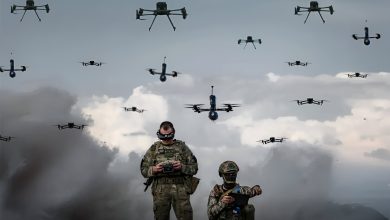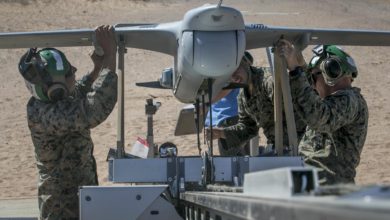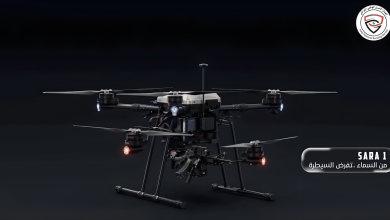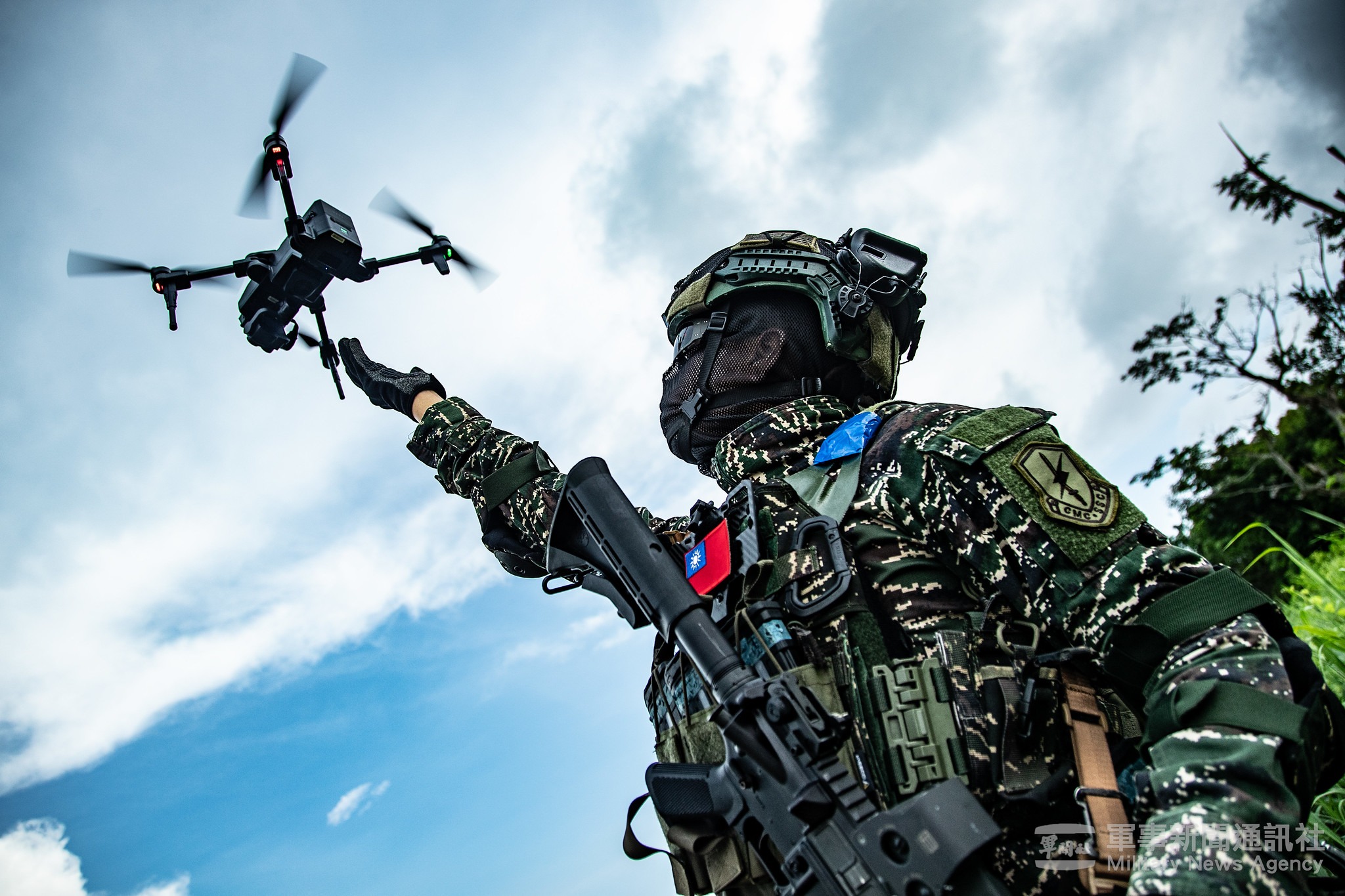
The US-based think tank Center for a New American Security (CNAS) has examined Taiwan’s defense posture amid the threat of a potential Chinese invasion, highlighting gaps in its current strategy and the need to use coordinated drone operations more effectively.
The report proposes a “Hellscape” concept in which synchronized drone deployments across air, surface, and underwater domains could strengthen Taiwan’s defenses and complicate an amphibious assault.
The concept draws on lessons from recent conflicts, particularly the war in Ukraine, highlighting the potential of commercial unmanned systems to disrupt conventional military operations at relatively low cost.
By employing resilient drones capable of operating under GPS and communications jamming, Taipei could target Chinese amphibious forces during transit and at landing zones.
According to CNAS, the objective is to prevent Beijing from achieving a rapid military occupation, focusing on denying control at the water’s edge rather than relying on full-scale engagements inland.
The report frames this approach as a potential deterrent by increasing the projected cost and risk of an invasion.

The Hellscape Operational Framework
The Hellscape concept organizes Taiwan’s defensive measures into geographic and operational layers, extending from roughly 80 kilometers (50 miles) offshore to the coastline.
In the outermost layer, long-range aerial, surface, and underwater drones are intended to disrupt and damage Chinese ships while gradually exhausting their defensive interceptor capabilities.
The next layer, spanning 35 kilometers (22 miles) to 5 kilometers (3 miles) from shore, relies on sea mines and one-way attack drones to channel and slow landing craft.
The final 5 km (3 miles) to the shore, including the landing beaches, constitutes the innermost layers, where short-range drones engage ships as they come into sight.
The report noted that the effectiveness of the Hellscape concept depends on integrating uncrewed systems with conventional and asymmetric capabilities, establishing clear operational doctrines, and conducting rigorous training.