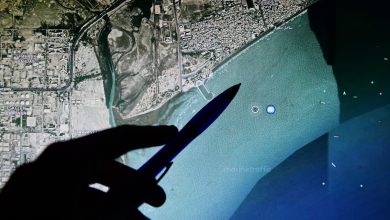
In May 2025, the brief India-Pakistan confrontation illustrated a key shift in deterrence. Despite both states being nuclear-armed, the conflict remained conventional.
Rising conventional strike capabilities now allow states to signal resolve, impose costs, and manage escalation without resorting to nuclear threats.
This dynamic is mirrored elsewhere.
In the Middle East and Ukraine, nuclear weapons act as a ceiling states avoid crossing unless vital interests are at stake. Below that threshold, conflicts are conducted through high-intensity conventional warfare.
European states are increasingly repositioning to complement — or compensate for the absence of — nuclear deterrence with advanced deep conventional strike (DPS) capabilities.
The Conventional-Nuclear Continuum
For decades, strategic thinking focused on nuclear arsenals. States measured and flexed nuclear capabilities to communicate deterrence.
Yet the India-Pakistan flare-up shows a different reality: both sides stayed within the conventional domain. The nuclear “ceiling” remains intact, but the floor of conventional coercion is expanding.
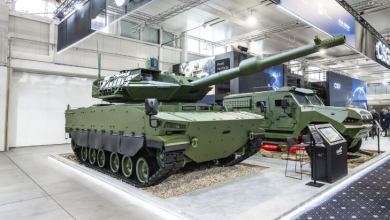
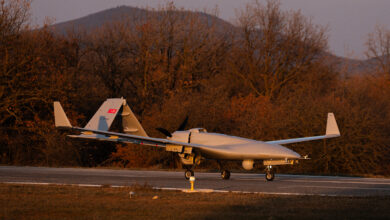
Deep Precision Strike (DPS) is decisive in this shift. Long-range, high-precision systems can penetrate robust air defenses to hit high-value targets, using warheads of significant payload.
They serve three roles: as operational effectors, as signals imposing costs, and as a complement to nuclear deterrence.

Europe’s Wake-Up Call
In Europe today, a growing number of states are waking up to this logic.
The extended US nuclear umbrella is increasingly seen as uncertain; purely defensive capabilities are no longer enough.
Poland’s case is emblematic. Confronted by Russia’s war in Ukraine and proximity to Belarus, Polish leaders have debated nuclear acquisition but lack time to pursue such options.
Instead, Warsaw is accelerating DPS development through its domestic Lanca project, a joint low-cost cruise missile program with Anduril. The country has also paid particular interest to France on the MdCN missile and its ground-launched Land Cruise Missile variant.
Even nuclear-armed European states are adjusting.
In July 2025, the UK and France coordinated nuclear deterrence under the Northwood Declaration, signaling that extreme threats would prompt a response.
Behind the pledge lies a broader shift: credible deterrence is now shifting from only nuclear to nuclear plus credible conventional options.
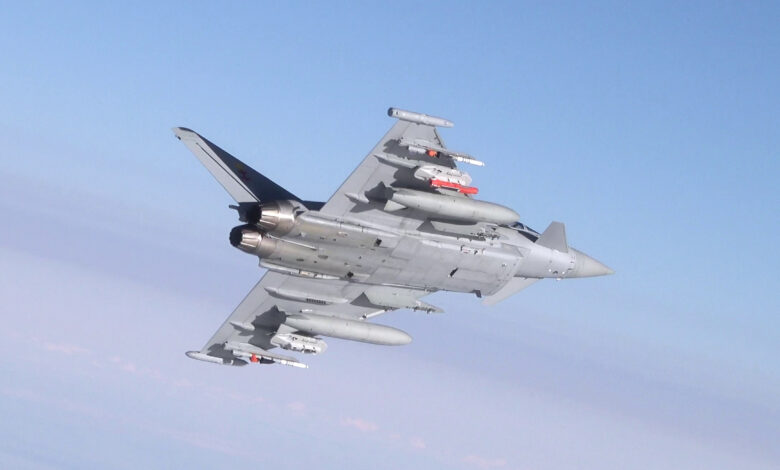
The two countries are also the most experienced in Europe in the operational use of cruise missiles, including the SCALP/Storm Shadow, whose performance in Ukraine and India has recently made headlines.
Three factors drive this logic.
First, nuclear deterrence depends on visible, resilient conventional forces. Without them, nuclear threats lose credibility.
Second, modern conflicts demand striking in the adversary’s depth, not merely defending one’s homeland. DPS enables attacks on command nodes, logistics, dual-use infrastructure, and maneuver corridors, raising the cost of aggression.
Third, DPS deters below the nuclear threshold. If adversaries believe they can wage limited wars without risking nuclear escalation, deterrence erodes.
European Initiatives in Practice
France is considering developing a conventional-capable ballistic system with a 2,000-kilometer+ (1,243-mile) range, potentially paving the way for hypersonic applications.
The final decision has not yet been made, and deliveries would not take place before 2035–2040.
France and the UK are also key partners in ELSA (European Long-Range Strike Approach), alongside Poland, Germany, Italy, and Sweden to shape next-generation long-range precision-strike systems.
A recent letter of intent confirms the desire to move forward, with initial results showing growing European consensus on the need for a credible DPS.
But the most decisive projects appear to be at a standstill, despite their technical maturity and the alternative they offer to acquiring American Tomahawks, with the Land Cruise Missile being one of them.
Indeed, progress remains slow. Political and industrial inertia threatens to undercut Europe’s ability to act decisively.
Closing the Gap
As the reality of high-intensity conflict returns to Europe, leaders can no longer rely solely on nuclear threats or defensive postures. The lesson is clear, whether it comes from Ukraine, India, or Israel: deterrence depends on a full spectrum of capabilities.
Deep Precision Strike is a new, central asset in preventing the aggressor from gaining the upper hand under the pretext of acting “below the nuclear threshold.” It offers a way to deter, signal resolve, and impose meaningful costs in this perspective.
In this context, Europe’s leaders face no choice but to accelerate procurement and operationalization.
Today’s sudden and brutal reality forces rapid adaptation, requiring clear priorities and firm resolves, indeed the core foundations of any credible deterrence posture, whether nuclear or conventional.

Helena Schmidt is a senior analyst in European foreign and security policy, with extensive experience in European think tanks, specializing in NATO dynamics, and the defense policies of Central and Eastern European member states.
The views and opinions expressed here are those of the author and do not necessarily reflect the editorial position of The Defense Post.
The Defense Post aims to publish a wide range of high-quality opinion and analysis from a diverse array of people – do you want to send us yours? Click here to submit an op-ed.