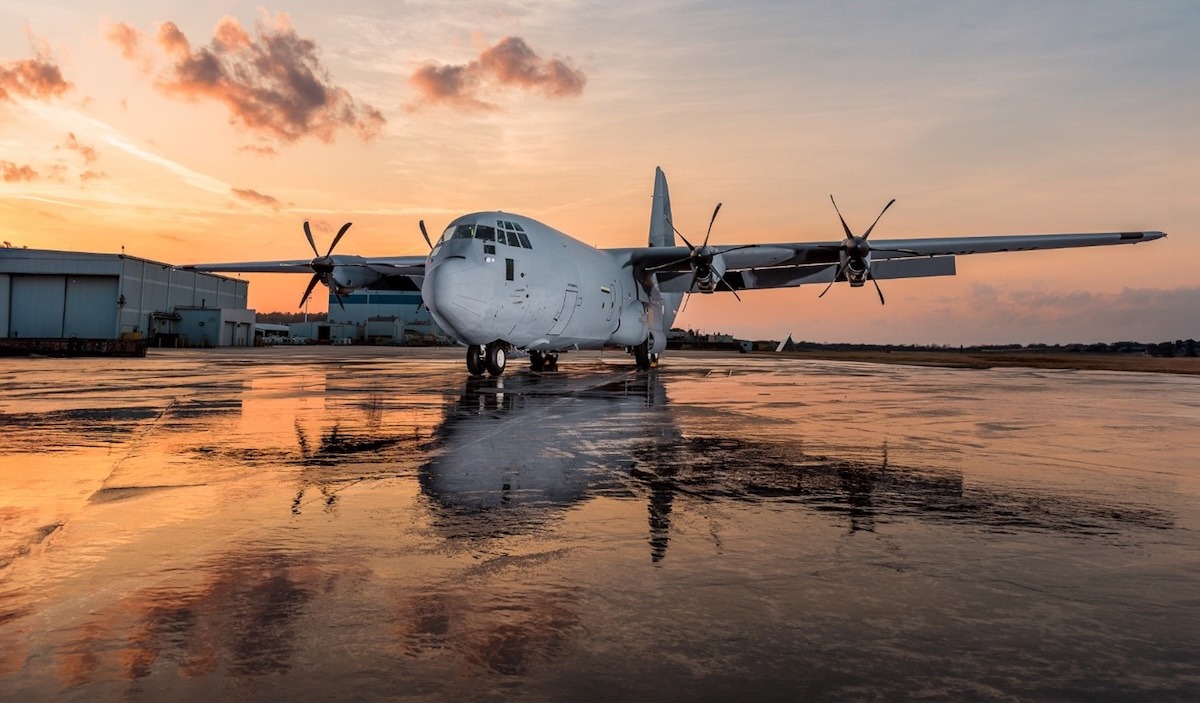
The US has contracted Lockheed Martin to supply devices and upgrades that will help the Royal Australian Air Force (RAAF) improve how it trains its C-130J pilots and crew.
The deal covers two weapon systems trainers, an enhanced integrated cockpit systems trainer, loadmaster part‑task trainer, and upgrades to the RAAF’s virtual simulation and virtual maintenance trainers.
It falls under a foreign military sale, with Wright-Patterson Air Force Base managing the program. Deliveries are scheduled to start in 2029.
The latest training devices feature improved graphics, motion cueing, and high‑fidelity cockpit replication that will help the RAAF prepare for its incoming 20 C-130J-30 Super Hercules aircraft procured in 2023 under a $6.6-billion contract.
Australia’s additional C-130J-30s are intended to replace and augment its existing fleet of 12 C-130Js. The first aircraft is slated to begin arriving in 2028.
“We’re honored to continue our long-standing partnership with the Royal Australian Air Force to enhance and expand their training capabilities,” said Todd Morar, VP of Air and Commercial Systems at Lockheed Martin.
RAAF C-130J
With a payload capacity of up to 46,700 pounds (21,183 kilograms), the C-130J is used to transport personnel, equipment, and humanitarian supplies for a variety of missions, including search and rescue and medical evacuation.
The aircraft features a maximum takeoff weight of 164,000 pounds (74,393 kilograms), a top speed of 410 miles (660 kilometers) per hour, and an operational altitude of 28,000 feet (8,615 meters).
It can reach distances of up to 2,160 nautical miles (2,486 miles/4,000 kilometers) while carrying a 40,000-pound (18,144-kilogram) payload.
As the aircraft is spacious enough to accommodate the M142 HIMARS, Australia reportedly considered using the C-130J to support HIMARS “shoot and scoot” maneuvers near enemy lines.
According to a Lockheed Martin representative, the rocket system’s ability to fit inside the aircraft was one of the factors behind Canberra’s procurement decision.