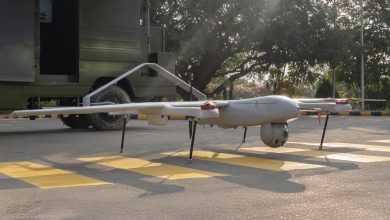
The US Defense Advanced Research Projects Agency (DARPA) has selected Shearwater Aerospace to provide AI software that helps drones exploit wind currents to extend flight endurance.
Shearwater has been selected as a subcontractor on DARPA’s Albatross program, which seeks to use weather‑informed mission planning and real‑time sensing of dynamic wind conditions to enable unmanned aircraft to harness energy from the atmosphere.
Under the agreement, Shearwater will supply its advanced automated mission‑planning and micro‑weather forecasting technology to support autonomous soaring demonstrations.
The company’s Smart Flight system, already used in defense and logistics applications, combines AI‑powered micro‑weather intelligence with real‑time guidance to continuously adjust flight paths.
Rather than treating weather as a constraint, this software anticipates atmospheric shifts and uses them to extend drone endurance without adding new hardware or sensors.
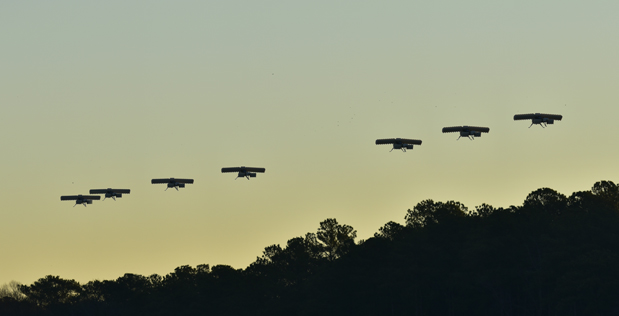
Prime contractor PhysicsAI with support from Applied Aeronautics will run a series of flight demonstrations in coming months to evaluate how software‑enabled planning boosts persistence across different environments.
Albatross Program
Rather than redesigning aircraft, the Albatross program aims to retrofit existing unmanned aerial systems (UAS) with planning tools and control solutions that optimize performance using environmental energy.
Success for the Albatross is defined by how effectively soaring conditions are leveraged to increase range and endurance in operationally relevant contexts.
More broadly across DARPA’s unmanned aviation portfolio, autonomy is a recurring theme.
In mid‑2025, the agency’s Early VTOL Aircraft Demonstration initiative accelerated flight tests of vertical take‑off and landing drones under the larger ANCILLARY program, integrating autonomy software like Sikorsky’s MATRIX algorithms to handle full‑mission navigation from takeoff to landing with minimal human supervision.
These efforts follow a lineage of DARPA programs exploring UAS autonomy and mission flexibility.
For example, autonomous mission continuation software was a key goal of the Rapid Experimental Missionized Autonomy program, launched in 2023 to enable drones to complete mission tasks even when operator communication is disrupted.