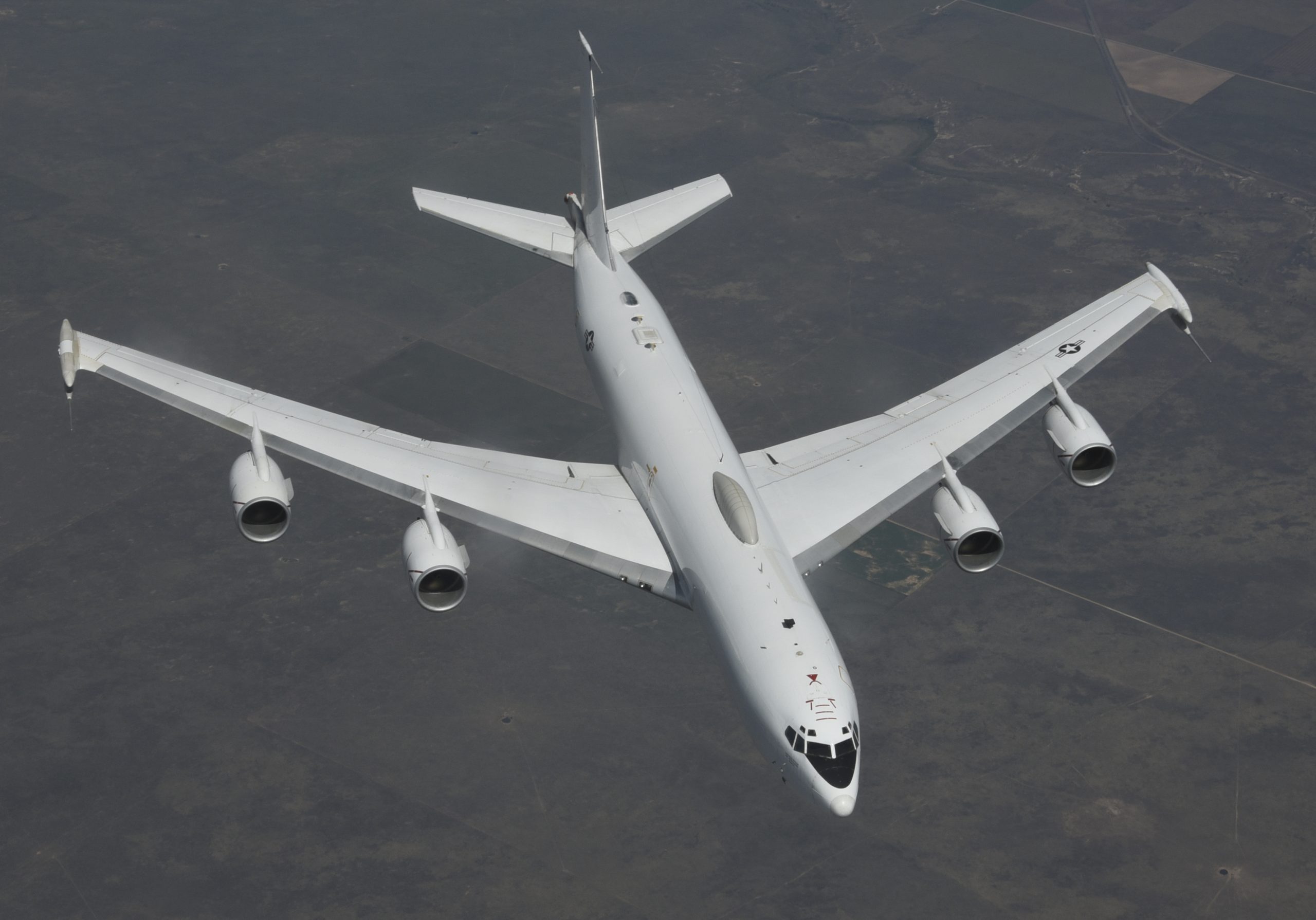
RTX subsidiary Collins Aerospace has received a $20.3-million contract to upgrade the US Navy’s E-6B airborne command post and communications relay aircraft.
Also called the “Mercury,” the platform serves as a ”doomsday plane” intended for Take Charge and Move Out or TACAMO missions, sustaining coordination between US government executives and military leaders in the event of a major conflict or nuclear attack.
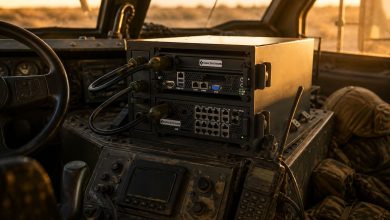
Collins’ award covers the delivery of three full-rate production high-power transmit set modernization (HPTS-M) kits for the navy.
These packages will enhance the aircraft’s strategic communications capability, replacing older components such as transmitters and radios for continuous and reliable connectivity.
Specifications of the new devices were not revealed. According to a HPTS-M pre-solicitation notice in 2024, the US Department of Defense identified Collins as its “only known qualified, responsible source that can fulfill the requirements” of the project.
Work for the contract will be conducted at the company’s facility in Richardson, Texas.
It is scheduled to complete associated tasks by June 2027, with oversight by Naval Air Systems Command in Patuxent River, Maryland.
Training, Replacement
The award comes amid the US Navy’s decision in 2025 to expand the training program for future E-6B Mercury pilots.
Courses will be held in Oklahoma, where the force also houses and operates most of its E-6B airframes.
Meanwhile, the military revealed “E-130J” as the designation for the new TACAMO asset that will eventually replace the aging E-6B.
The E-130J is modeled after a C-130J-30 Super Hercules tactical transport aircraft. Currently, the navy plans to field nine of these systems by 2028.
Separately, the US Air Force is working on a parallel program to fill gaps of its own E-4B doomsday fleet commissioned in the 1970s.
The service confirmed last year that four of these new platforms, designated as the “E-4Cs,” are now in various stages of development.