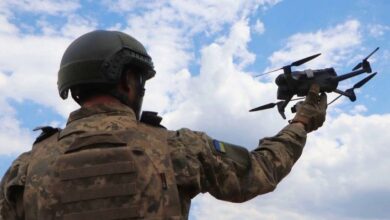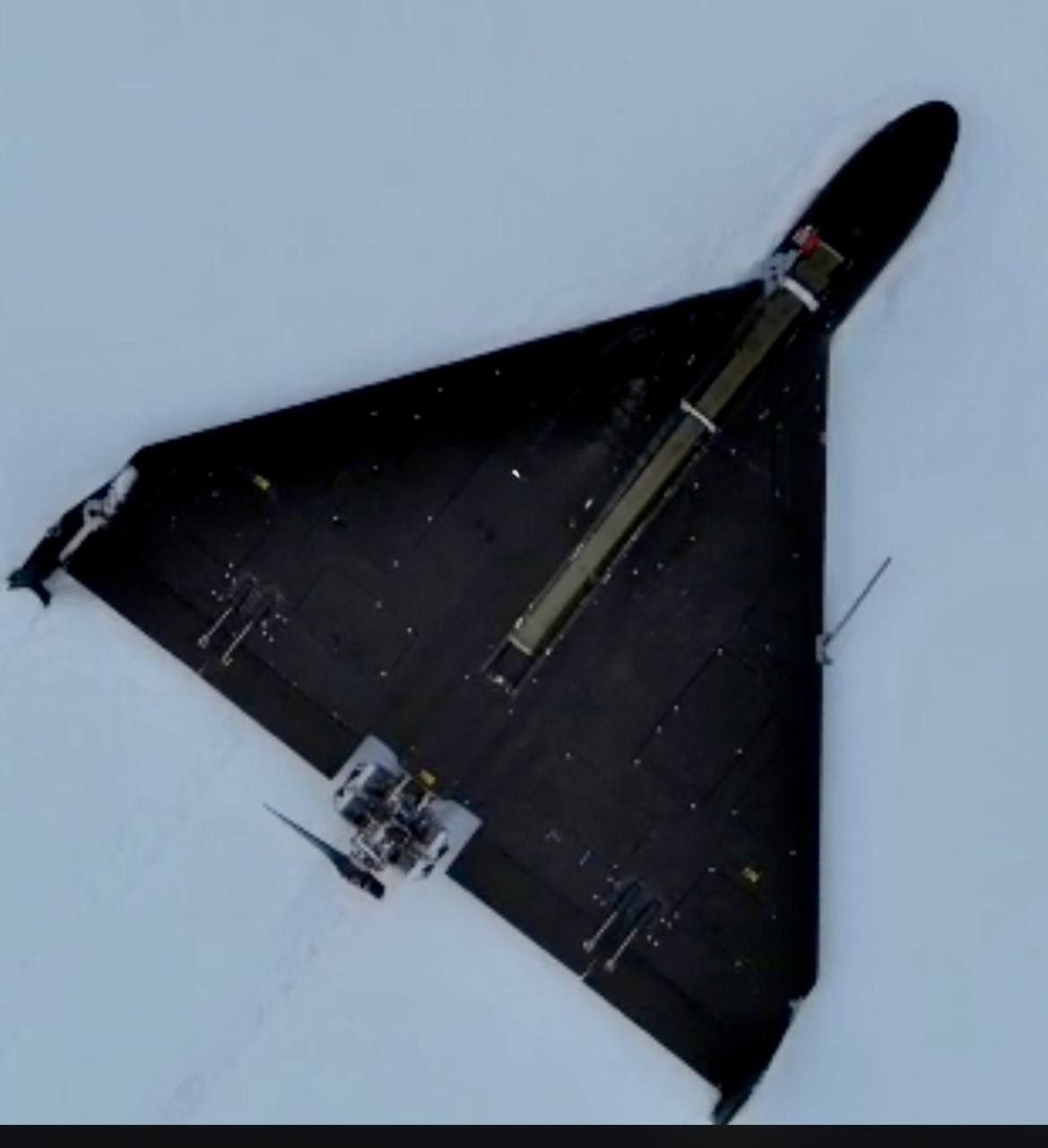
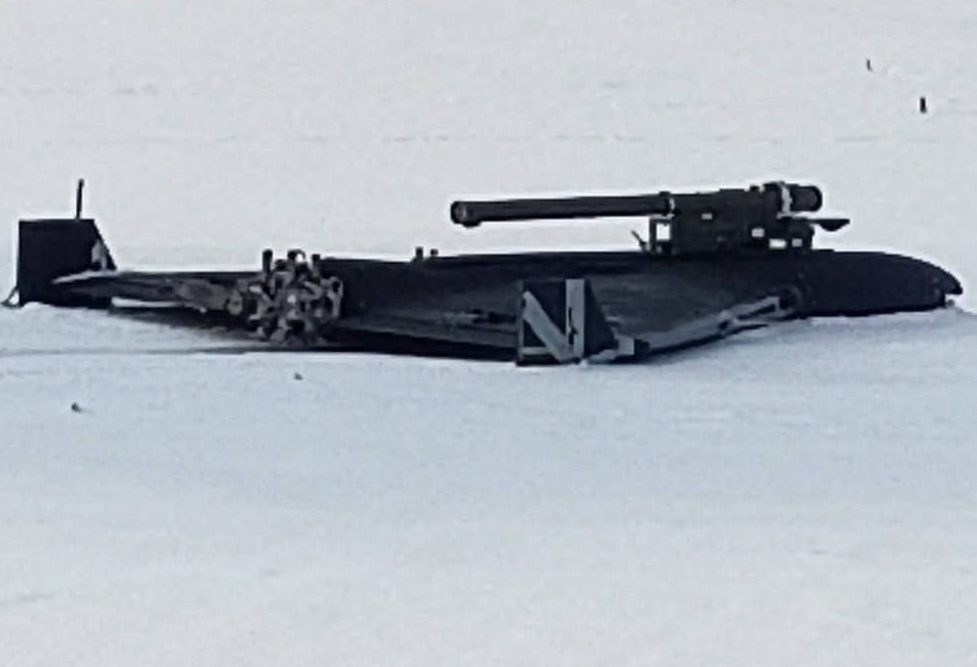
The Ukrainian Armed Forces has shot down a Russian Shahed one-way attack drone that was equipped with a man-portable air defense system (MANPADS).
This marks the first known instance of a MANPADS-armed Shahed — referred to as Geran in the Russian military — highlighting the continued adaptation and evolution of the Iranian-origin loitering munition as Russia seeks to expand its operational roles.
The drone, which was reportedly downed in Ukraine’s northern Chernihiv region, was also fitted with a radio modem and camera, enabling it to be controlled from Russian territory, according to the Unmanned Systems Forces of the Armed Forces of Ukraine.
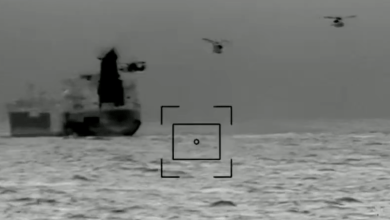
This comes close on the heels of an earlier detection of a Shahed drone armed with an R-60 air-to-air missile, suggesting a concerted effort by the Russian military to deter Ukrainian fixed- and rotary-wing aircraft engaged in counter-drone operations.
Questionable Effectiveness
Notwithstanding the concept’s novelty, its real-world effectiveness remains questionable, as there have been no reports of Ukrainian aircraft being shot down by these modified Shahed variants.
Theoretically, the MANPADS, identified as the 9K333 Verba infrared homing missile, has an estimated engagement range of up to 6.5 kilometers (4 miles).
Effective employment, however, would require the drone to have sufficient situational awareness and maneuverability to cue the missile into the target’s boresight for lock-on.
Rather than threatening fighter aircraft, the modification is more likely intended to deter the Ukrainian fleet of Mi-8/Mi-17 helicopters and Mi-24 gunships used in counter-drone roles.
Shahed Evolution
The development highlights the Shahed’s ongoing evolution as Russia seeks to overcome battlefield constraints, moving beyond preprogrammed strikes on static targets.
Recent variants appear to incorporate modifications aimed at engaging dynamic, closer-range targets such as moving trains.
These modifications include integrating cameras and cellular modems, enabling reconnaissance, real-time imagery transmission, and, when leveraging Ukrainian wireless networks, potentially man-in-the-loop control.
Alternatively, control could be maintained through line-of-sight datalinks when operating close to the front line, or via relay-based networks in which a larger “mothership” drone serves as an airborne communications node, linking one-way attack drones to distant operators.