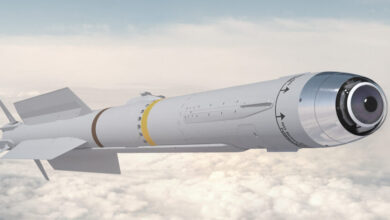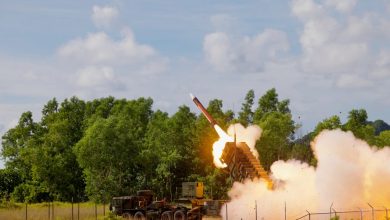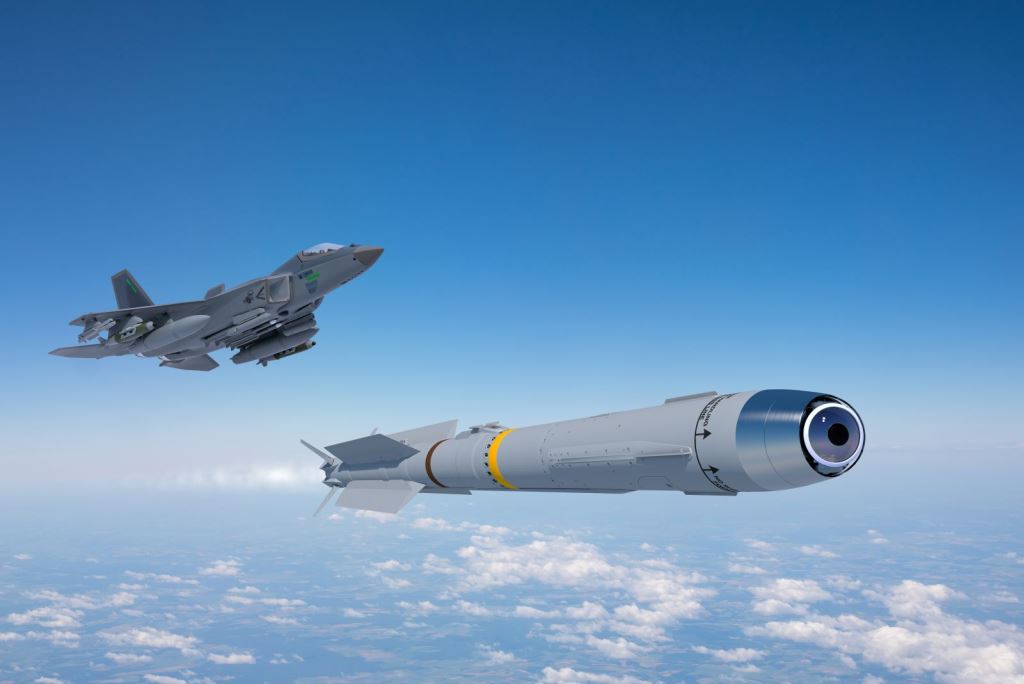
The IRIS-T is a short- to medium-range air defense and air-to-air missile family designed for agility, precision, and the messy realities of modern battlefields.
Think of it as a fast-acting guardian: small, highly maneuverable, and built to track threats that dart, pop up, and try to hide. It’s not the biggest or the longest-ranged missile on the shelf, but with its reaction speed, sensor intelligence, and modular design, it doesn’t need to be.
This guide breaks down what the IRIS-T missile is, how it evolved, and why it’s becoming a cornerstone in air defense networks.

Breaking It Down
At its heart, IRIS-T is a seeker-guided missile with three core parts: a high-off-boresight infrared imaging seeker, an agile control package, and a compact warhead with a proximity or impact fuse.
The seeker uses imaging infrared to discriminate targets and is paired with modern onboard processors and a robust fuse to maximize kill probability.
Variants expand the family across roles:
- IRIS-T AAM (Air-to-Air): the original, carried by fighter aircraft to defeat agile aerial threats.
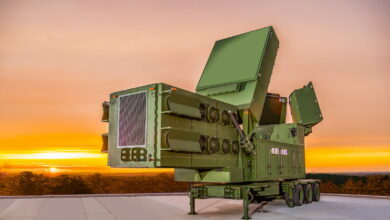
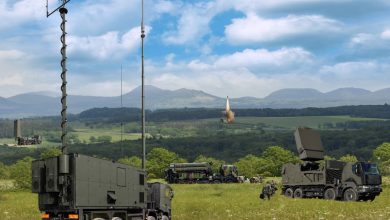
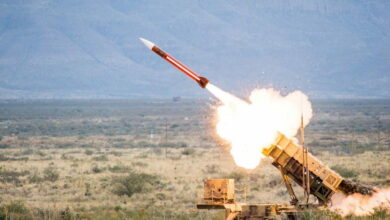
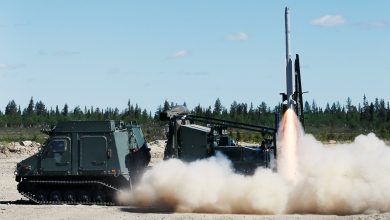
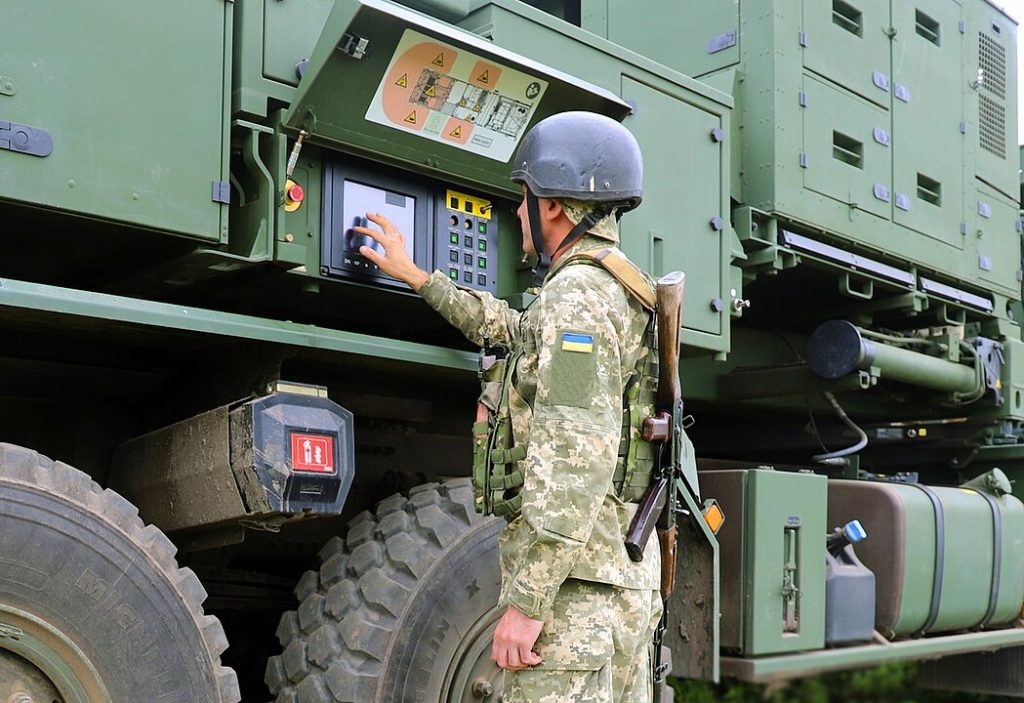
- IRIS-T SL (Surface-Launched): a ground-based, containerized variant for point and local area air defense.
- IRIS-T SLM (Surface-Launched, Medium-Range): an extended-range surface-launched model with added boosters and datalink for semi-active networked engagements.
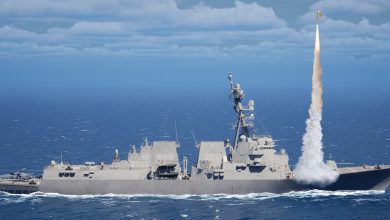
- IRIS-T SLS (Surface-Launched, Short-Range) and naval versions: fitted to ships and integrated air defense systems.
| Variant | Role or Platform | Range | Warhead | Weight | Guidance | Notes |
| IRIS-T AAM | Fighter aircraft air-to-air engagements | ~25 kilometers (15.5 miles) (air-to-air) | ~11.4 kilogram (25-pound) high-explosive fragmentation | ~87.4 kilograms (192.7 pounds) | Imaging infrared homing | Agile short-range AAM; fire-and-forget with thrust-vectoring control |
| IRIS-T SLS | Mobile short-range air defense | Up to ~12 kilometers (7.5 miles) | Same as AAM | Same as AAM | Infrared homing; adapted air-to-air seeker | Adapted AAM for surface-launch; reduced range/ceiling compared to AAM |
| IRIS-T SLM | Medium-range area air defense | Up to ~40 kilometers (25 miles) | Same as AAM | ~130 kilograms (286.6 pounds) (larger motor/booster) | Midcourse inertial or datalink + terminal IR | Extended range with booster and networked guidance; engages threats at higher altitude/longer standoff |
Compared with longer-range surface-to-air missiles, such as the medium-range S-300 or Patriot family, IRIS-T trades reach for responsiveness. It features a shorter range but faster reaction, superior maneuverability, and better close-in discrimination against low-observable or high-maneuver targets.
Compared with older heat-seeker air-to-air missiles, its imaging seeker and datalink options give it stronger resistance to flares and jamming.
From Concept to Capability
IRIS-T grew out of a simple problem: late-1990s fighters needed better short-range missiles.
A multinational European program, with Germany’s Diehl Defence as the primary contractor, pooled expertise and industrial capacity to produce a missile that learned from past lessons — especially that dogfights and close threats demand off-axis engagement, rapid acquisition, and countermeasure resistance.
Over subsequent decades, the design migrated from a pure air-to-air role into surface-launched roles as planners realized the seeker and guidance architecture were well-suited to point air defense.
Older missiles struggled with off-axis targets, slow acquisition, and susceptibility to flares or electronic countermeasures. Developed to be better, the IRIS-T features an imaging infrared seeker and high off-boresight capability, allowing pilots to lock onto targets well beyond the aircraft’s nose.
Agile control surfaces and fast onboard processing meant it could track and engage highly maneuverable threats in seconds.
Smarter sensors and guidance made it resilient against decoys and jamming, increasing its reliability in cluttered, contested skies. And thanks to a modular design with software-defined guidance and adaptable boosters, the missile could evolve from a fighter-carried weapon into surface-launched variants.
Key Limitations
Despite its agility and advanced imaging infrared seeker, the IRIS-T family has clear operational limits:
- Short to medium range only: 25 kilometers (15.5 miles) for the air-to-air variant; 12 kilometers (7.5 miles) and 40 kilometers (25 miles) for ground-launched versions, SLS and SLM, respectively.
- Infrared dependency: Performance can degrade in heavy cloud, rain, fog, dust, or against low-thermal-signature and cooled targets.
- Countermeasure pressure: While highly flare-resistant, advanced aircraft equipped with Directional Infrared Countermeasures, sophisticated flare patterns, or towed decoys can reduce the kill probability.
- Limited altitude envelope: Roughly up to 6,000 meters (19,685 feet) for SLS and 20,000 meters (65,616 feet) for SLM, restricting effectiveness against high-altitude threats.
- Line-of-sight vulnerability: Terrain masking, urban clutter, and nap-of-the-earth flight profiles can break engagement opportunities.
- Constrained magazine depth: Each launcher carries a limited number of missiles, and reloading exposes the system to detection and counterstrike.
- Cost imbalance: Effective but economically inefficient when used against low-cost unmanned aerial vehicles or mass drone swarms.
Operational Impact: IRIS-T Missile Now and in the Future
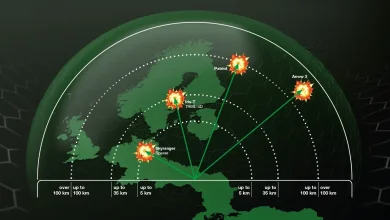
In contemporary conflicts where drones, cruise missiles, and low-flying aircraft complicate air defense, systems like IRIS-T are used to protect high-value assets such as airbases, command hubs, ports, and critical infrastructure, and to create layered defense meshes when paired with medium- and long-range systems.
Looking ahead, its strengths align with proliferating small-aerial threats, contested GPS environments, and the need for resilient, networked defense layers.
Upgrades in networking (such as datalinks and sensor fusion), seeker processing, and launcher modularity will keep it relevant as a flexible node inside broader integrated air defense systems.
As proof of its contribution to military firepower, countries such as Ukraine, Bulgaria, Thailand, and Saudi Arabia have already added the missile to their defense systems.