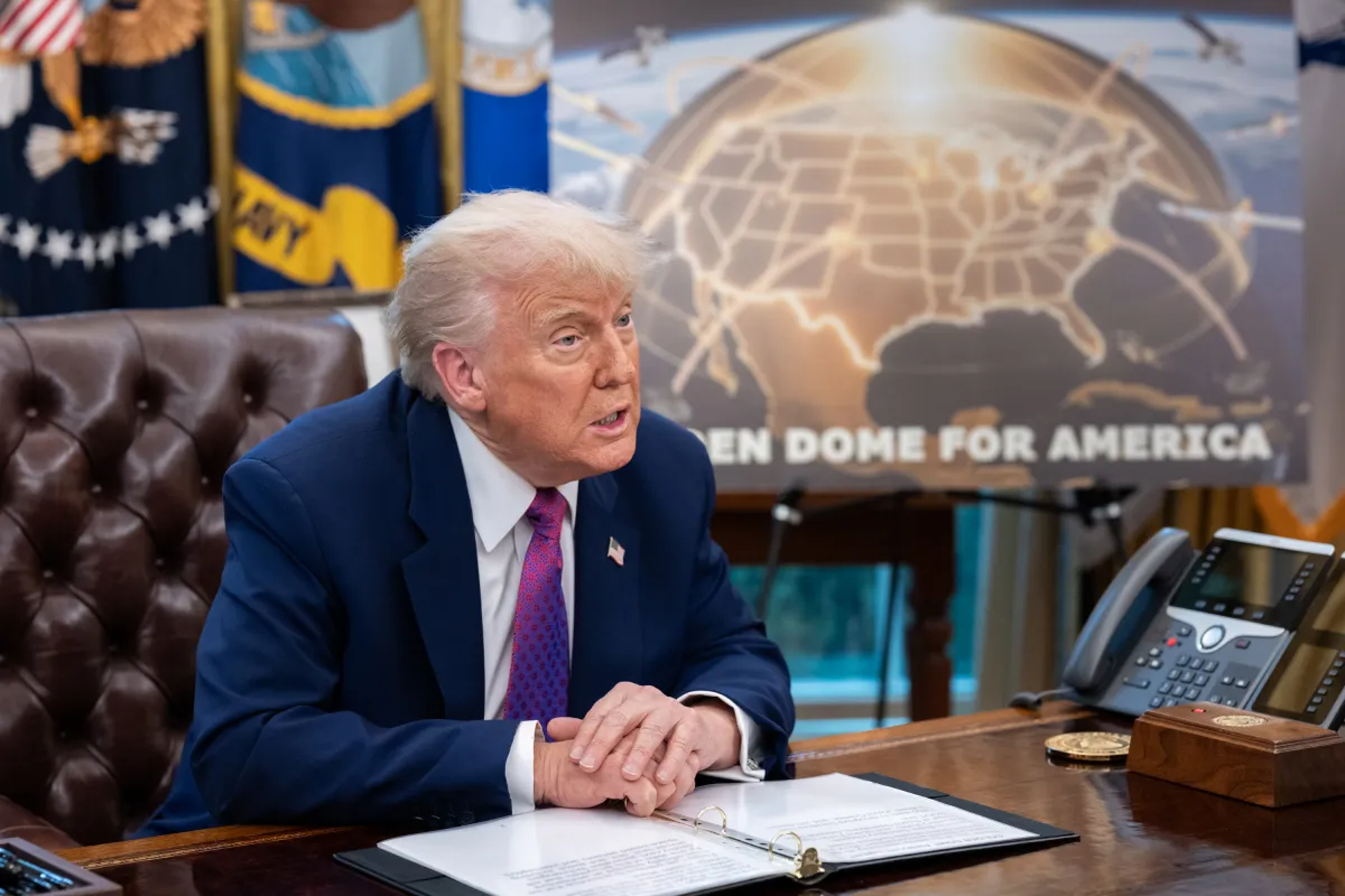
The US Missile Defense Agency (MDA) has selected 1,014 companies for the opening round of a massive contracting vehicle supporting the Pentagon’s future Golden Dome air and missile defense effort.
The first wave of “qualifying offerors” will compete for future task orders under the Scalable Homeland Innovative Enterprise Layered Defense (SHIELD) program, an indefinite-delivery/indefinite-quantity contract with a ceiling of up to $151 billion.
MDA has received 2,463 proposals for the initial phase. No funds are tied to the base awards, and costs will be obligated at each order level.
Works will run through December 2035 if all options under the initiative’s terms are exercised.
The SHIELD Program
MDA said SHIELD gives the US Department of Defense a single, flexible mechanism to quickly field new technologies nationwide.
The vehicle covers a wide scope of mission areas, from prototyping and weapons development to cybersecurity, systems engineering, data analysis, and other emerging needs.
“This contract encompasses a broad range of work areas that allows for the rapid delivery of innovative capabilities to the warfighter with increased speed and agility,” the agency said.
It also highlighted the use of artificial intelligence, machine learning, digital engineering, open systems standards, and agile development.
Golden Dome Progress
The Golden Dome initiative stems from an executive order signed early in US President Donald Trump’s second term directing a layered homeland air defense architecture, including space-based interceptors.
US Space Force Gen. Michael Guetlein leads the effort and delivered a proposed architecture to senior Pentagon leaders in September.
MDA began preparing industry partners earlier this year, releasing a presolicitation notice in July and hosting an industry day in Huntsville, Alabama, in August.
Presentation slides related to the program described SHIELD as a “versatile vehicle” envisioned to run for a decade, according to Breaking Defense.
These developments followed the US Space Force’s solicitation in late November for space-based mid-course interceptors.
The service declined to identify awardees due to “enhanced security measures,” Bloomberg reported.