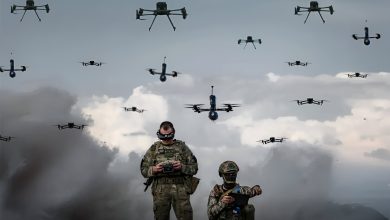
Anduril’s latest drone crashes during US Air Force testing have intensified scrutiny of the defense tech company’s rapid development claims.
A test flight over Florida’s Eglin Air Force Base this month ended abruptly when an Altius drone plunged 8,000 feet (2,438 meters) into the ground, according to a report by Reuters. Within hours, a second Altius suffered a similar fate, spiraling into the earth during a separate demonstration.
Both incidents, disclosed publicly for the first time in the report, cast a sharper light on whether one of Silicon Valley’s most heavily funded defense firms can match its battlefield claims with consistent performance.
Founder Palmer Luckey has repeatedly cited their combat success, claiming earlier this year that Altius models had destroyed “hundreds of millions of dollars” of Russian equipment. Yet interviews with former staff, military officials, and drone operators in Ukraine point to a gap between public messaging and field performance.
Anduril’s Ghost reconnaissance drone faced early setbacks in Ukraine, struggling against Russian electronic jamming and challenging terrain. Even the updated Ghost X model, rolled out in late 2023 to fix those problems, experienced a highly publicized crash during a US Army exercise in Germany earlier this year, which the company attributed to a rotor issue.
Anduril argues these failures are part of its testing philosophy. In response to questions, spokesperson Shannon Prior described the recent crashes as “isolated examples” amid hundreds of tests and said the company intentionally pushes prototypes to their limits.
Pressures and Challenges in US Drone and Autonomy Projects
Anduril’s stumbles are not occurring in isolation. A broader push across the US defense sector to develop autonomous, AI-enabled, and cost-efficient unmanned systems has produced both rapid innovation and visible growing pains.
One example is the Pentagon’s Replicator Initiative, launched in 2024, which aims to field thousands of low-cost autonomous drones to counter China’s massed platforms.
Several vendors participating in Replicator — including small contractors supplying loitering munitions and quadcopters — have encountered reliability issues in early testing cycles.
Naval drone experimentation is seeing similar turbulence. Boeing’s Orca extra-large unmanned undersea vehicle went through extensive re-engineering after repeated delays tied to battery reliability and software integration. The navy received the first Orca in 2023.