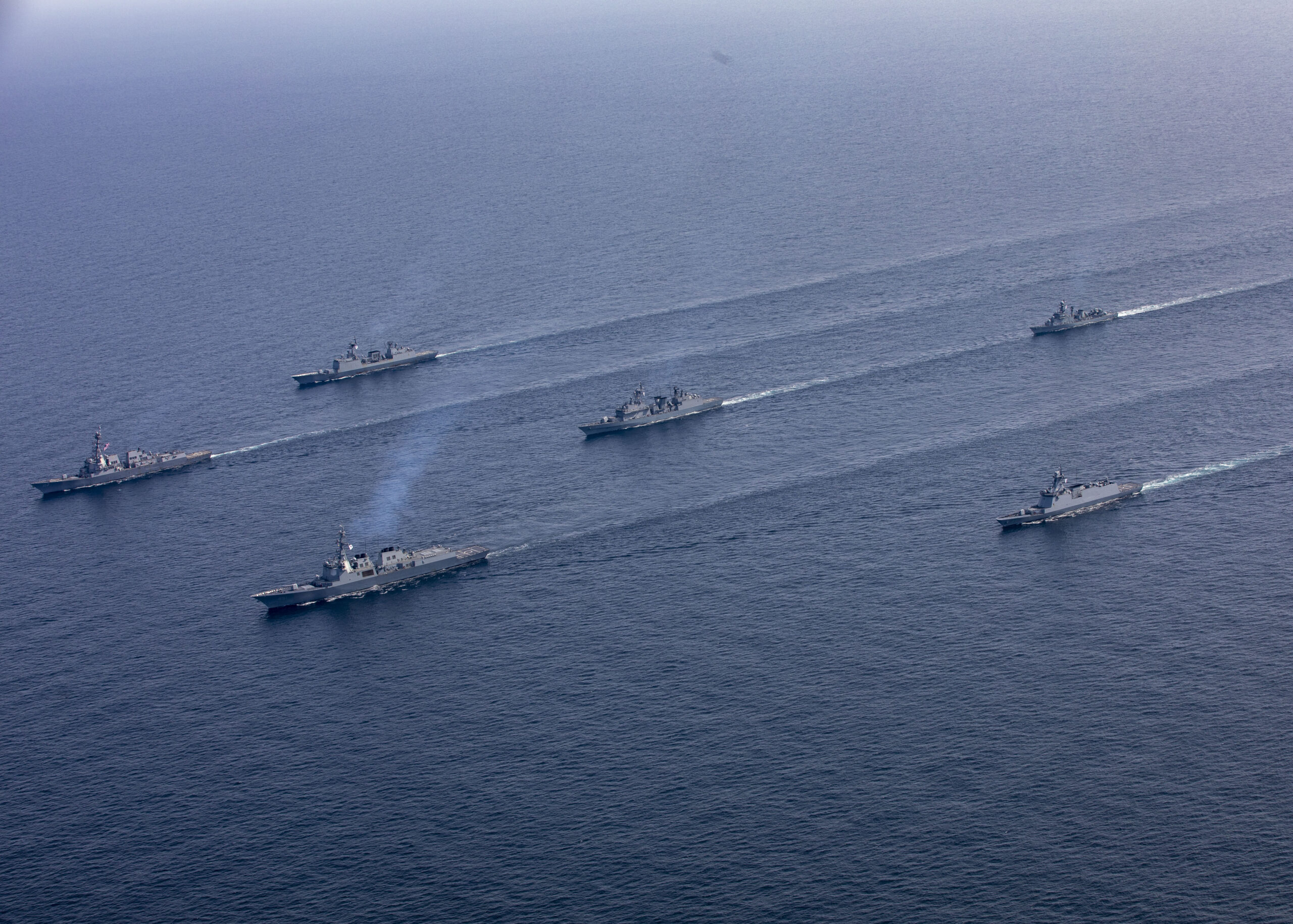
The End of Strategic Separation: How Europe and Asia Became One Security Theater
Democratic nations must adapt by building trans-regional coordination to match the authoritarian powers already doing so.

North Korean shells rain down on Ukrainian trenches. European warships patrol the Taiwan Strait. Russian engineers help Pyongyang with satellites, while South Korean howitzers defend NATO’s eastern flank.
The message is unmistakable: the Euro-Atlantic and Indo-Pacific are no longer separate security theaters.
The wars and rivalries of the 2020s have fused Europe and Asia into a single strategic continuum. Russia’s invasion of Ukraine, China’s assertiveness, and North Korea’s deepening cooperation with Moscow have erased the geographic boundaries that once shaped defense planning.
The result is a new global system of competition — stretching from the Baltic to the Taiwan Strait — where military, technological, and industrial power are tightly intertwined.
What happens in Ukraine now shapes deterrence in East Asia, and tensions in the South China Sea affect Europe’s security and economy.
A Web of Mutual Support
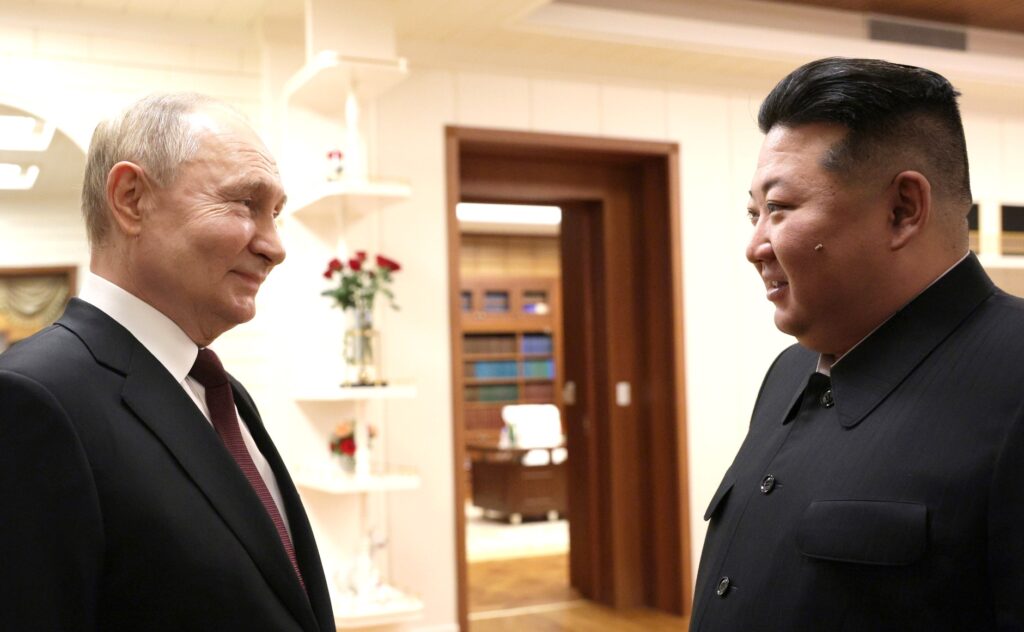
At the center of this convergence is the growing axis between Moscow, Beijing, and Pyongyang.
Russia’s dependence on Chinese trade and technology has deepened under Western sanctions. North Korea, meanwhile, has supplied Moscow with millions of artillery shells and missiles in exchange for Russian space and weapons expertise.
These interactions tie European and Asian security together in unprecedented ways.
North Korean munitions are used on European battlefields, while Russian engineers help advance Pyongyang’s missile and satellite programs. The conflicts may be geographically distant, but they now draw from the same supply and technology networks.
For Beijing, the partnership is strategic: as Russia confronts NATO, China gains time and space to pressure Taiwan and expand its presence in the South China Sea.
These authoritarian powers are not formal allies — but their cooperation is redrawing both regional maps at once.
NATO’s Indo-Pacific Awakening
NATO has begun to adapt to this new reality. The alliance’s 2022 Strategic Concept labeled China a “systemic challenge” for the first time, linking the Indo-Pacific directly to Euro-Atlantic stability.
The alliance is now strengthening dialogue and interoperability with its four key Indo-Pacific partners — Japan, South Korea, Australia, and New Zealand. These nations participated in recent NATO summits and are expanding cooperation in cyber defense, space resilience, and emerging technologies.
This is not about NATO projecting military power into Asia. It’s about recognizing that cyberattacks, maritime disruption, or technology theft in the Indo-Pacific can directly threaten European defense.
The alliance’s shift reflects a broader truth: deterrence is now trans-regional by design.
Europe Looks East
European governments have also stepped up their Indo-Pacific engagement.
France, the United Kingdom, Germany, and the Netherlands have deployed naval forces for exercises and freedom-of-navigation operations across the Indian and Pacific Oceans.
The EU’s 2021 Indo-Pacific Strategy outlined a long-term commitment to maritime security, supply-chain resilience, and technological cooperation with Asian partners.
The logic is clear: Europe’s prosperity and energy access depends on open Indo-Pacific sea lanes, and China’s strategic alignment with Russia means instability in Asia directly affects Europe’s own defense calculus.
For the first time in modern history, deterrence in the Pacific has become a pillar of Europe’s security.
Industrial and Technological Interdependence
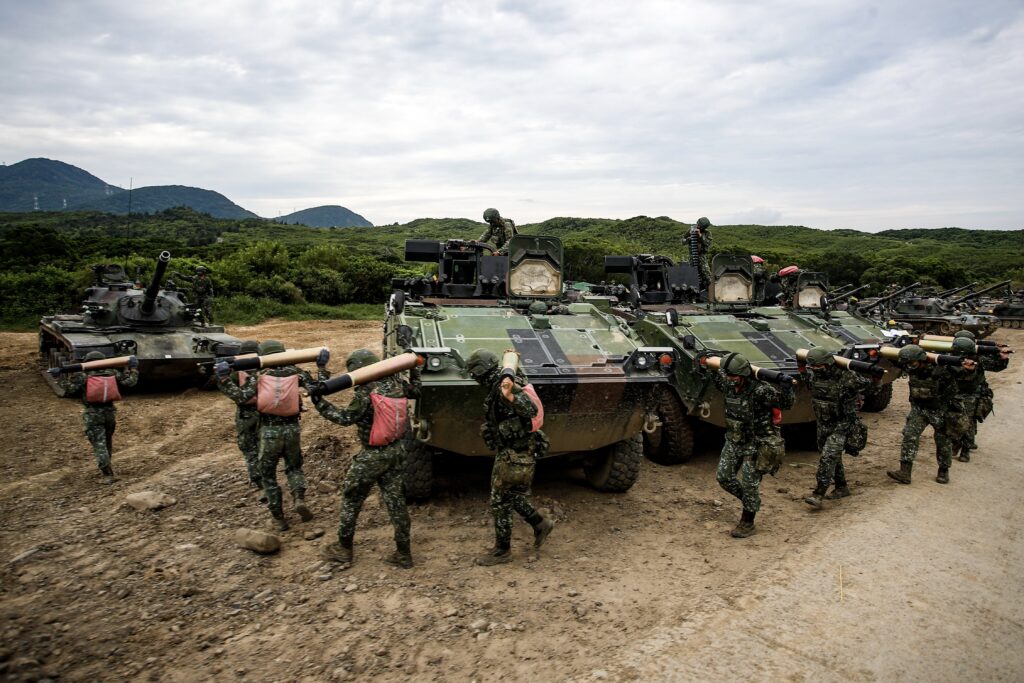
The merging of the two theaters extends beyond diplomacy — it is embedded in defense industries and supply chains.
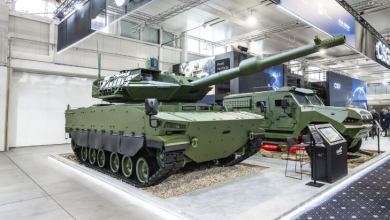
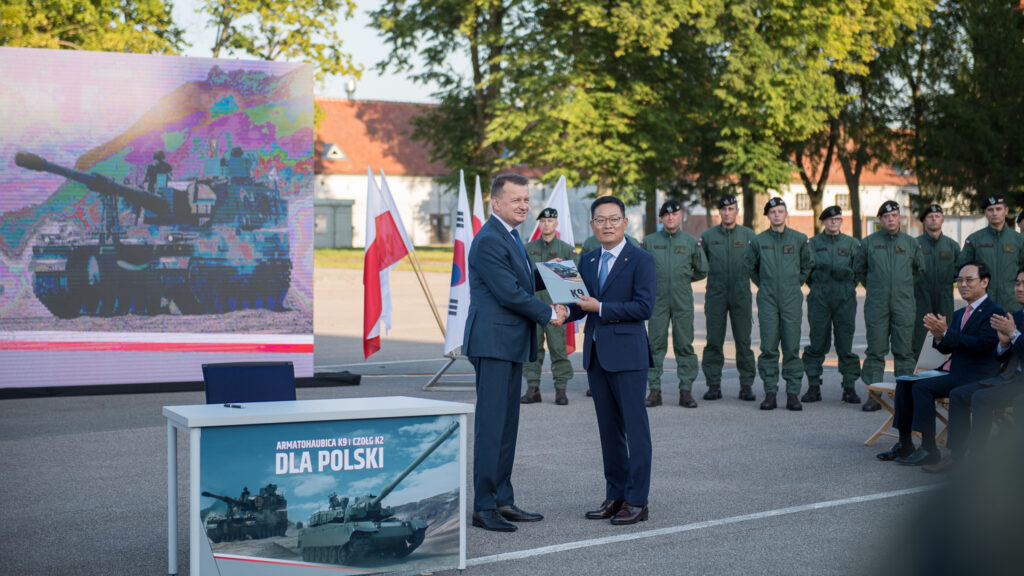
South Korea has emerged as one of Europe’s most important arms suppliers. Its K2 tanks, K9 howitzers, and FA-50 aircraft are now part of NATO’s frontline inventory, from Poland to Norway. These deals reinforce European deterrence while integrating Korean manufacturing into the continent’s defense ecosystem.
Conversely, European firms provide radar, propulsion, and sensor technologies essential for Asian militaries.
Both regions share the same vulnerabilities in semiconductors, rare earths, and critical undersea infrastructure. A single supply disruption in one region now reverberates across the other, proving that economic security is defense security.
The Rise of the Middle Powers
Middle powers are becoming the connective tissue between Europe and Asia.
South Korea, Japan, Australia, and several European states are collaborating on logistics, arms production, and technology standardization, creating what might be called a “horizontal alliance network.”
For Seoul, this role is especially significant. Its industrial scale, combined with growing maritime reach, positions South Korea as a bridge between NATO’s defense innovation ecosystem and the Indo-Pacific security architecture. Expanding joint maintenance hubs and co-developing next-generation systems could further lock the two regions into a shared defense economy.
Friction in the System
Still, trans-regional coordination faces hurdles.
European governments worry that US prioritization of the Indo-Pacific could weaken support for Ukraine. Asian allies, in turn, fear that a prolonged European conflict could sap US deterrence capacity in the Pacific.
Political perceptions differ, too. Many Europeans still view China primarily as an economic rival, not an immediate military threat, whereas Indo-Pacific partners see Beijing through the lens of immediate security risk. Without a common threat perception, strategic unity remains fragile.
Institutionally, NATO lacks a mechanism to coordinate with the Quad or AUKUS. Without one, duplication may replace synergy.
From Ad Hoc Cooperation to Structured Resilience
To solidify this emerging network, three priorities stand out.
First, create a permanent consultation mechanism between NATO, the EU, and Indo-Pacific partners focused on defense technology, logistics, and industrial cooperation.
Second, align military planning so that crises in one region do not automatically drain resources from the other.
Third, invest in resilient supply chains and dual-use production lines that serve both theaters simultaneously — ensuring that deterrence in one region reinforces, not competes with, the other.
The goal is not to build a global alliance but a global architecture of deterrence.
One Theater of Deterrence
The merging of Euro-Atlantic and Indo-Pacific security is not a policy choice but it is a strategic reality.
Authoritarian powers have already linked their military, technological, and industrial capabilities across continents. The task for democracies is to respond with equal coherence.
The 21st century’s frontline of freedom no longer runs through a single region. From the Baltic to the Pacific, security is shared, deterrence is linked, and instability anywhere now echoes everywhere.
If NATO and its Indo-Pacific partners can align defense strategies and industrial capacities, they will create a global architecture of deterrence — one capable of preserving stability across both oceans.
Distance no longer guarantees safety, and the future of transatlantic security will be shaped as much in the waters of the Indo-Pacific as in the skies over Europe.

Jihoon Yu is the director of external cooperation and associate research fellow at the Korea Institute for Defense Analyses.
Jihoon was a member of the Task Force for South Korea’s light aircraft carrier project and the Jangbogo-III submarine project.
He is the main author of the ROK Navy’s Navy Vision 2045.
His area of expertise includes the ROK-US alliance, the ROK-Europe security cooperation, inter-Korean relations, national security, maritime security, hybrid threats, and strategic weapons systems.
He earned his MA in National Security Affairs from the US Naval Postgraduate School and Ph.D. in Political Science from Syracuse University.
The views and opinions expressed here are those of the author and do not necessarily reflect the editorial position of The Defense Post.
The Defense Post aims to publish a wide range of high-quality opinion and analysis from a diverse array of people – do you want to send us yours? Click here to submit an op-ed.