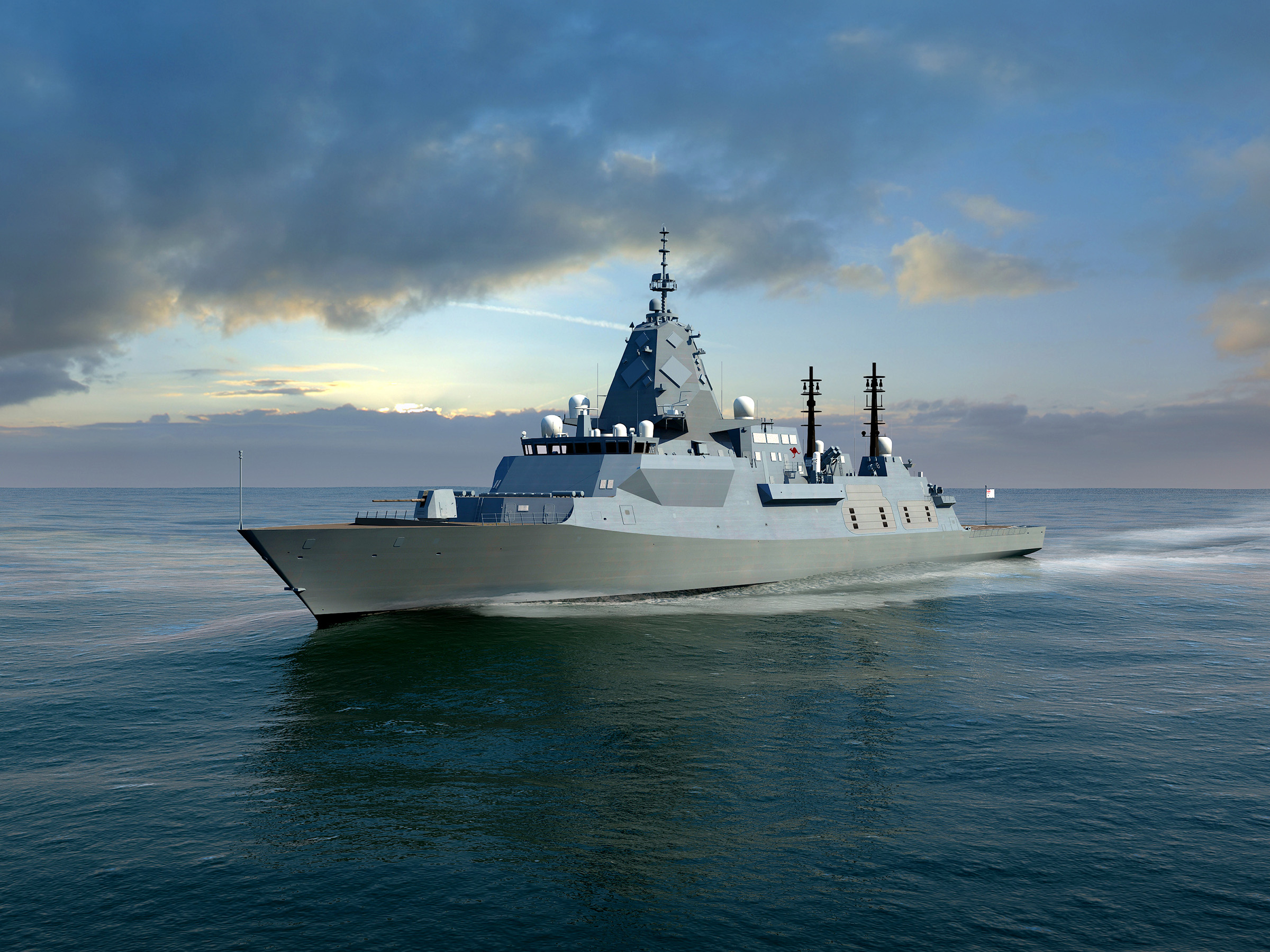
BAE Systems Australia and Melbourne-based BlueScope Steel have signed a five-year framework agreement to supply locally-made steel for the Royal Australian Navy’s Hunter-class frigate program.
Under the deal, BlueScope’s Port Kembla Steelworks in New South Wales will produce specialized, high-strength steel for the construction of three of the anti-submarine warfare ships at the Osborne Naval Shipyard in South Australia.
Each ship will incorporate about 5,000 tonnes (10 million pounds) of Australian steel, with 77 percent of the material sourced from BlueScope Distribution.
The steel sheets are custom-engineered to deliver durability according to the naval force’s standards, particularly in operations across demanding maritime environments.
Alongside materials supply, BlueScope Distribution will handle logistics, warehousing, and delivery to match BAE’s “steel in, ships out” construction model at Osborne.
In addition to supplying materials, BlueScope will provide technical support, certification, and project management across BAE’s operations in Australia.
Production is already underway, with 41 of 78 major ship units for the first vessel in progress.
Strengthening Sovereign Capability
According to the consortium, the partnership will secure a steady, homegrown supply of steel and related services while reinforcing it against potential global supply chain disruptions.
Andy Coxal, BAE Systems Maritime Australia’s delivery director, noted that the Hunter frigate program “is a national endeavour,” emphasizing that Australian companies like BlueScope play a key role in maintaining a self-reliant defense industry capable of protecting critical sea routes.
BlueScope Distribution General Manager Mark Smith also commented on the deal, highlighting that it recognizes both companies’ dedication to Australian manufacturing.
“We’re delighted to have been invited by BAE Systems Australia to enter into this Framework Agreement which acknowledges our longstanding partnership and commitment to supporting a domestic, fully integrated steel supply chain to support the defence industry,” he said.
The Hunter-Class Frigate
The Royal Australian Navy’s Hunter frigate program was launched in 2018 to replace the service’s Anzac warships operational since the 1990s.
Canberra originally planned to build up to nine vessels, but reduced the future fleet to six units following a 2024 review to efficiently expand the country’s surface combatants while balancing dedicated frigates between anti-submarine warfare and general-purpose missions.
Each Hunter-class ship will measure 151 meters (495 feet) long, have a capacity for more than 200 personnel, and space for a large helicopter, unmanned aerial systems, as well as medium rigid hull inflatable boats.
They will be fitted with lightweight anti-submarine torpedoes, naval strike missiles, land attack subsonic cruise missiles, surface-to-air missiles, 30-millimeter chain guns, naval artillery guns, and automated close-in weapon systems.
A vessel is powered by a Rolls-Royce MT30 gas turbine, two electric motors, and four high-speed diesel generators for speeds over 27 knots (50 kilometers/31 miles per hour) and a range of 7,000 nautical miles (12,964 kilometers/8,055 miles).
Construction of the lead Hunter frigate began in January 2025 and is expected to be commissioned by 2032.